U.S. technology shares reversed course this week, giving up all the gains they made the previous week. Profit-taking and concerns about AI competition from China and whether AI investment returns will meet expectations hit the semiconductor sector, pushing it into bear territory.
The sell-off in tech stocks came despite cooling inflation at both the retail and wholesale levels, which eased fears of an interest rate hike by the nation’s central bank.
For the week, the Dow Jones Industrial Average edged 0.93 percent lower, closing at 52,146. The S&P 500 dropped 1.55 percent to 7,457, near its weekly low touched on July 17. The Nasdaq Composite fared far worse, down 2.90 percent. The Russell 2000 fell 0.52 percent.
The Chicago Board Options Exchange Volatility Index closed the week at 18.77, up 24 percent.
Stocks opened sharply lower on July 13, led by tech shares, with Intel, AMD, and Nvidia down 6.12 percent, 3.52 percent, and 4.21 percent, respectively. The sector came under pressure from profit-taking after the previous week’s gains and another rout in South Korean semiconductor shares in overnight trade. The Kospi, the country’s major equity index, fell more than 7 percent, with SK Hynix, which made a bullish Wall Street debut the previous week, down 15 percent.
The tech-heavy Nasdaq dropped 1.55 percent for the day. The S&P 500, the Dow Jones, and the Russell 2000 fared slightly better, down 0.79 percent, 0.26 percent, and 0.90 percent, respectively.

Another factor pressuring Wall Street was the rise in oil prices and bond yields. West Texas Intermediate crude surged more than 4 percent to near $75 per barrel following the resumption of clashes between Washington and Tehran, with strikes on regional energy infrastructure adding to supply concerns.
The yield on the U.S. 10-year Treasury note rose to 4.59 percent, its highest level in nearly two months, while the two-year Treasury yield edged to its highest level since early 2025.
Adding to the pressure on stocks for the new trading week was a flurry of macroeconomic data and earnings reports scheduled for release later in the week.
Alex Guiliano, chief investment officer of Ridgewood, New Jersey-based Resonate Wealth Partners, said markets were balancing economic news, corporate earnings, and Federal Reserve Chair Kevin Warsh’s upcoming testimony before the House Financial Services Committee and Senate Banking Committee on July 14 and July 15, respectively.
“While the Fed and [consumer price index] data will determine what’s next for interest rates, the sustainability of this stock market rally ultimately hinges on whether corporate profits can support economic resilience,” he told The Epoch Times.
Conflict Tests Markets
Meanwhile, the escalation of the Iran conflict would test whether the broad stock market rally could hold, he said. “The market will have to balance the positive of corporate earnings strength with the negative of geopolitical risks.”
Stocks rebounded on the morning of July 14 following a turnaround in South Korean shares, led by SK Hynix. The Nasdaq recovered part of the previous day’s losses, closing 0.90 percent higher. The S&P 500 and the Russell 2000 closed slightly higher, up 0.38 percent and 0.44 percent, respectively. The Dow Jones closed flat, weighed down by a 25 percent decline in IBM, a member of the blue-chip index.
Another factor helping the broader market recover was a sign of cooling inflation, easing pressure on the Federal Reserve to raise interest rates. The consumer price index (CPI), a broad measure of the cost of living, rose 3.5 percent in June, down from 4.2 percent in May and below market forecasts of 3.8 percent.
The inflation reading, the lowest in five months, came on the back of an easing in price hikes for key components. Energy costs rose 15.7 percent, down from 23.5 percent in May, as the ceasefire between the United States and Iran eased inflationary pressure on energy prices, alongside a slowdown in shelter costs (3.3 percent in June versus 3.4 percent in May) and food (3 percent in June versus 3.1 percent in May).
“Tuesday’s weaker-than-expected CPI print suggests the inflation surge driven by the Iran war is fading, but this may just be a temporary relief as tensions have escalated in recent days,” Skyler Weinand, chief investment officer of Dallas-based Regan Capital, told The Epoch Times.
Weinand believes the weaker inflation data will likely keep the Federal Reserve on hold for now and reduce the odds of a rate hike.
“But we remind investors that almost every communication that has emanated from Chair Warsh during his short tenure so far has been hawkish,” he said. “Warsh is looking to get consumer prices under control, and the best tool the Fed currently has is raising interest rates.”
The rebound in stocks extended into the July 15 trading session, led again by techs, following a strong earnings report from European semiconductor giant ASML Holdings. The Nasdaq edged up 0.62 percent, while the S&P 500, the Dow Jones, and the Russell 2000 added 0.38 percent, 0.29 percent, and 0.40 percent, respectively.
Adding to the positive sentiment was another cool inflation number. The producer price index (PPI), a measure of wholesale inflation, rose at an annual rate of 5.5 percent in June, following a downwardly revised 6 percent gain in May.
The reading, below forecasts of 6.2 percent, was the lowest in three months, a sign that inflation is ebbing and further easing concerns of another rate hike.
Fed’s Beige Book
Another positive headline for market bulls was the release of the Federal Reserve’s Beige Book, which showed a slightly improving economy.
“The economy is getting a little better, and the World Cup helped. That’s the main takeaway from the surprisingly good CPI and PPI inflation reports this week and now the Fed’s Beige Book,” Heather Long, chief economist at Navy Federal Credit Union, told The Epoch Times.
She said the slight-to-moderate economic improvement was broad-based, with both hiring and manufacturing picking up pace. “Inflation is a problem, but it doesn’t seem to be getting worse. Fed leaders have made two things clear this week: Inflation will be tamed, and they are not in a hurry to hike rates.”
Still, trade was choppy on profit-taking, with all major averages giving up early gains and dipping into the red before recovering by the end of the day to close in the green.
The equity market turned decisively negative on July 16, led by techs, down another 1.5 percent, followed by the S&P 500 and Dow Jones, down 0.5 percent and 0.2 percent, respectively, on broad profit-taking.
Another factor weighing on sentiment during the trading session was an anemic reading for the retail sector. Retail sales rose 0.2 percent in June, following an upwardly revised 1 percent rise in May. While in line with expectations, the reading marked the smallest increase in five months, as lower gasoline prices weighed on gas station receipts.
“Consumer spending is a critical engine of the US economy, so investors want to see households continue opening their wallets. June’s report was not particularly robust, but it was not a red flag either — especially given the upward revision to May,” Bret Kenwell, U.S. investment analyst at eToro, told The Epoch Times.
The sell-off broadened on July 17, led by artificial intelligence-related and semiconductor stocks, as investors reassessed the sustainability of the AI-driven rally. The PHLX Semiconductor Index closed 1.6 percent lower and was down 20.2 percent from its all-time closing high reached on June 22, meaning the sector officially entered a bear market.
Jose Torres, senior economist at Interactive Brokers, said in an online post that concerns about AI competition from China dragged the semiconductor sector into the bear territory.
“Fears of Chinese competition from AI startup Moonshot add to existing worries about a potential slowdown in revenue growth among providers of the technology because of volatile pricing,” he said, adding that Wall Street is increasingly worried that the sector’s strong sales and profits could decelerate.
In addition, Torres said returns from massive AI capital expenditures may fall short of market expectations, weighing on major technology companies. Meanwhile, upbeat economic data continue to support a rotation toward cyclical stocks, helping the Dow Jones Industrial Average and Russell 2000 outperform the S&P 500.
Ruben Dalfovo, an investment strategist at SAXO, a Danish online investment bank and trading platform, said in an online post that semiconductor demand remains strong, but share prices had already priced in years of sustained growth.
“The semiconductor sector has developed a rather unusual problem. Companies keep reporting excellent results, yet their shares are falling,” he said.
The Nasdaq closed down another 1.40 percent. The S&P 500, the Dow Jones, and the Russell 2000 fared slightly better, down 1.01 percent, 0.77 percent, and 0.49 percent, respectively.
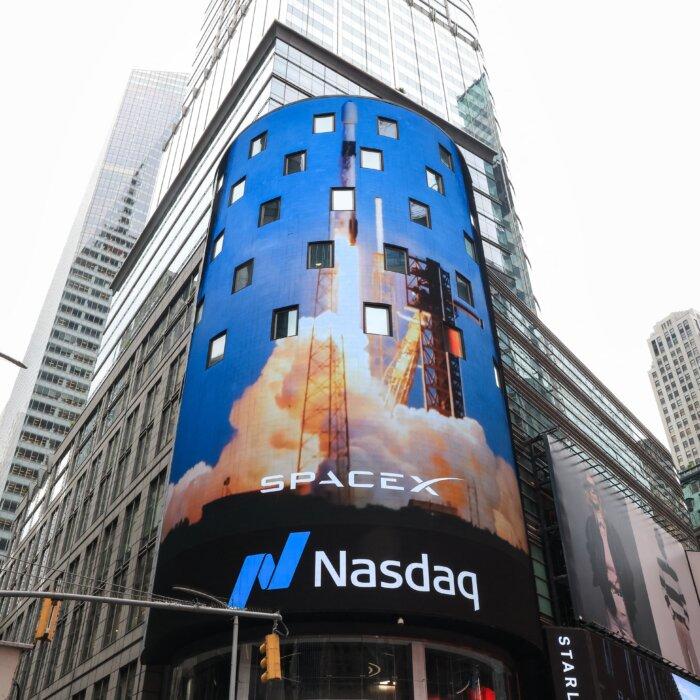
Adding to the sell-off were a series of negative corporate and geopolitical headlines: another disappointing earnings forecast from U.S. Surgical, another overseas tech rout, SpaceX’s cancellation of its Starship rocket launch after an engine failure, and concerns that further escalation in the U.S.–Iran war could keep oil prices—the primary fuel of inflation—elevated.