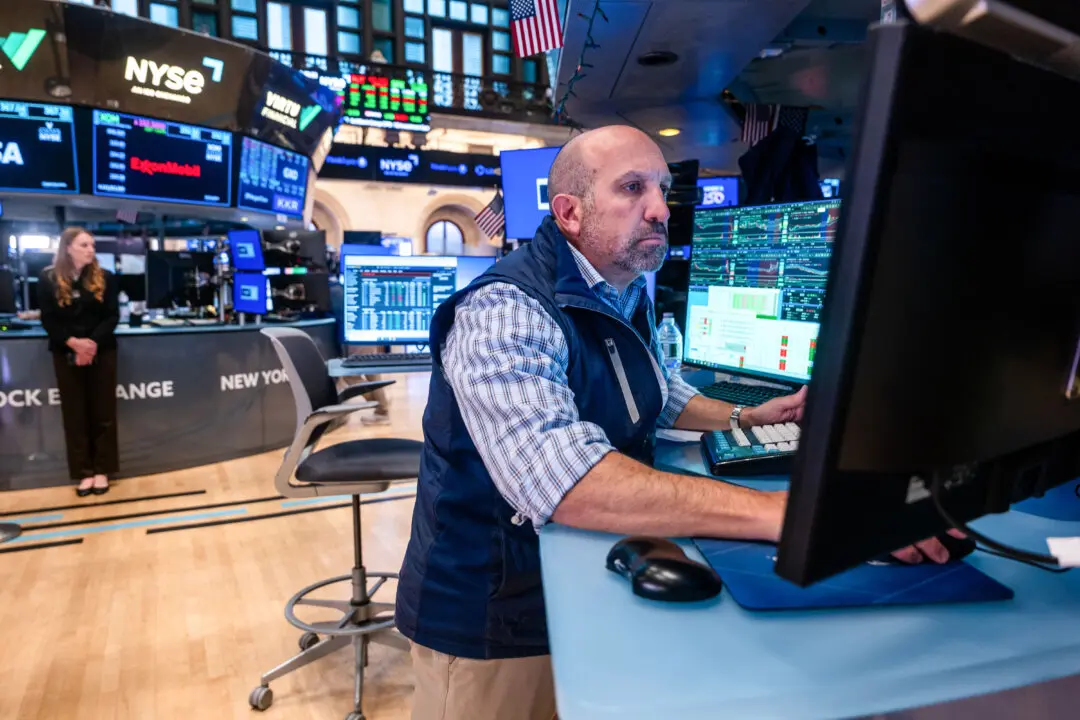
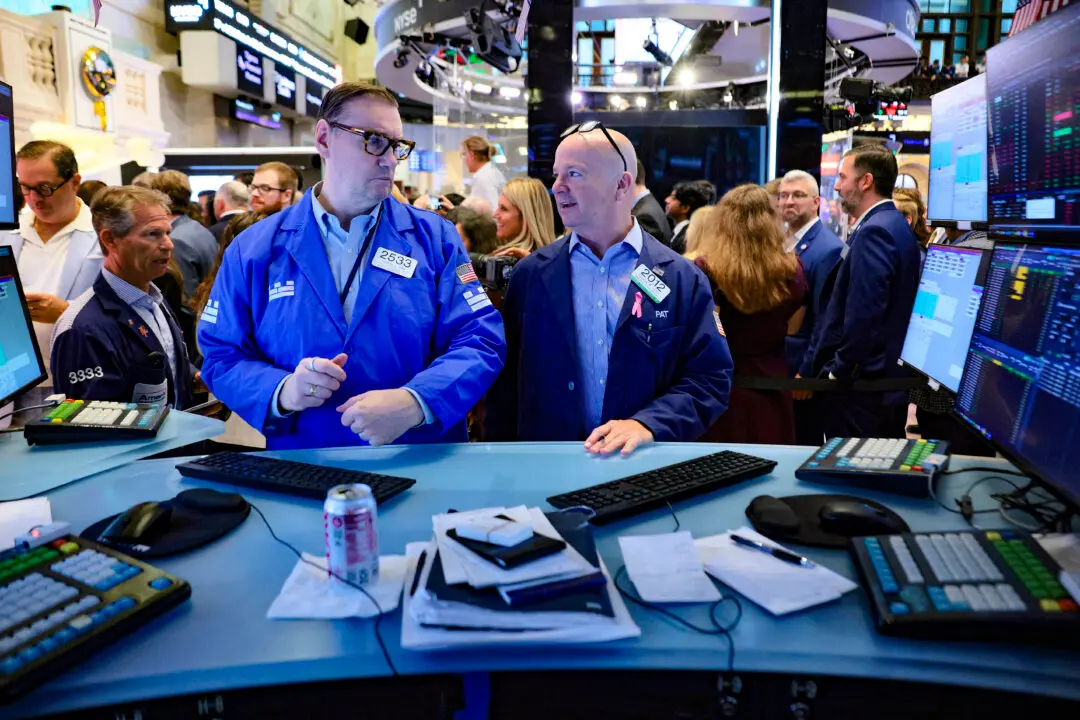
Stocks showed remarkable resilience this week, recovering from yet another tech-led sell-off amid heightened volatility. Investor sentiment swung sharply between optimism and caution, influenced by strong corporate earnings, valuation concerns, and growing uncertainty surrounding the Federal Reserve’s next interest rate move.
Trading opened sharply higher on Nov. 10, extending the rebound that began late on Nov. 7 on hopes that the federal government shutdown was nearing an end. Bond yields provided additional support, with the benchmark 10-year Treasury hovering near 4.10 percent.
Optimism gathered momentum through the session as investors brushed aside valuation anxieties. The shift from last week’s fear of losing out (FOLO) to a renewed fear of missing out (FOMO) propelled all major indexes higher. The S&P 500 and Nasdaq led the advance, with the tech-heavy Nasdaq notching its strongest day since this past May, surging by 2.27 percent.


Those gains followed a week in which the Nasdaq had dropped 3 percent as investors took profits in heavily owned AI names that have driven the market’s technology rally since this past spring.
The mood shifted again on Nov. 11 as profit-taking returned, especially in the tech sector. Selling intensified after CoreWeave Inc. issued weaker-than-expected earnings guidance, triggering renewed concerns about overcrowded AI trades. Shares of the AI-focused cloud operator fell by double digits, dragging down other AI stocks, including Palantir and AppLovin.
Adding to the pressure, reports surfaced that SoftBank had sold its entire stake in Nvidia for $5.80 billion, stirring fresh valuation worries in the already-stretched AI chip segment.
By early afternoon, however, markets again demonstrated their resilience. Tech-sector losses moderated, while healthcare stocks helped fuel a rotation into more reasonably valued sectors. Nasdaq ultimately finished the day with only slight losses, while the S&P 500 and Russell 2000 closed higher. The Dow, meanwhile, set another record, topping 48,000 for the first time.
The Nasdaq attempted to regain momentum on the morning of Nov. 12, after AMD unveiled an ambitious long-term growth strategy following the previous day’s close. The chipmaker expects its data center and AI businesses to expand at an average rate of more than 35 percent each year and aims for earnings per share above $20, based on a non-GAAP (Generally Accepted Accounting Principles) measure.
“AMD is entering a new era of growth fueled by our leadership technology roadmaps and accelerating AI momentum,” said Lisa Su, the company’s chair and CEO.
“With the broadest portfolio of products and our deepening strategic partnerships, AMD is uniquely positioned to lead the next generation of high-performance and AI computing. We see a tremendous opportunity ahead to deliver sustainable, industry-leading growth. We have never been better positioned.”
But AMD’s upbeat outlook wasn’t enough to stem renewed selling in AI companies. By the market close, the Nasdaq and Russell 2000 were both lower, while the S&P 500 and Dow posted gains.
Health care, metals, financials, and retail powered a broad S&P advance, and the Dow notched yet another all-time high above 48,000. Falling bond yields—down to 4.07 percent on the 10-year note from 4.11 percent on Nov. 10—supported the broader rally.
Nov. 13 saw more mixed market action. After the market closed, Cisco reported stronger-than-expected earnings, and news broke that the government shutdown had officially ended. Yet neither development was enough to counter investor anxiety over sky-high tech valuations.
Rising Treasury yields—back up to 4.10 percent—added pressure following hawkish comments from Federal Reserve officials.
All major indexes posted steep declines, their worst in a month, and extended losses early on Nov. 14 before staging a choppy mid-session rebound that later faded. Markets ultimately ended the week mixed.
Rick Gardner, chief investment officer of RGA Investments in Raleigh, North Carolina, sees the recent turbulence as a routine pullback after a sustained multi-week rally.
Gardner advised investors to stay invested ahead of what is typically a seasonally strong year-end period.
“Better-than-expected earnings have been one of the main reasons keeping stocks elevated, and we expect this strong earnings dynamic to continue powering stocks well into 2026 as companies are becoming more efficient, which is driving margins,” he said.
Michael Landsberg, chief investment officer at Landsberg Bennett Private Wealth Management in Punta Gorda, Florida, said he has been expanding exposure beyond the few U.S. chip firms most investors own. His firm is allocating more capital to other segments of the AI ecosystem, heating, ventilation, and air conditioning (HVAC), electricity transfer, power generation, and infrastructure, both domestically and internationally.