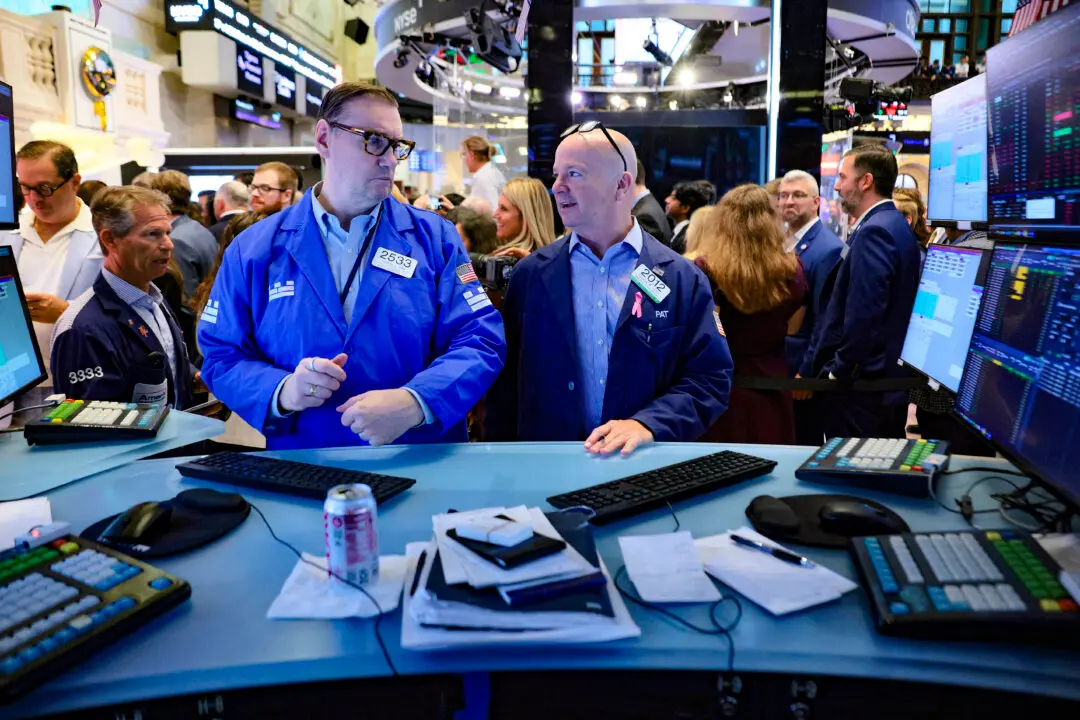
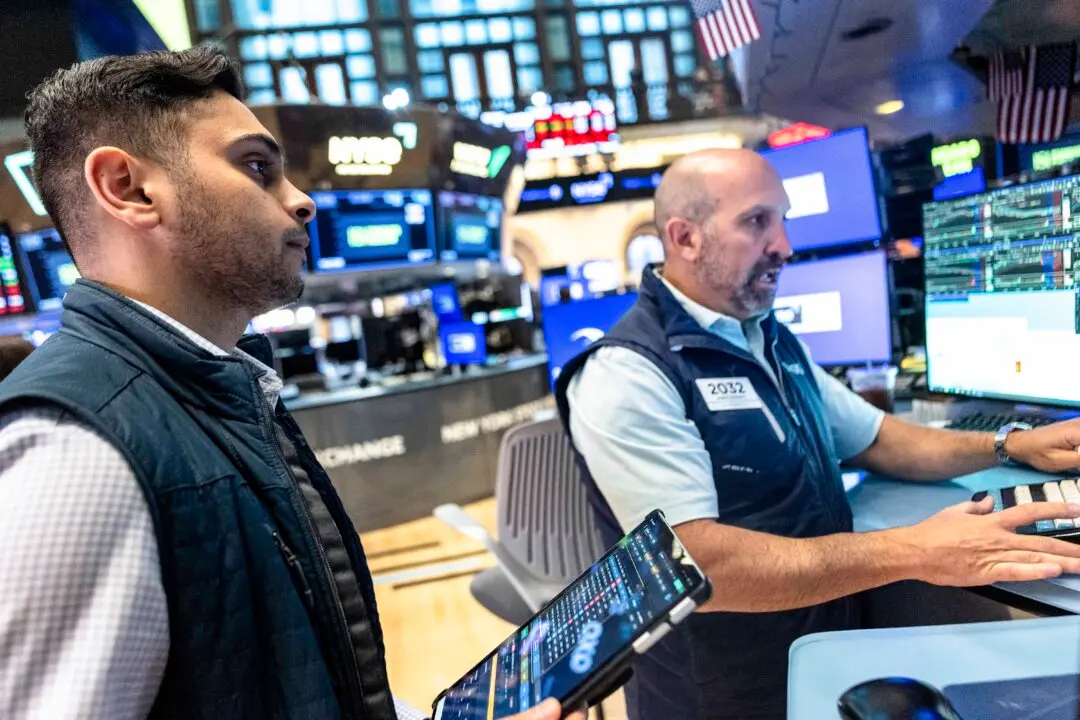
Equities ended the week in the red after late-week U.S.-China tariff tensions prompted investors to unload popular trades.
Meanwhile, worries that a prolonged government shutdown could weigh on the economy shifted market sentiment from positive at the start of the week to negative by the end. What seemed like another winning week for the bulls—fueled by a flurry of corporate deals—turned into a field day for the bears.
Wall Street opened the week higher on Oct. 6, extending the previous week’s gains. Both the S&P 500 and the Nasdaq notched new highs following a couple of bullish corporate headlines.
One came from the tech sector: AMD announced a multi-billion-dollar deal to supply artificial intelligence (AI) chips to OpenAI, with ChatGPT’s parent company having the option to take a 10 percent stake in the semiconductor giant.
AMD shares rallied nearly 25 percent in premarket, pulling up the semiconductor sector, which has led gains in recent weeks.
The other bullish headline came from the financial sector: Fifth Third Bancorp announced the purchase of Comerica in a $10.9 billion deal, lifting regional bank shares.
Still, markets ended the day mixed, with the S&P and Nasdaq reaching new highs, while the Dow closed slightly lower.
Corporate headlines continued to lift the market through midweek, with Dell raising its earnings forecasts and Intercontinental Exchange announcing a $2 billion investment in Polymarket on Oct. 7, followed by better-than-expected results from Pepsi and Delta Air Lines on Oct. 9.
However, trading turned choppy amid signs that the market may be topping. The S&P 500 and Nasdaq, which closed lower on Oct. 7 after hitting intraday highs, rebounded sharply on Oct. 8 to reach fresh highs, but lost ground again by the close on Oct. 9.
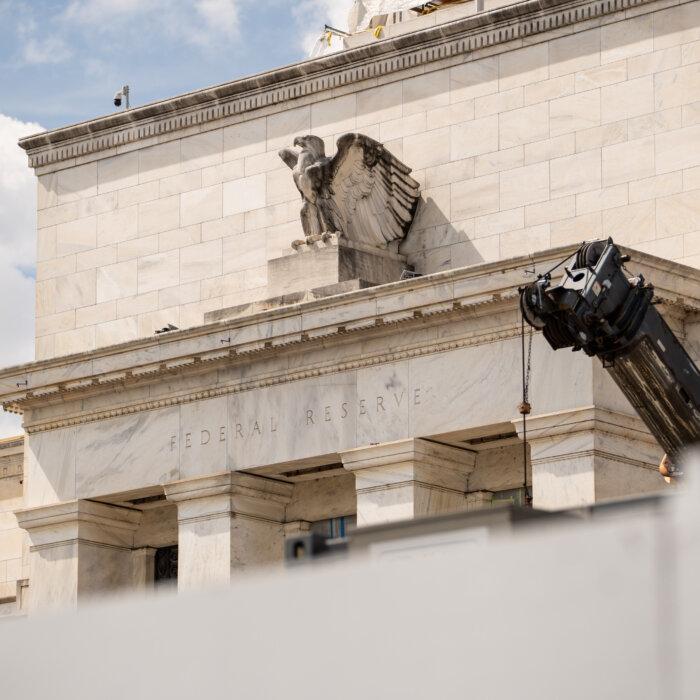
“In assessing the appropriate stance of monetary policy, the Committee will continue to monitor the implications of incoming information for the economic outlook. The Committee would be prepared to adjust the stance of monetary policy as appropriate if risks emerge that could impede the attainment of the Committee’s goals,” the minutes stated.
The Federal Reserve’s mixed assessment of the economy creates some uncertainty over the pace of interest-rate cuts for the remainder of the year.
These headlines rekindled fears of another round of trade clashes, putting pressure on Wall Street’s most popular trades and driving all major equity indexes sharply lower.
“Each week, a shutdown subtracts about 0.1% of annualized GDP growth via reduced government activity. There could be a sentiment channel as well if the duration of the shutdown enters uncharted territory,” Michael Feroli, chief U.S. economist at J.P. Morgan, said.
The longer-term outlook is murky, especially in the continued absence of key economic data.
“It’s going to be challenging to discern what this means for the direction of Fed policy. If the shutdown is lengthier, it could muddy the waters about how markets price the likelihood of any rate cuts past December,” said Jay Barry, head of global rates strategy at J.P. Morgan.
Robert Edwards, chief investment officer at Naples, Florida-based Edwards Asset Management, agrees. He said that an extended government shutdown could fog up the economic data—primarily the monthly jobs and inflation statistics—for the next quarter or so.
This data fog “would put the data-dependent Federal Reserve in an awkward position for the next few meetings, where it would be forced to make interest rate decisions with little incoming economic data,” Edwards told The Epoch Times.
Edwards described the market as a “no respect” bull market that has been ripping higher since April’s tariff volatility.
“We don’t see any reason for distrust. There is also more money and bull fuel coming, especially with lots of cash sitting on the sidelines that will likely soon chase a shrinking supply of stock shares,” he said.