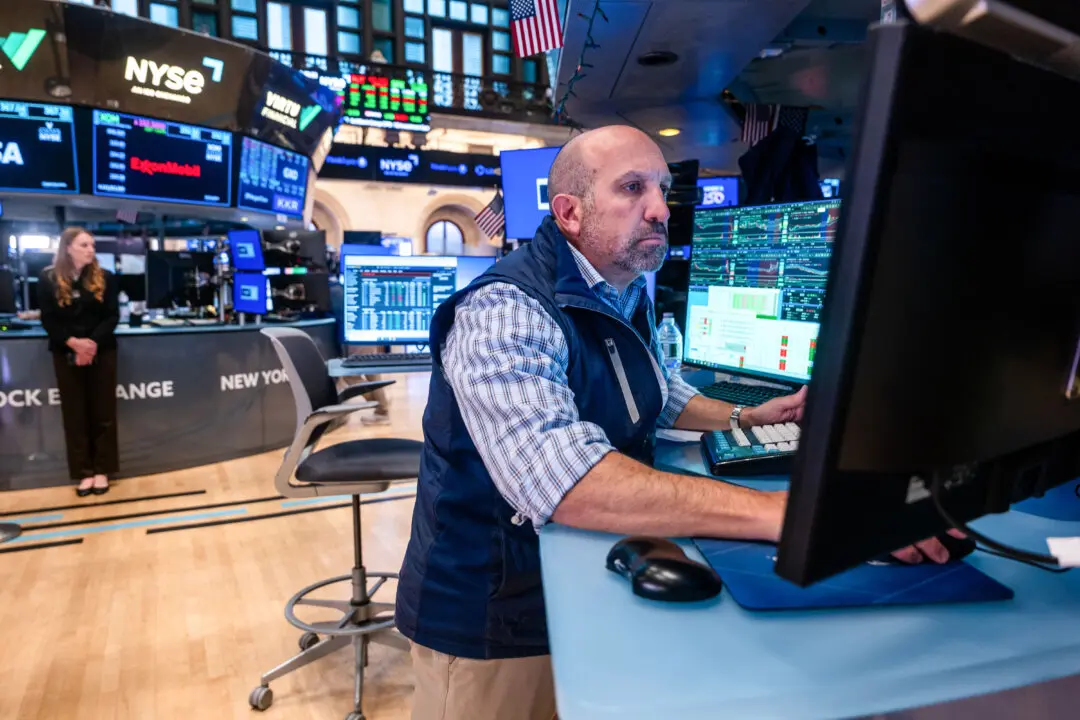
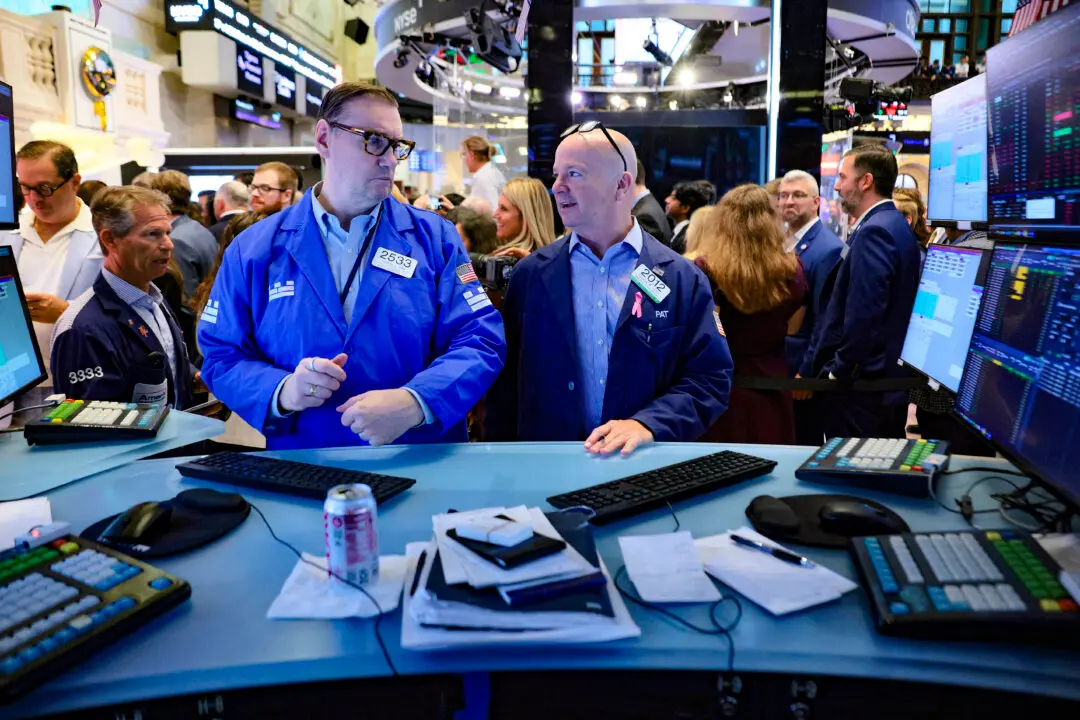
The broad rally in U.S. stocks, driven by easing trade tensions between the United States and China and the calming of inflation fears, continued for most of this week but ended abruptly toward the end of the week because of rising geopolitical uncertainty in the Middle East.
The S&P 500 Index closed at 5,976 on June 13, down by 0.39 percent for the week. The Dow Jones Industrial Average fell by 1.32 percent to finish at 42,197. The Nasdaq Composite Index declined by 0.63 percent to 19,406, while the Russell 2000 dropped by 1.49 percent.
Wall Street opened the new trading week on June 9 higher, building on the previous week’s broad gains, which pushed the S&P 500 above the 6,000 mark for the first time since it reached an all-time high in February.
Equity market bulls had several factors working in their favor. One was the resumption of U.S.–China talks in London, which raised hopes of easing trade tensions between the world’s two largest economies. This boosted the shares of tech giants with significant exposure to the Chinese market.
Another positive was the kickoff of Apple’s WWDC 2025 event in Cupertino, California, which added momentum to the tech rally.

The rally continued into the middle of the week as U.S.–China talks ended on a positive note, and a couple of better-than-expected inflation numbers emerged.
The better-than-expected inflation numbers further eased fears that tariffs would drive up prices.
“At least to this point, the upward price pressures on inflation from tariffs are yet to show up. We had some expectation that the CPI data in May would reflect the impact of tariffs; yet, both the headline and core numbers came in at 0.1 percent, less than expected, and kept year-over-year numbers restrained,” he said.
“In any event, fears of significantly higher inflation readings appear unfounded at present.”
Meanwhile, the easing of inflation reinforced the prospect of the Federal Reserve cutting interest rates sooner rather than later, according to Rick Gardner, chief investment officer at Raleigh, North Carolina-based RGA Investments.
“Thursday’s weaker-than-expected PPI shows that we are continuing to make progress on inflation moving back near the Federal Reserve’s 2 percent target, even as we face continued uncertainty over tariffs,” Gardner told The Epoch Times.
He said the softer consumer and wholesale inflation data suggest that inflation may be normalizing—an encouraging sign for both consumers and the Federal Reserve.
“If we continue to see tame inflation data, it may keep the prospect of Federal Reserve rate cuts on the table for the second half of 2025,” Gardner said.
The prospect of a Fed rate cut boded well for two Treasury bond auctions during the week, sending bond yields lower.
Adding to the positive sentiment in the middle of the week were solid earnings from Oracle Corp. The tech giant expects the growth rate of cloud infrastructure to accelerate to more than 70 percent in fiscal 2026 from 50 percent in fiscal 2025, further fueling the tech rally.
Things turned sour for equity market bulls on June 13, however, following an escalation in the conflict between Iran and Israel in the Middle East, which sent oil prices higher and stocks lower.
Gardner remains positive on the U.S. economy and equities.
“The economy may have been more resilient than many expected, with softening inflation, a strong labor market, and its capacity to adapt to the tariff uncertainty,” he said.
“The ability of our economy to adapt may be one reason why the stock market has been able to rebound in relatively short order from its April lows.”
Gardner said that while stocks are nearing the record levels seen in February, investors may soon look for the next driver of market gains.
“The next catalyst for markets may be a trade deal with China, the extension of the 2017 tax cuts, and the prospect of Fed rate cuts as inflation continues to soften,” he said.
Bret Kenwell, a U.S. investment analyst at eToro, is closely watching next week’s Federal Reserve interest rate decision.
“So far, Chair Powell has walked a tightrope when it comes to monetary policy,” he told The Epoch Times.
Kenwell expects the Fed chair to face more pressing questions about what the central bank needs to see before cutting rates.
“While Powell doesn’t give many clues on future Fed decisions and does a good job not to tip his hand, investors crave certainty and will be looking for some answers during next week’s Fed press conference,” he said.