Employment data continue to send mixed signals about labor market conditions as the number of Americans filing new applications for unemployment benefits declined to a one-month low.
The previous week’s claims were revised slightly higher to 264,000. The market consensus pointed to a reading of 240,000 new weekly jobless claims.
The four-week average, which removes noise from week-to-week volatility, was little changed at 240,000.
A program for federal workers filing claims—the Unemployment Compensation program for Federal Employees (UCFE)—rose by 45, to 572. They have spiked by 118 percent from the same period a year ago.
Economists have been closely monitoring this metric to determine the impacts of the current administration’s public policy changes.

Continuing jobless claims—a measure of the number of out-of-work individuals presently receiving unemployment benefits—fell for the fourth consecutive week to a lower-than-expected 1.92 million from a downwardly adjusted 1.927 million, easing from a four-year high.
Recurring claims have remained above 1.9 million for 17 consecutive weeks, indicating the challenges workers face in finding new employment.
At the same time, the job market may be improving, as continuing jobless claims are at a near four-month low.
What the Fed Says
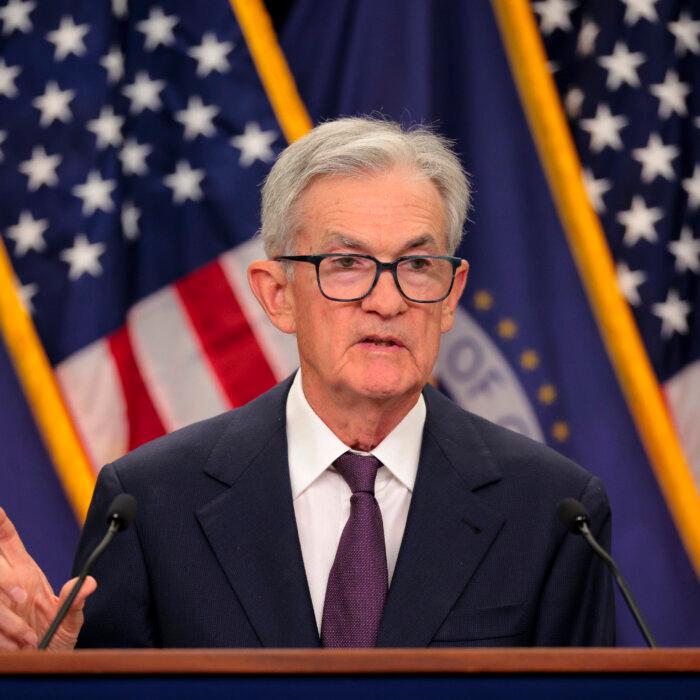
Federal Reserve Chair Jerome Powell described the state of the U.S. labor market as a “low firing, low hiring” climate.Speaking to reporters at the post-meeting press conference on Sept. 17, Powell reiterated that employment conditions are in a “curious balance,” pointing to the simultaneous drop in labor supply and demand.
“Typically, when we say things are in balance, that sounds good,” Powell told reporters. “But in this case, the balance is because both supply and demand have come down quite sharply. We now see the unemployment rate edging up.”
“This is quite an unusual situation,” he noted.
“Our policy had been really skewed toward inflation for a long time,” Powell said. “Now we see that there’s downside risk, clearly, in the labor market, so we’re moving in the direction of more neutral policy.”
A neutral policy is one in which interest rates are neither restrictive nor accommodative.
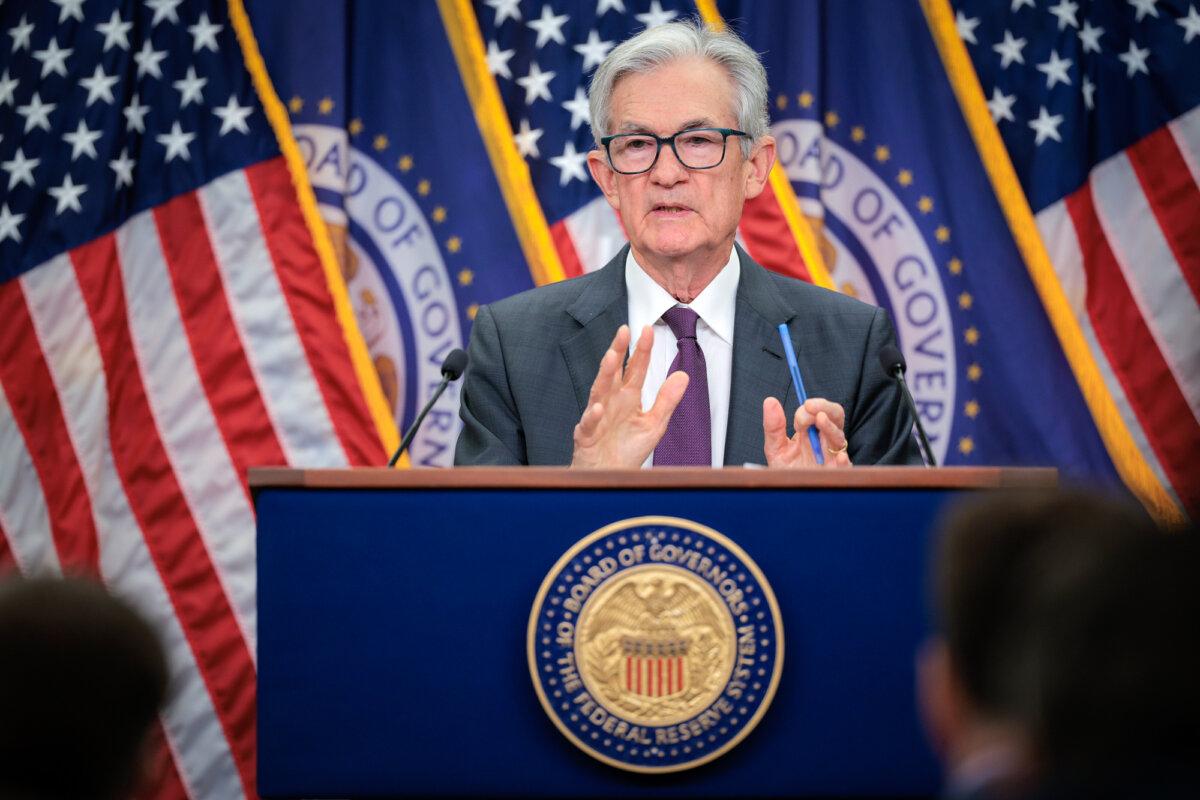
The Summary of Economic Projections—a periodic survey of policymakers’ expectations for monetary policy and the broader economic landscape—signaled a more conservative outlook for rates. Officials are forecasting two additional 25-basis-point rate cuts this year, as well as another reduction in 2026.
“Chairman Powell laid out a detailed and logical explanation for why the Fed is now focusing more on labor market weakness than they are on inflation, which should indicate that the Fed plans to do more than one rate cut this year,” Chris Zaccarelli, chief investment officer at Northlight Asset Management, said in a note emailed to The Epoch Times.
According to the central bank chief, the decline in the labor force is a result of lower immigration. The softness in labor demand, meanwhile, has been driven by companies waiting for the uncertainty to pass.
While Powell told reporters that tariffs are reviving price pressures, he stated that the data suggest they will likely lead to “a one-time price increase as opposed to creating an inflationary process.”