“That’s because President [Donald] Trump’s agenda has created tailwinds for small businesses that we haven’t seen in four years,” she said.
“Small businesses are more optimistic than they’ve been in seven years.
“So, what we’ve got going now are tax cuts, deregulation, fair trade. And we see that playing out across the economy with strong economic growth from [gross domestic product], rises in U.S. capital goods orders, inflation coming down to about half of where it was under the Biden administration. So, all of this has set us up for a great shopping season, which is forecast to surpass $1 trillion as we head into the Christmas season.”

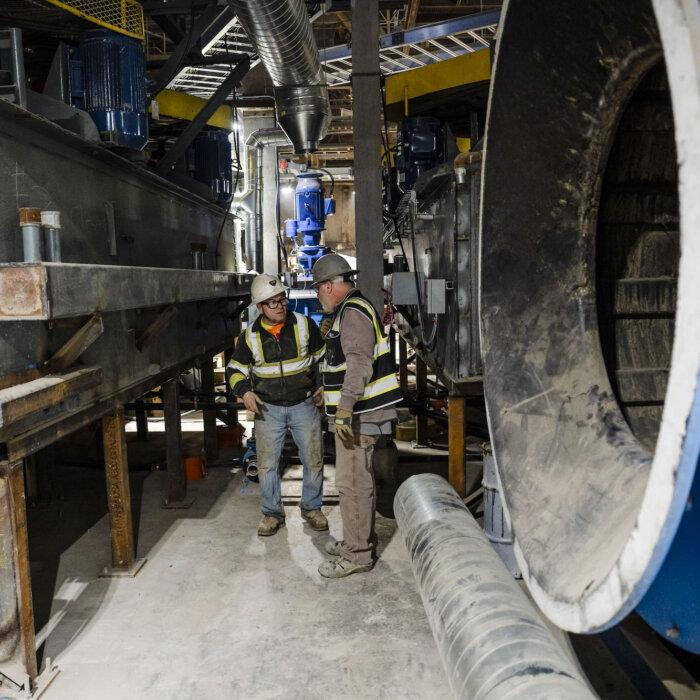
When asked about the impact of tariffs, Loeffler said small businesses, which account for 98 percent of all U.S. manufacturers, were left behind because of decades of unfair trade practices, stemming from bad political and economic policies.
“And President Trump is reversing that to empower U.S. producers, finally, put a level playing field to restore jobs in this country,” she said.
“Small businesses say the number-one concern they have now is a skilled workforce. It’s not tariffs. It was taxes and inflation. But thanks to this economic agenda, that’s getting reversed. And so now we’re really focused on [a] skilled workforce to build those made-in-America products that consumers want.”
The net percent of owners expecting better business conditions in the future fell by 3 points from September to its lowest level since April, according to the NFIB.
“Additionally, many firms are still navigating a labor shortage and want to hire but are having difficulty doing so,” Bill Dunkelberg, NFIB’s chief economist, said.
Economic Health, Tariff Issue
The U.S. Chamber of Commerce analysis found that in the third quarter, small businesses were more optimistic about their view of the overall U.S. economy and local economies than they were in the previous quarter.“Two in five (40 percent) small businesses believe that the U.S. economy is in good health, and 46 percent say the same of their local economy,” it stated.
“Also, fewer see a poor national economy: 42 percent of small businesses believe that the U.S. economy is in poor health (down five percentage points from this time last year).”
Meanwhile, the Trump administration’s tariff policies have been criticized by business groups.
Jay Timmons, the association’s CEO, said tariffs on critical manufacturing inputs would “significantly increase” the costs of installing machinery in factories, hampering investment in new plants.
“The challenge facing the United States today is that our domestic industry can produce at most 84 percent of the inputs manufacturers need to build, modernize, and operate our facilities and to increase production and output,” Timmons said.
“That means that, at an absolute minimum, 16 percent of critical manufacturing inputs must be imported to manufacture more here in the U.S.”
The Trump administration has promoted more investments in the small-business sector, which employs an estimated 46 percent of private-sector workers.
The SBIC supplements private equity capital and debt financing for small businesses to expand and modernize their operations.
In 2025, the program channeled $53 billion to small-business investments, up from $46 billion in the last fiscal year.
“With a record year for SBIC licenses, leverage, and activity, it’s clear that the private sector is responding to the Trump Administration’s historic tax cuts and deregulation to invest for the long term,” Loeffler said.