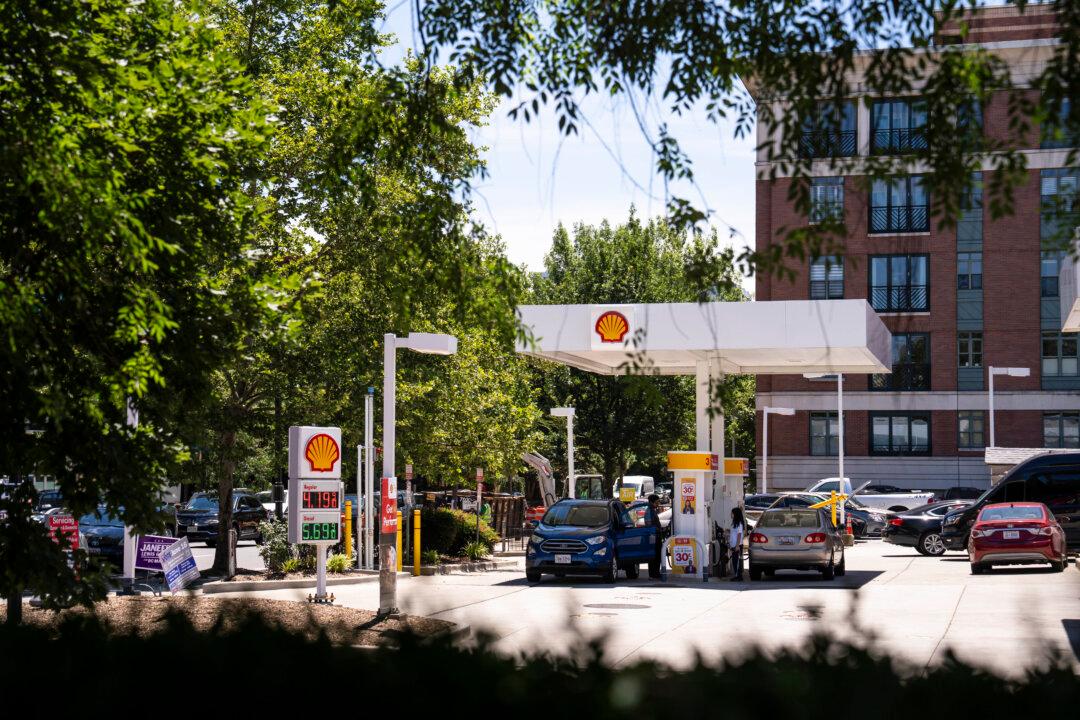
U.S. consumers opened their wallets at the start of the holiday shopping season as retail sales posted their best month since July.
This came in higher than the market forecast of 0.4 percent.
Retail sales also climbed by 3 percent year-over-year, higher than economists’ expectations of 2.7 percent.
Broad-based gains were driven by rebounding auto sales and robust holiday shopping, contributing to the better-than-expected reading.
Motor vehicle and parts sellers, home‑improvement and garden retailers, gas stations, sporting‑goods shops, and other miscellaneous stores all posted increases of more than 1 percent.
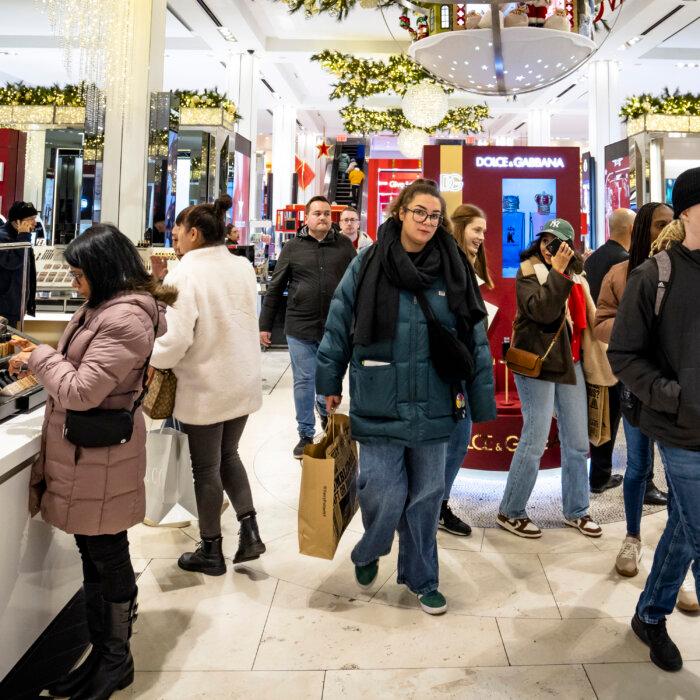

“November was a solid, but not spectacular, month for retailers,” Ted Rossman, senior industry analyst at Bankrate, said in a statement to The Epoch Times.
“We now have data for two-thirds of the holiday shopping season (since many people started in October), and year-over-year sales are outpacing inflation by about three-quarters of a percentage point. That’s pretty good, all things considered.”
Meanwhile, the retail sales control group—a key measure that excludes auto dealers, building materials stores, food services, and gas stations—advanced 0.4 percent, in line with forecasts, following a 0.6 percent gain in October.
This metric is used to calculate gross domestic product (GDP) because it largely tracks real personal consumption expenditures—the biggest component of U.S. GDP.
Despite the 43-day government shutdown, fourth-quarter growth prospects remain high.
Some economic observers are drawing comparisons to the 1990s, arguing that the United States is witnessing productivity-driven growth.
“I have drawn the analogy to the 90s for years, and it looks like we are seeing the same kind of productivity-driven growth. Though I believe this one is deeper and likely more sustainable,” Nancy Tengler, CEO and CIO of Laffer Tengler Investments, said in a note emailed to The Epoch Times.
Unit labor costs declined 1.9 percent but were up from the second quarter drop of 2.9 percent.
Affordability and Inflation
Affordability has become a dominant theme in the consumer landscape—and a political wedge in Washington politics.While the first quarter typically sees a slowdown in consumer spending after the holiday season, Rossman expects it to be more pronounced this year.
“I suspect the pullback could be stronger than usual for many households this year, due to these affordability concerns, although higher-income households should continue to power the economy forward,” he said.
But new inflation data this week suggests that price pressures could be stabilizing.
Export and import prices will be released on Jan. 15, and forecasts suggest little change in the November numbers.
Eric Clark, CIO at Accuvest, says inflation will likely continue edging lower.
“We’re expecting inflation to trend a bit lower over the next two to four months,” Clark said in a note emailed to The Epoch Times. “After that, it should stabilize, and it could become more volatile. However, for now, the stage is set for continued disinflation over the next couple of months.”
Despite optimism and improving data, consumers’ inflation views remain elevated.