The Trump administration has proposed imposing tariffs of up to 12.5 percent on imports from dozens of trading partners over concerns that they failed to enforce import bans on goods made with forced labor.
The Office of the U.S. Trade Representative (USTR) said on June 2 that it had finalized its months-long investigations into 60 trade partners to determine whether their trade practices allow products made with forced labor to enter U.S. markets.
In a June 2 statement, Greer said that none of the 60 U.S. trade partners investigated had effectively enforced a ban on the import of goods produced with forced labor. Among the 60 economies investigated were Australia, China, Canada, India, Israel, Mexico, Japan, the European Union, Russia, South Korea, and Vietnam.
Under the proposal, 16 economies—such as Canada, Mexico, the United Kingdom, and the European Union—would face 10 percent tariffs for allegedly failing to institute forced-labor restrictions. Others—including China, India, and Japan—would face a 12.5 percent tariff.
“The failure of our most important trading partners to address the importation of goods made with forced labor is unacceptable,” he said. “This creates a dynamic where American workers are forced to compete globally on an unlevel playing field.”
In its report, the USTR wrote that the “failure of each of the investigated economies to impose and effectively enforce a forced labor import prohibition” was found to be “unreasonable.”
These U.S. trade partners undermine the “universal aim of eliminating forced labor,” the trade office wrote, and unfairly distort market conditions in favor of companies that use forced labor while undermining the profitability of companies that do the right thing.
Such actions also contribute to the “circumvention of existing forced labor import prohibitions,” the report read.
“We will no longer tolerate this disparity. Some trading partners have taken initial steps to prevent the importation of forced labor goods, including through USMCA and commitments in Agreements on Reciprocal Trade,” Greer said. “However, each of our trading partners must do more to ensure that trade does not perversely encourage and entrench forced labor globally.”
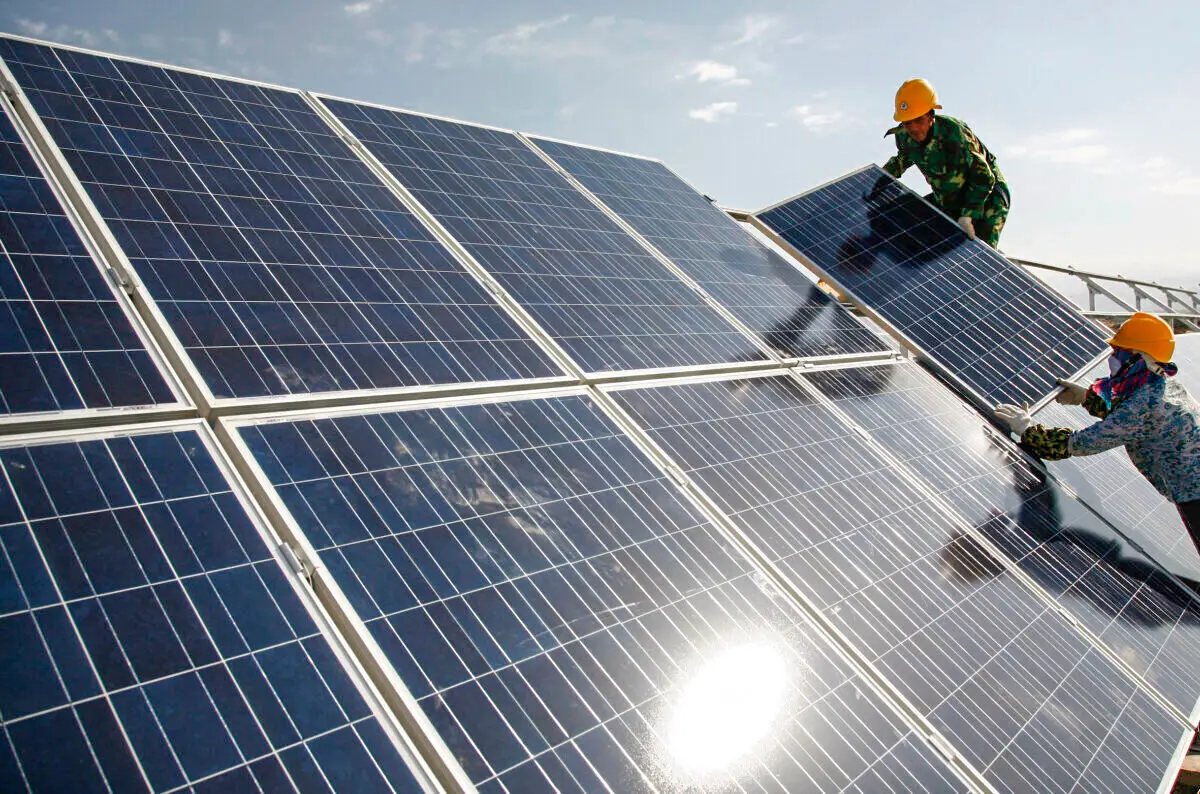
As examples of markets believed to be at high risk of distortion from exploitation of forced labor, the report listed China’s polysilicon production for the solar panel supply chain; China-made cotton exported to Bangladesh, Hong Kong, Japan, the Philippines, and Vietnam; rice production in Burma; tobacco from Malawi; and beef from Brazil.
Of these trade partners, the USTR noted in a Federal Register notice that six—Canada, Ecuador, the European Union, Indonesia, Mexico, and Pakistan—have laws that ban the import of goods produced with forced labor.
The office also acknowledged commitments in reciprocal trade agreements with the United States by nine partners to ban forced labor imports—Ecuador and Indonesia again, as well as Argentina, Bangladesh, Cambodia, El Salvador, Guatemala, Malaysia, and Taiwan—as well as the United Kingdom for its “partial regime” that prevents the import of certain forced labor goods.
While these 14 partners lead others in imposing bans, they join the 46 other trade partners who have yet to impose protective mechanisms against the indirect support of forced labor by failing to enforce a prohibition on the import of goods produced with forced labor.
As a result, the USTR said it has proposed an additional 10 percent tariff on the 14 U.S. trade partners that have failed to enforce their bans, and a higher additional 12.5 percent tariff on the remaining trade partners that have failed to both impose and enforce such a ban.
Exemptions were listed for all trade already subject to Section 232 tariffs and for raw materials needed to ensure domestic supply or to avoid economic disruption. Textiles imports will also be partially exempt, with the volume reciprocal to U.S. textile imports by the trade partner to receive a reduced Section 301 tariff rate.
The Supreme Court ruled in February that the tariffs imposed by Trump on U.S. trading partners under the International Emergency Economic Powers Act were unlawful.
The trade office in its June 2 report noted “there is universal international consensus regarding the necessity of eliminating all forms of forced labor,” citing the United Nations’ Universal Declaration of Human Rights (1948), which states that “no one shall be held in slavery or servitude; slavery and the slave trade shall be prohibited in all their forms.”
The United States has prohibited the importation of goods made with forced labor for “nearly a century,” the office said in a post on X. “It is time for our trading partners to follow suit.”
The USTR will hold hearings about its proposed tariffs on July 7. Public comments on the proposals will be accepted until July 6, and requests to appear at the hearing will be accepted until June 22.