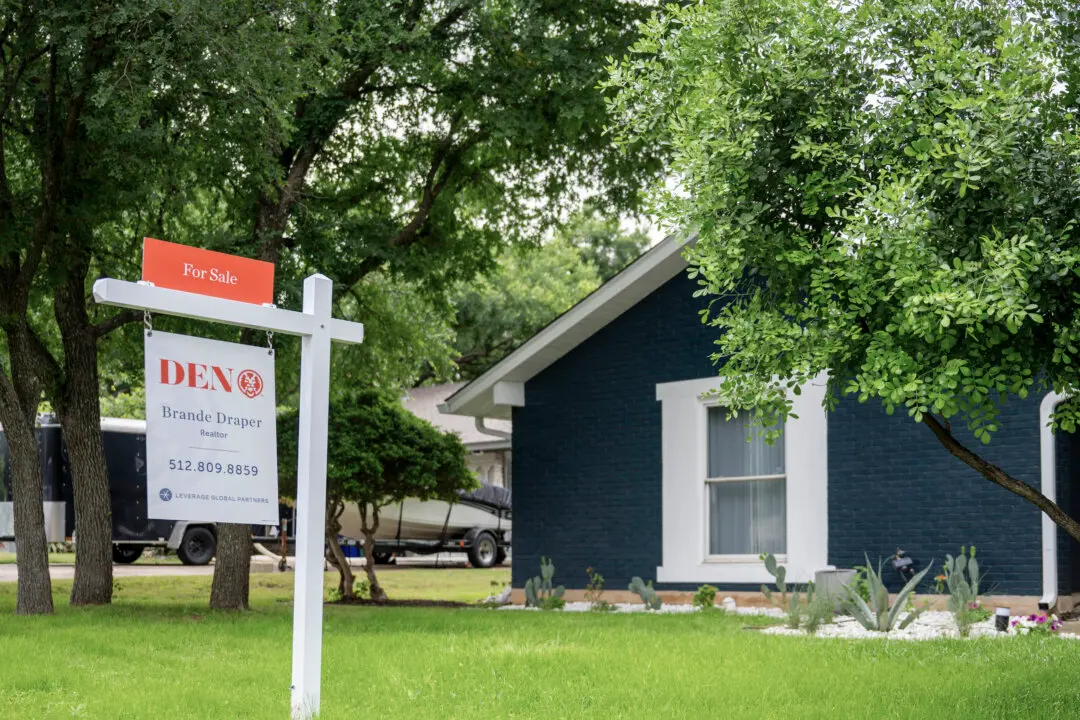
National housing prices rose by 1.5 percent year over year in August, the smallest annual increase since 2023 and short of market expectations for a 1.9 percent gain, a new report from S&P Dow Jones Indices shows.
Nicholas Godec, head of fixed income tradables and commodities at S&P Dow Jones Indices, said that “for the fourth straight month, home values have lost ground to inflation, meaning homeowners are seeing their real wealth decline even as nominal prices inch higher.”
The 20-city composite, covering the largest metropolitan areas across the country, rose by 1.6 percent year over year, with New York City leading at 6.1 percent. Chicago came in second with a 5.9 percent increase, and Cleveland was third at 4.7 percent.
Conversely, Tampa, Florida, recorded a 3.3 percent year-over-year drop, followed by Phoenix and Miami—both experiencing 1.7 percent declines.
Prices fell 1.5 percent in San Francisco, while Denver and San Diego saw declines of 0.7 percent. Seattle reported the smallest drop, at 0.1 percent.
The report also found that 19 of 20 cities experienced price declines before seasonal adjustment, with only Chicago seeing a gain. After seasonal adjustment, all three indices—the 20-city composite, the 10-city composite, and the national index—remained negative.
“Mortgage rates remaining above 6.5 percent continue to weigh on buyer demand, even during what should be the busy summer season,” Godec said. “The combination of high financing costs and prices that remain near record highs has limited transaction activity.”
According to Godec, the rapid price appreciation of the past few years is coming to an end, and these adjustments could lead to a more stabilized market. While some homeowners may be facing a decline in their equity, new homebuyers are still faced with elevated prices and higher loan rates.
The report concluded that markets with more affordable metropolitan areas and stable economies fared better.
Akron’s cost of living was rated 17 percent below the national average, with a median home price of $83,500 and a median monthly rent of $795.
Buffalo, New York, ranked second, with a median home price of $101,000 and a median monthly rent of $801, putting the city’s cost of living 18 percent below the national average.
Des Moines, Iowa, ranked third, with a median home price of $141,300 and a median rent of $881. Residents had a cost of living about 14 percent below the national average.
Fort Wayne, Indiana, and Green Bay, Wisconsin, completed the top five of the country’s most affordable cities.