President Donald Trump will decide whether to extend the U.S.–China tariff truce after trade talks conclude in Stockholm.
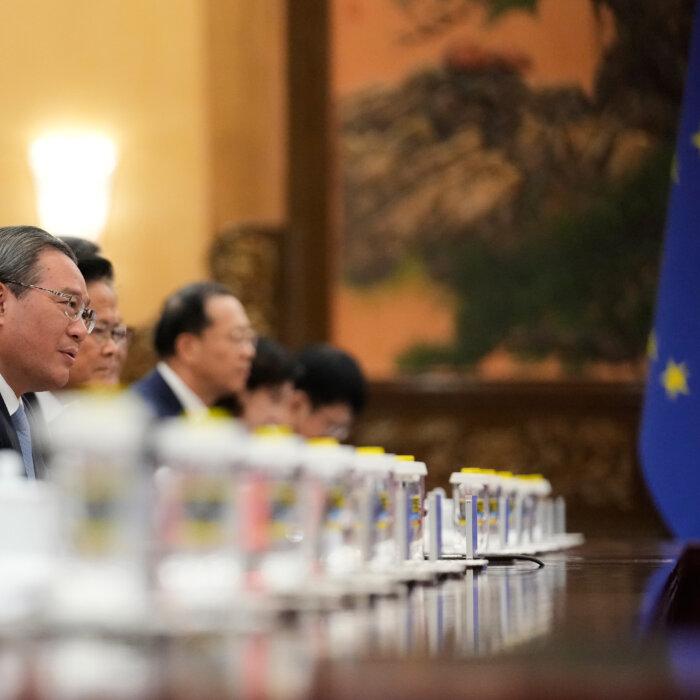
U.S. and Chinese officials wrapped up two days of talks in Stockholm on July 29, with the two largest economies seeking to deescalate trade tensions.
China’s top trade negotiator, Li Chenggang, told reporters that the two sides agreed to extend the tariff pause beyond the Aug. 12 deadline following “comprehensive and in-depth” discussions. But he stopped short of confirming whether Washington and Beijing agreed to a timeline.
The U.S. tariff rate on Chinese goods will remain at 30 percent, and China will continue applying a 10 percent levy on U.S. products.
The current pause followed meetings between U.S. officials and their Chinese counterparts in Geneva and London.
But U.S. officials disputed the Chinese official’s statement, saying that no extension was agreed upon.
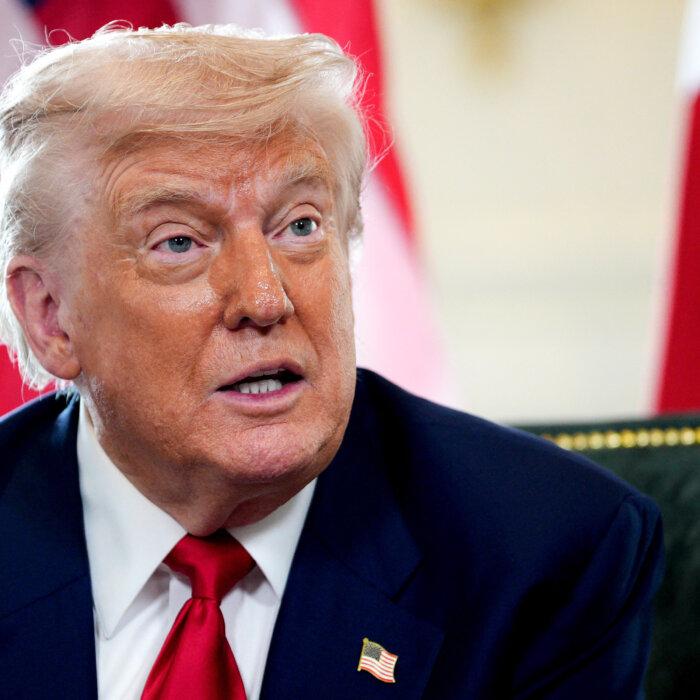
At a post-meeting press conference, Treasury Secretary Scott Bessent told reporters that it will be up to the president to decide whether to extend the tariff pause.
Bessent and Trade Representative Jamieson Greer floated the idea of another 90-day extension for the president to consider.
Overall, said Bessent, it was a “very constructive” meeting as both sides discussed a wide range of issues, such as the economy, concerns over global overcapacity, and Iran sanctions, in an in-depth manner.
“Here you have the two largest economies in negotiation, and as I’ve said before and we reiterated to them, we don’t want to decouple,” Bessent said. “We just need to de-risk with certain strategic industries.”
Trump will always have the “final say” on all trade agreements, according to Bessent.
Speaking to reporters aboard Air Force One, Trump said that he will be briefed on July 30 and then make a decision.
“We'll either approve it or not,” he said. “But [Bessent] felt very good about the meeting—better than he felt yesterday.”
The latest round of talks may open up the possibility of a face-to-face meeting between Trump and Chinese leader Xi Jinping.
But Trump said on social media he was not pursuing a “summit” with Xi, but might visit China if invited.
“I may go to China, but it would only be at the invitation of President Xi, which has been extended. Otherwise, no interest!” Trump said in a July 29 post on Truth Social.
He later said to reporters that he will “probably” meet Xi before the year’s end.
Looking to Aug. 1 and Beyond
All eyes will be on the Aug. 1 deadline, and Commerce Secretary Howard Lutnick reaffirmed that it will not be postponed.In a July 29 interview with CNBC’s “Squawk Box,” Lutnick stated that after the upcoming deadline, the United States will impose reciprocal tariffs on dozens of countries.
“Aug. 1 is the date that we’re setting all these rates, and they are off to the races after that,” Lutnick said.
He also noted that Trump had turned down multiple trade proposals to pursue better terms for the United States.
“What’s happened is many, many countries had made us OK offers to open their markets—you know, 50 percent, 30 percent,” Lutnick stated. “The president said, ‘No, no, I want them open.’
“So now the price of a deal with the United States of America is black and white—completely open markets. He wants to make sure that Americans can sell their goods overseas.”
While Trump said that he is considering a global baseline tariff rate of 15 to 20 percent, other markets could face higher import duties.
The president told reporters that India could face levies of up to 25 percent.
As for China, Lutnick suggested that U.S. negotiators are operating on a different timeline.
“We have our own team working with China. They’re their own thing,” he said.