The rates laid out in the executive order range from 10 percent to as high as 41 percent, depending on whether a nation has reached an agreement with the U.S. and the nature of that agreement.
“Some trading partners have agreed to, or are on the verge of agreeing to, meaningful trade and security commitments with the United States, thus signaling their sincere intentions to permanently remedy … trade barriers … and to align with the United States on economic and national security matters,” Trump said in the executive order.
“Other trading partners, despite having engaged in negotiations, have offered terms that, in my judgment, do not sufficiently address imbalances in our trading relationship or have failed to align sufficiently with the United States on economic and national-security matters,” the executive order reads. It said others failed to engage in negotiations at all.
Many countries will see a tariff rate between 10 and 15 percent on their goods, depending on whether the United States has a trade deficit or surplus with that nation.
A trade surplus means that the U.S. exports more goods to a nation than that nation sells to the United States. When a country’s exports to the U.S. exceed the value of U.S. exports to that country, it’s a trade deficit for the United States, resulting in a net outflow of cash.
Minimizing trade deficits has been a key pillar of Trump’s trade policy.
In line with that, Trump’s plan would impose a 10 percent tariff on countries with which the U.S. enjoys a trade surplus. Nations with which the U.S. has a trade deficit will see a baseline 15 percent rate.
Several of the largest U.S. trading partners are included in the executive order.
Based on the trade deals they struck with the United States, the European Union, South Korea, and Japan will see a 15 percent rate.
The United Kingdom will see a 10 percent tariff.
Many other countries will have their goods taxed at a higher than 15 percent rate, including those that haven’t reached an agreement or who agreed to such terms.
Some of the hardest hit countries are Syria, with a 41 percent reciprocal tariff rate, Laos, with a 40 percent rate, and Switzerland, with a 39 percent rate.
The largest U.S. trading partner, China, is subject to an extended deadline ending Aug. 12, as negotiations between the two largest economies are ongoing.
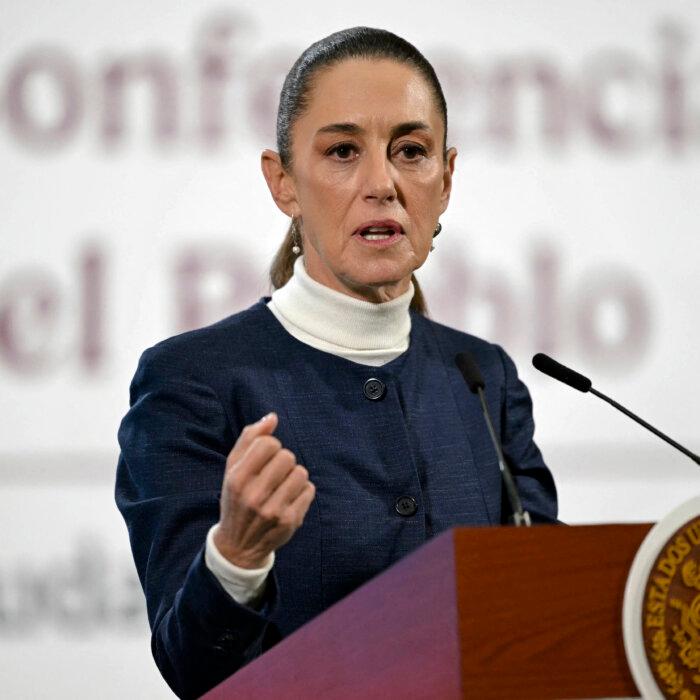
Mexico, another major trading partner, will be subject to 25 percent tariffs for a 90-day window while negotiations are ongoing, down from the 30 percent Trump had previously threatened.