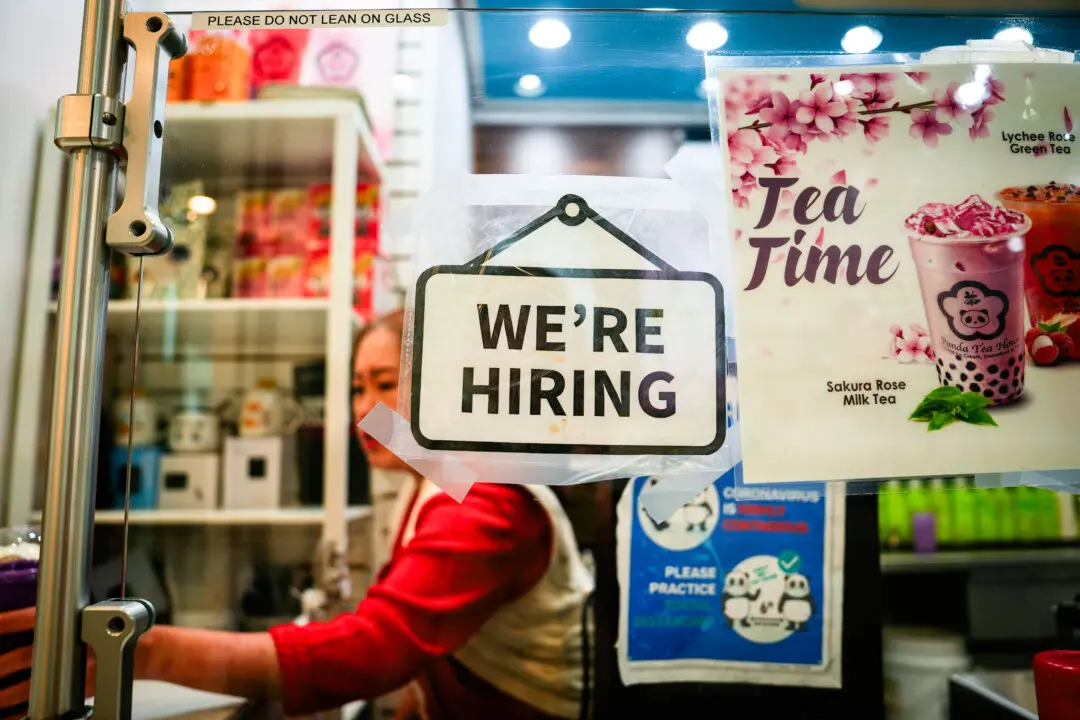
The nation received a summer update this week on America’s inflation situation.
The conclusion among a chorus of economists and market watchers is that President Donald Trump’s sweeping global tariffs have yet to have a material impact on inflation levels, but price pressures may be starting to build across the U.S. marketplace and become apparent in the coming months.
Whether the current administration’s trade agenda will lead to one-time price adjustments or persistent inflation will be the chief debate for the next several months.
Examining Tariff Inflation Data
Federal Reserve Chair Jerome Powell, appearing before Congress for his semiannual monetary policy report in June, said any tariff-related effects on inflation should begin to be reflected in the hard data for July and August.The headline annual inflation rate suggested some reprieve for anxious shoppers, holding steady at 2.7 percent for the second consecutive month and coming in below economists’ expectations. On a monthly basis, the CPI rose by 0.3 percent, in line with market forecasts.
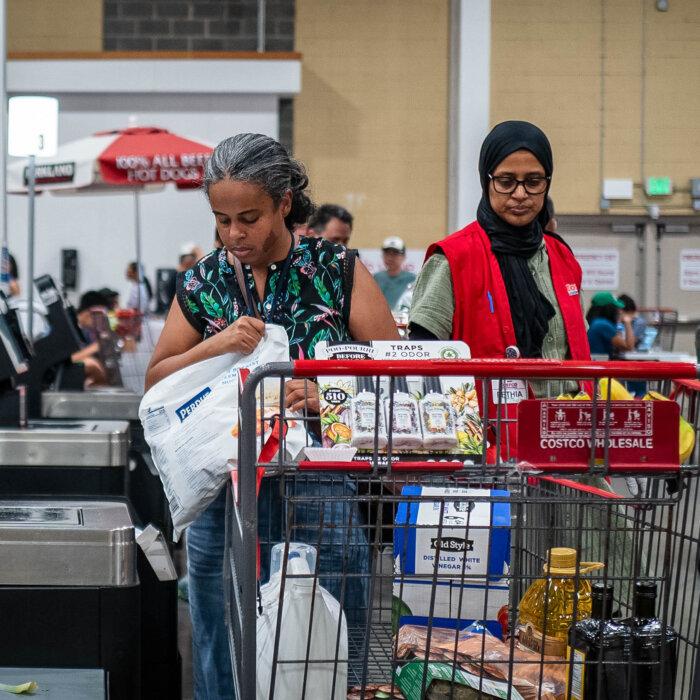

Core inflation, which removes noisy signals like volatile energy and food prices, was a cause for concern among market watchers. Core CPI advanced to a higher-than-expected 3.1 percent year-over-year, up from 2.9 percent in June, and reached a five-month high. The core inflation rate jumped by 0.3 percent from June to July.
Following notable broad-based gains in June, tariff-sensitive items were little changed last month.
Canned fruits and vegetables, which are mostly imported from South Korea, Vietnam, and China, were flat.
The index for appliances declined by 0.9 percent, down from the 1.9 percent increase in the previous month. Within the category, major appliances decreased by 2.2 percent, laundry equipment fell by 1.8 percent, and “other” appliances decreased by 0.4 percent.
Estimates indicate that approximately 95 percent of clothing sold in the United States is imported from Bangladesh, China, India, and Vietnam, primarily because of lower labor costs and established international supply chains. Despite a heavy reliance on foreign markets for clothing, apparel prices edged up at a tepid pace of 0.2 percent, but many items in the index registered a month-over-month decline.
For example, men’s and women’s apparel declined by 1.3 percent and 0.3 percent, respectively. Boys’ apparel slipped by 0.6 percent while girls’ apparel rose by 0.3 percent. Footwear surged by 1.4 percent.
- Commuters travel in Los Angeles on April 11, 2025. (John Fredricks/The Epoch Times)
On the tech side, televisions rose by 0.5 percent following a 0.1 percent dip in the previous month. On a 12-month basis, prices for televisions have declined by 9 percent.
Smartphones—manufactured mainly in China, India, and Vietnam—have experienced a substantial decline in prices over the past 12 months, with a decrease of almost 15 percent. In July, smartphone prices remained unchanged for the second consecutive month.
While consumer prices have been tame this year, the latest CPI figures “could be the calm before the storm,” according to Greg McBride, chief financial analyst at Bankrate.
“This CPI measures inflation in July, but a slew of tariffs are taking effect this month,” McBride said in a statement to The Epoch Times. “It may take a few months before those costs make their way fully to the consumer, but inflation is poised to pick up further in the remainder of 2025.”
Pipeline Inflation Indicators
In addition to the CPI, the figures for the July producer price index (PPI) and trade prices were released, coming in far hotter than anticipated.On a year-over-year basis, producer prices and core PPI advanced to 3.3 percent and 3.7 percent, respectively.
But while the initial expectation was that goods caused the spike in producer inflation, it was the services component that resulted in a worse-than-expected reading.
Final demand prices for services swelled by 1.1 percent, compared to the 0.7 percent jump in prices for final demand goods.
The bureau stated that this increase can be traced to equipment selling, which surged by 3.8 percent. Financial services, automobile retailing, and freight truck transportation contributed to the high number.
Still, price inflation appeared in producer goods.
Wholesale food prices, for instance, increased by 1.4 percent, with prices for dried vegetables soaring by 38 percent. Energy also increased by 0.9 percent, driven by a nearly 15 percent surge in home heating oil and distillates and a nearly 12 percent rise in diesel.
Bill Adams, chief economist at Comerica Bank, noted that various business surveys had indicated input price pressures earlier in the year. These costs are now showing up in government statistics, he said.
“With PPI up much more than CPI in July, tariff costs look to be working their way through the value chain,” Adams said in a note emailed to The Epoch Times. “Consumer prices are expected to rise faster through the turn of the year as a result.”
Prices at America’s ports also rose last month.
Services Versus Goods
It might seem counterintuitive in today’s economic climate of high tariffs, but core services inflation is outpacing core goods price pressures.Last month, core services rose by 0.4 percent in the CPI report, partly fueled by a 4 percent surge in airfares and a 1 percent increase in motor vehicle maintenance and repairs.
Economists and monetary policymakers believe that services inflation typically carries more weight than goods inflation. Several factors support this idea.
First, prices for services are less volatile and change more slowly. When they rise, they tend to remain elevated.
Second, the services sector is less sensitive to interest rates. If the Federal Reserve is raising or cutting interest rates, consumers, for example, will continue to get haircuts or pay their rent.
What It Means for the Fed
The Federal Reserve System maintains a congressionally approved dual mandate of maximum employment and price stability.One of the reasons the U.S. central bank has left the benchmark federal funds rate unchanged since January is that the economy remains intact and employment conditions are solid. This economic climate allows monetary policymakers to wait and determine how much tariffs will influence price inflation.
But two officials—Fed Gov. Christopher Waller and Fed Vice Chair for Supervision Michelle Bowman—believe that the institution needs to lower interest rates to prevent a further deterioration of the U.S. labor market.
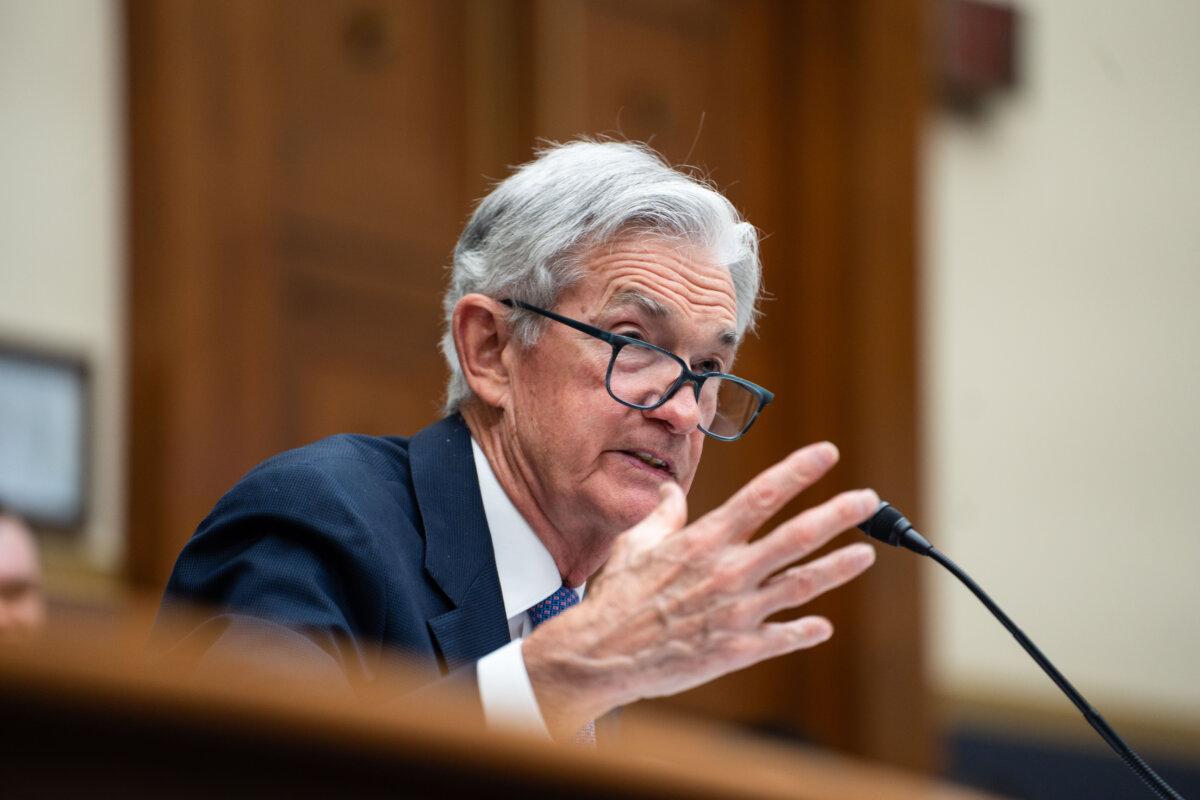
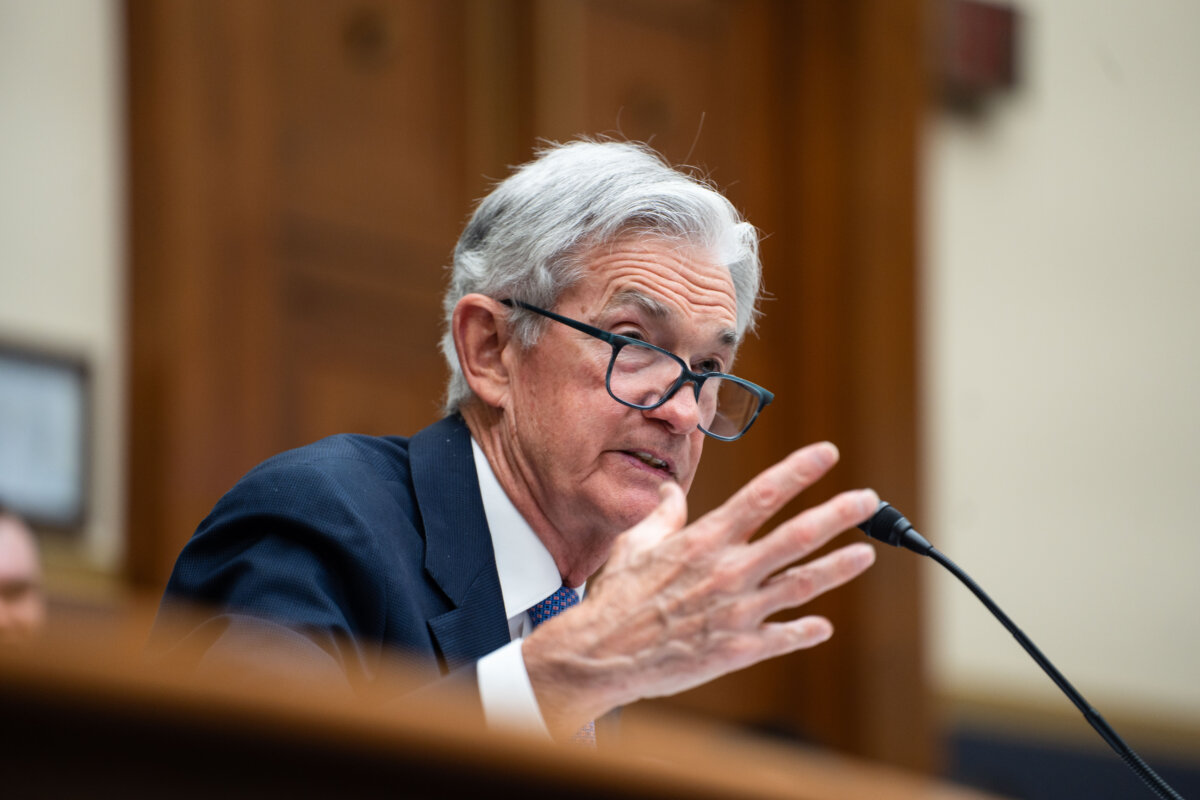
- Federal Reserve Chair Jerome Powell testifies before the House Committee on Financial Services on Capitol Hill on June 24, 2025. (Madalina Kilroy/The Epoch Times)
“We will be closely monitoring the final bearer of those costs to determine how much margin compression companies allow and how much of those additional costs are passed along to consumers.”
But the Fed might have what it needs—softening labor conditions and modest inflation surprises—to pull the trigger on the first rate cut of 2025, according to Buchbinder.
Prior to the September policy meeting, the Fed will have another set of inflation reports and the August jobs data.
“I do think we’re going to be in the business of trying to figure out which part of the price increases are we ignoring ... and which ones are we responding to,” Goolsbee said.
“I still think underneath all of this, we’ve been in a strong position on the economy going into April, and there is still a lot of strength in the economy.”
The Fed will hold its next two-day policy meeting Sept. 16 and 17.