Last week’s big news concerned inflation, with a deflationary Producer Price Index (PPI) and a slightly inflationary Consumer Price Index (CPI) revealing two different views. Last Wednesday’s deflationary PPI stems from the products imported from China, due to the deflation there, while the CPI’s shelter costs (owners’ equivalent rent) remained stubbornly high in August at +0.4% (a 5% annual rate). At the same time, lower crude oil prices helped depress both wholesale and consumer price inflation, and last Monday, OPEC+ agreed to boost crude oil production to 137,000 barrels a day in October, depressing prices more.
The Federal Open Market Committee (FOMC) is currently meeting in Washington DC, and they may finally be ready to announce their first key interest rate cut since late last year (September to December).
Here are the most important developments recently and what they mean:
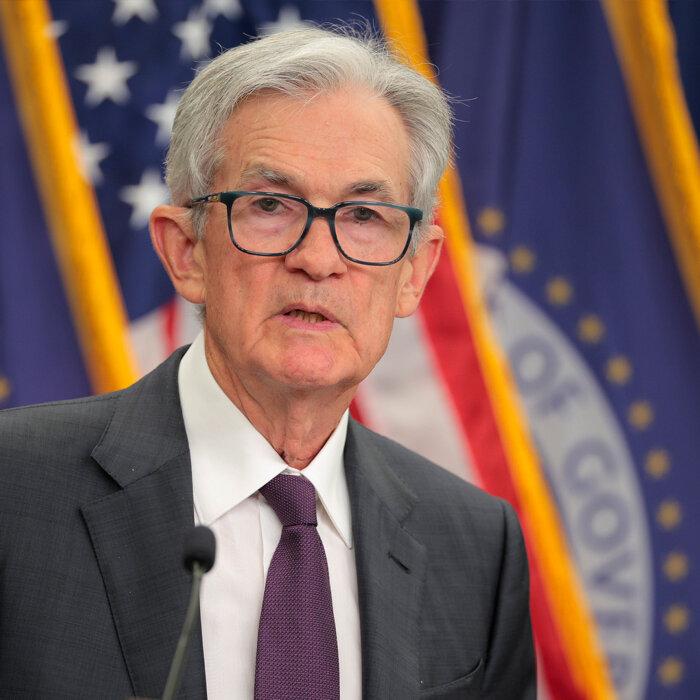
- The Federal Open Market Committee (FOMC) statement and updated “dot plot” will dominate financial markets this week. Interestingly, President Trump has also been saying that he expects a “big cut” from the Fed on Wednesday. Specifically, Trump said, “I think you have a big cut” and “It’s perfect for cutting.” In other words, if the FOMC only cuts 0.25% versus 0.5%, President Trump is expected to continue to bash Fed Chairman Jerome Powell.
- President Trump on Truth Social called for companies to start announcing their sales and earnings every six months, versus quarterly announcements currently. Specifically, Trump said, “Subject to SEC Approval, Companies and Corporations should no longer be ‘Required’ to report on a quarterly basis … but rather on a Six (6) Month Basis.” I suspect that the push to switch to bi-annual versus quarterly accounting will get some pushback, since it was entirely unexpected.
- President Trump is scheduled to talk to Chinese President Xi on Friday, where they are expected to announce a TikTok deal. On Truth Social, President Trump said, “The big Trade Meeting in Europe between The United States of America, and China, has gone VERY WELL! It will be concluding shortly. A deal was also reached on a ‘certain’ company that young people in our Country very much wanted to save. They will be very happy!”
- In the meantime, China announced that a preliminary investigation found Nvidia violated the country’s antimonopoly law in connection with the acquisition of Mellanox Technologies, an Israeli company that it acquired in 2020. China’s antitrust regulator said the investigation was continuing, and it didn’t elaborate on the alleged violations or say whether it would punish Nvidia. I suspect that China needs leverage on President Trump and that this Nvidia investigation is just part of that leverage. In the meantime, any pullback in Nvidia is a great buying opportunity.
- The lack of investment in China is one reason that deflation has been widespread since May 2022. China’s National Bureau of Statistics announced that August retail sales rose at a 3.4% annual pace, which was below economists’ consensus forecast of a 3.9% annual increase. The National Bureau of Statistics also announced that industrial output grew at a 5.2% annual pace in August, which was also below economists’ consensus estimate of a 5.7% annual pace. The pace of retail sales in China has steadily declined in the past three months, while the pace of industrial output has declined for two consecutive months. Fixed asset investment, or what we refer to as capital expenditures, has collapsed in China, but the worst sign is that property investment has been negative for years and declined at a 10% annual pace through August.
In summary, the Federal Reserve is in a conundrum because it should have cut in June. However, a rate cut should be forthcoming. Due to labor market concerns, the Fed is expected to cut key interest rates 0.25% on September 17th. I am also hoping that the deflation we are importing from China will soon show up in the wholesale goods prices and that shelter costs (owners’ equivalent rent) will help the CPI fall within the Fed’s inflation target. Lower crude oil prices should also help to lower both wholesale and consumer inflation.