Tesla shares closed up by more than 8 percent on June 23 after the electric vehicle pioneer launched its highly anticipated driverless taxi service for a select group of riders.
According to the company’s X feed and website, Tesla officially launched the Robotaxi platform to a limited group of people in Austin, Texas, on June 22. Over the past 24 hours, the company’s feed on X has showcased several taxi passengers and influencers sharing videos of their first rides in the self-driving Tesla taxi service.
Elon Musk’s X feed on June 22 also included dozens of reposts and comments about the new Robotaxi service, including one remark saying, “Culmination of a decade of hard work.” He also reposted several videos and wry comments about the autonomous taxi service’s safety and driving features.
In the video that has collected 16.2 million views, Meshabi highlights his second ride in the robotaxi service, commenting, “Super smooth. It is literally like riding in a Tesla. Hanging out and there’s no driver. Zero drama.”
Through the company’s invitation-only Tesla Robotaxi app, customers can request a ride and manage their trip experience on their smartphone or other online platform. During the ride, passengers can also enjoy different entertainment features, such as music streaming, by using the vehicle’s touchscreen or the Robotaxi app.
Additionally, Tesla is currently charging a flat rate of $4.20 per ride for the service. If customers want to leave a tip, they will see a page with Tesla’s hedgehog mascot saying, “Just Kidding.”
Despite the successful launch and Tesla’s rising stock prices, some commenters on X and Elon Musk critics remained unimpressed by the Robotaxi debut, noting that the service was originally supposed to be introduced to ride-share passengers in 2023. Additionally, others complained that the initial taxi rides were conducted in Tesla’s Model Y vehicles, which had steering wheels and a safety passenger.
In October 2024, Musk unveiled a more futuristic vehicle, the Cybercab, a car without a steering wheel or accelerator and brake pedals, specifically designed to carry passengers without a driver present. That Robotaxi version, he said, should be in production by 2026.
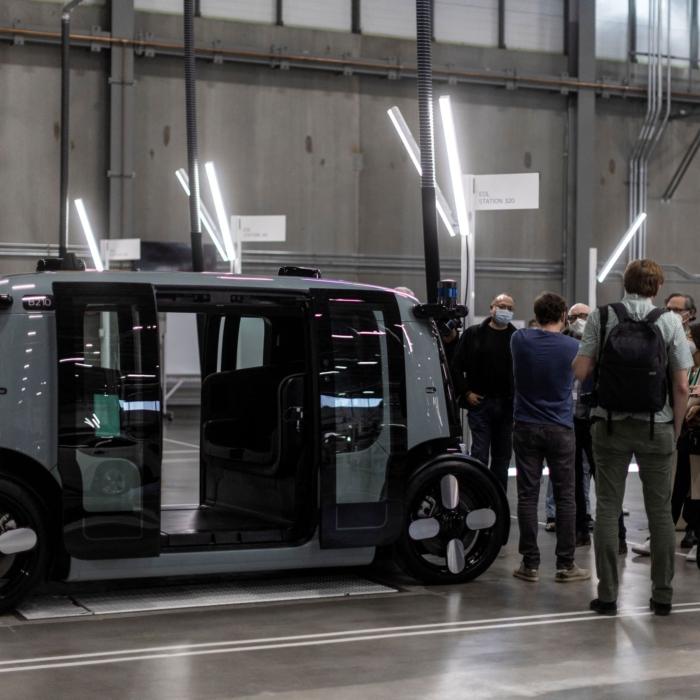
Additionally, Waymo, a competitor of Robotaxi, officially launched its robotaxi service in March. As a subsidiary of Google’s parent company, Alphabet, Waymo has now partnered with Uber in Austin. Furthermore, Amazon’s autonomous vehicle company, Zoox, announced last week that it has opened its first full-scale production facility in Hayward, California, where it plans to eventually produce 10,000 robotaxis annually. The new factory will build custom-built Zoox vehicles for key U.S. markets over the next few years.
Tesla shares increased by 8.23 percent to close at $348.68 on June 23. During the early morning session, the stock jumped more than 10 percent, reaching an intraday high of $357.43.