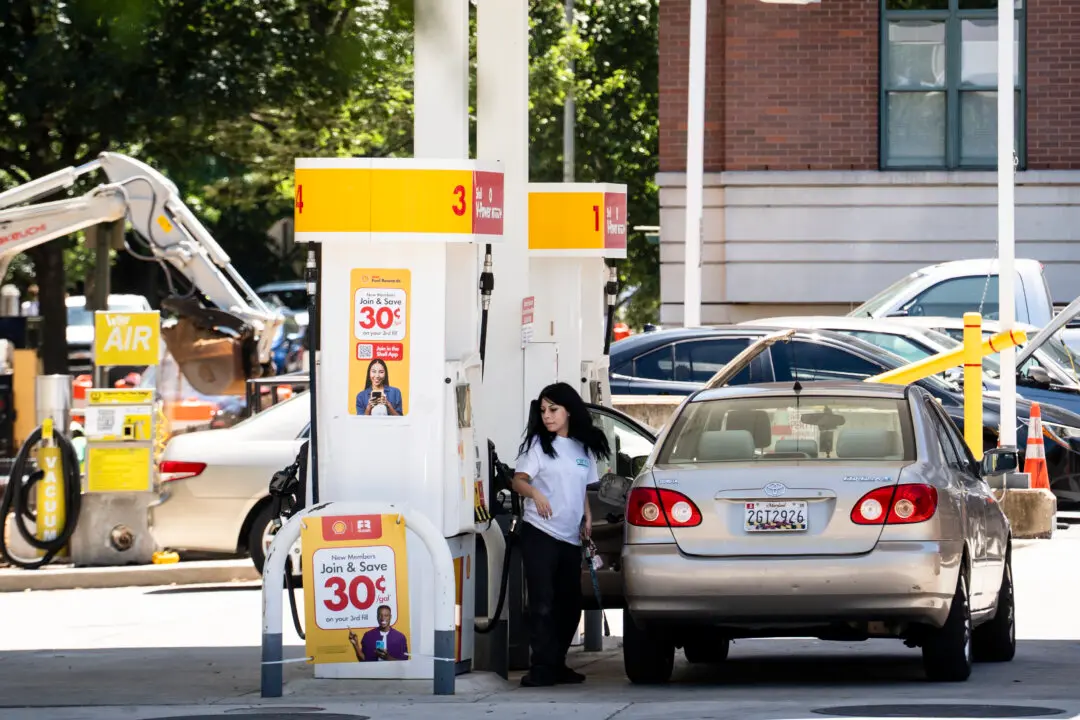
Crude oil prices have retreated since President Donald Trump delayed a decision on helping Israel destroy Iran’s nuclear program.
At a June 19 press briefing, White House press secretary Karoline Leavitt, reading a statement from the president, said a decision would be made within two weeks.
“Based on the fact that there is a substantial chance of negotiations that may or may not take place in the near future, I will make my decision of whether or not to go within the next two weeks,” Leavitt stated, quoting Trump.
Speaking to the media outside the White House, the president declined to provide details on his plans.
“I may do it. I may not do it. I mean, nobody knows what I’m going to do,” he said.
West Texas Intermediate crude oil, a U.S. benchmark, dipped about 0.2 percent to below $75 a barrel on the New York Mercantile Exchange during the June 20 trading session.


Brent crude, a global benchmark for oil prices, declined approximately 3 percent to below $77 per barrel on London’s ICE Futures exchange.
Still, U.S. and Brent crude are poised for a weekly gain of around 2 percent. They had been in negative territory for much of 2025, but had since turned positive and are up 2.5 percent this year.
Natural gas prices dropped by more than 3 percent to close the trading week at around $3.85 per million British thermal units. But they will record a weekly gain of nearly 7 percent.
“We continue to trade swing trades at daily levels, and hedge traders are anxious about potential supply disruptions that could lead to panic buying.”
In recent days, market watchers have presented various price forecasts.
Goldman Sachs estimates that an escalation in Israel–Iran hostilities could create a $10-a-barrel risk premium. Prices could top $90 if there is an Iranian supply disruption.
If the conflict in the Middle East eliminates 1.1 million barrels per day of crude exports from Tehran, oil prices could trade as much as 20 percent above pre-conflict levels, analysts at Citibank said in a note.
“Production elsewhere globally may have risen sufficiently to offset the disruption impact, particularly if the production disruption was expected,” Citi analysts stated.
The United States is producing close to 13.5 million barrels per day.
While the Organization of the Petroleum Exporting Countries (OPEC) announced it is increasing production, new data suggest output has fallen short of the cartel’s target.
‘Critical Chokepoint’: The Strait of Hormuz
The Strait of Hormuz, a narrow waterway situated between Iran and Oman, connects the Persian Gulf to the Arabian Sea and the Gulf of Oman, serving as a vital artery in global energy trade.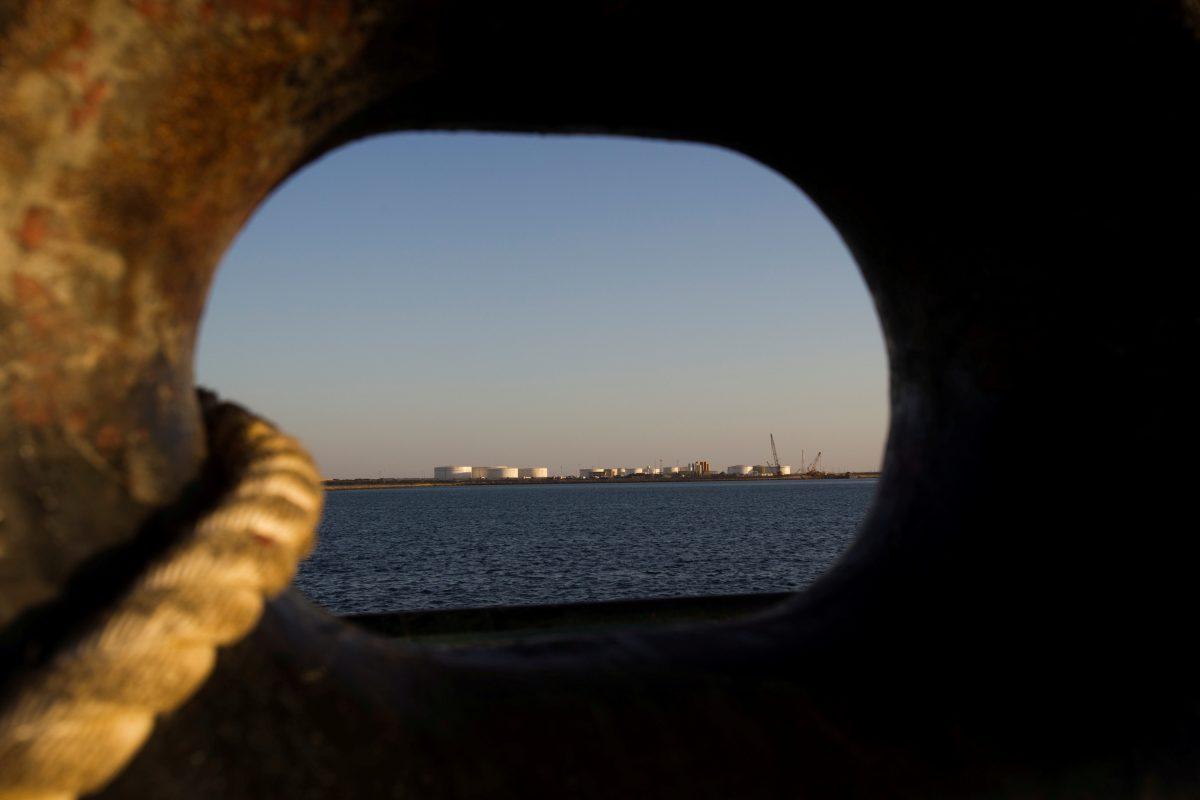
Described as a “critical chokepoint” by the Energy Information Administration (EIA), it processes immense volumes of crude oil and liquefied natural gas (LNG).
Iran produces approximately 3 million barrels of crude per day, and industry experts say other major oil producers in the region would quickly offset a production outage.
The worry, however, is that Tehran officials have threatened to block the strait, which would make it challenging to plug shortages and redirect supplies swiftly.
This prospect has sparked widespread concern throughout the global energy market.
“Any disruption from Iranian aggression would halt shipments with no viable alternate sea route, sharply tightening global gas markets,” Henry Hoffman, a co-portfolio manager of the Catalyst Energy Infrastructure Fund, said in a note emailed to The Epoch Times.
“Even a temporary shutdown, lasting weeks, would stall millions of tonnes of LNG, tighten markets, and spur sharp price shifts.”
A closure of the waterway would likely lead to a significant spike in prices in Asia and Europe, Hoffman notes.
Last year, more than 80 percent of the oil and LNG that traversed through the strait went to Asian markets, the EIA said.
China, India, Japan, and South Korea accounted for 69 percent of all crude oil flows moving through the Strait of Hormuz to Asia.
Since late 2022, most of Iran’s oil shipments have been directed to China, according to Goldman Sachs data.
Meanwhile, in Europe, the region relies heavily on energy imports to power the bloc nations.
“Most of Europe is still fundamentally dependent upon imported hydrocarbons, so that has a deeper impact upon their economy, and not in an ideal time,” Ben Jensen, a senior fellow for the Defense and Security Department at the Center for Strategic and International Studies, said at a June 20 NATO conference.
Alternative routes and pipeline infrastructure exist. However, according to the International Energy Agency (IEA), the alternatives are limited since “Iran relies exclusively on its Gulf terminals to export to markets outside the Caspian region.”
Simon Wong, an analyst at Gabelli Funds, said that Iran was unlikely to shutter the strait, “but it can disrupt traffic there.”
“If there’s any disruption in Iranian crude supply, I expect OPEC to unwind its cuts faster, which will cap the rise in crude prices. OPEC has 5 to 6 million barrels per day of spare capacity,” Wong said in a note emailed to The Epoch Times.
Disruptions—long or short—would likely prompt Asian and European markets to tap into their strategic reserves, according to ING commodity strategists.