Wall Street has registered a remarkable rebound from the April selloff as the Nasdaq Composite Index and S&P 500 reached a record high to close out the trading week.
The tech-heavy Nasdaq rose by about 105, or 0.52 percent, to above 20,273. The index is poised for a weekly gain of 4.25 percent and is up 5 percent this year.
The broader S&P 500 added 32 points, or about 0.5 percent, to 6,173. The index is also on track for a weekly boost of 3.44 percent, lifting its year-to-date increase to nearly 5 percent.
The blue-chip Dow Jones Industrial Average surged 432 points, or 1 percent, to 43,819. Although it has not yet returned to its all-time high, the Dow Jones has experienced an exceptional turnaround, rising by approximately 5 percent over the past three months. This year, the Dow is up 3 percent.
Yields on U.S. Treasury securities ticked up to finish the trading week. The benchmark 10-year Treasury yield picked up 2 basis points to firm above 4.27 percent.
West Texas Intermediate crude oil prices dipped 0.26 percent to $65.07 per barrel on the New York Mercantile Exchange. Natural gas soared by more than 6 percent to $3.74 per million British thermal units.
Precious metals were red across the board, with gold and silver prices falling by about 2 percent to $3,284 and $35.80 per ounce, respectively.
Cryptocurrencies also slumped. Bitcoin and Ether declined about 0.5 percent.
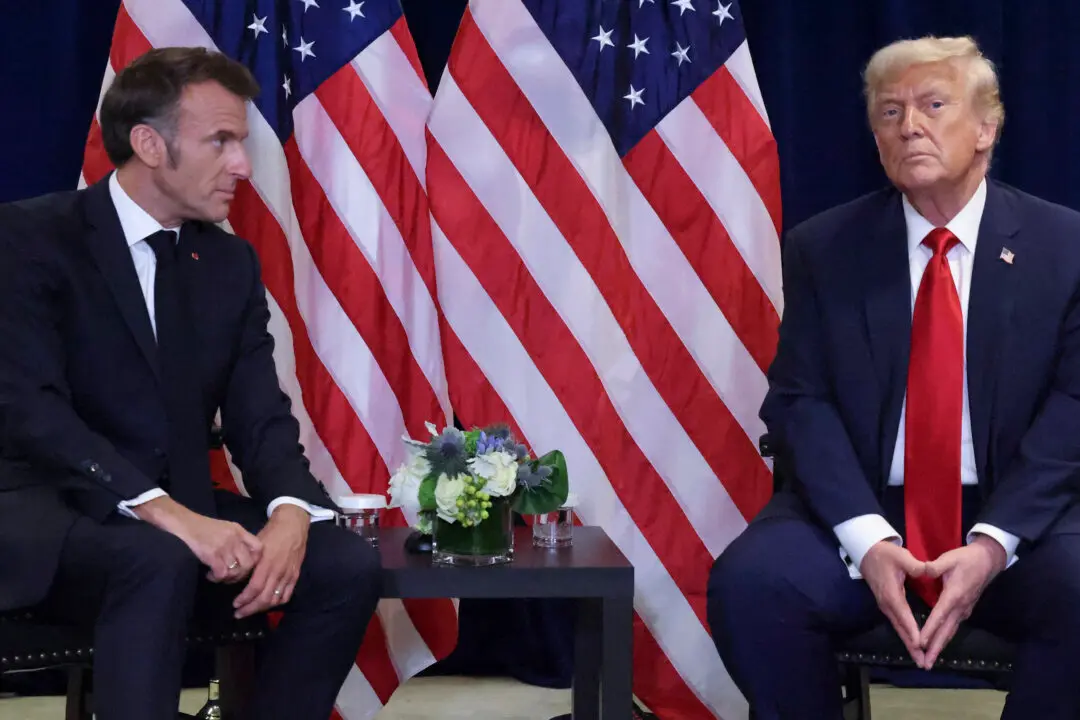
Investors cheered President Donald Trump and other White House officials’ revelation that a U.S.–China trade agreement had been finalized, and that the administration is expected to announce deals with 10 major trading partners.
“We’re going to do top 10 deals, put them in the right category, and then these other countries will fit behind,” Commerce Secretary Howard Lutnick said in an interview with Bloomberg Television on June 27.
Lutnick stopped short of specifying which countries are close to establishing trade agreements.
It has been a rollercoaster ride for the stock market over the past few months.
U.S. stocks had touched a new high in February on growing optimism about the new administration’s pro-business policies. However, the financial markets were inundated with red ink when the president began imposing levies on various products and announced sweeping global tariffs. Investors were worried that higher import duties would trigger a global recession and lead to rising inflation.
However, after Trump imposed a 90-day pause on reciprocal tariffs on dozens of U.S. trading partners and confirmed that the United States would begin negotiations for trade agreements, the leading benchmark indexes reversed their double-digit losses and staged a dramatic comeback.
The S&P 500, for example, is up by more than 20 percent since April 8, one day before the president hit the pause button on the implementation of steep tariff rates.
Financial markets shrugged off an uptick in the Federal Reserve’s preferred inflation measure.
Digesting the Data
Financial markets shrugged off an uptick in the Federal Reserve’s preferred inflation measure.The futures market added to its bet that the Fed will lower interest rates at the September policy meeting.
A chorus of monetary policymakers has signaled support for pulling the trigger on a quarter-point cut soon. Minneapolis Fed President Neel Kashkari advocated for a September cut, writing in a recent essay that the central bank could always pause reductions to the benchmark federal funds rate—a key policy rate that influences consumer, business, and government borrowing costs—if tariffs lift inflation.
“If we were to cut in September and then the effects of tariffs showed up this fall, I believe we should not be on a preset easing course,” he wrote on June 27. “If the data called for it, we could hold the policy rate at the new level until we gained greater confidence that inflation was headed back to our target.”
Over the past week, two major voices at the central bank—Fed Gov. Christopher Waller and Fed Vice Chair for Supervision Michelle Bowman—advocated for a rate cut as early as the July meeting.
Traders also ignored the downward revision to the first-quarter GDP growth rate, which clocked in at negative 0.5 percent, since it is a backward-looking indicator.
However, this could be a result of fewer imports rather than “stronger core measures of economic activity,” says Bill Adams, the chief economist for Comerica Bank.
“Real GDP likely rebounded in the second quarter, but that was more due to a big drop in imports after tariff frontrunning than a pickup in domestic activity,” Adams said in a note emailed to The Epoch Times. “Growth will likely hold below trend in the second half of the year, then gain traction in 2026 as income tax cuts offset tariff tax hikes.”
At the same time, the stronger-than-expected 16.4 percent increase in durable goods orders last month bolstered investor sentiment, says Tom Essaye, the president and founder of the Sevens Research Report.
“Looking past the massive rise in headline Durable Goods Orders in May revealed more signs of ongoing resilience in business spending, as well as the economy more broadly, despite the significant uncertainties regarding the ultimate impact that tariff policies and trade agreements will have on global growth this year,” Essaye said in a note emailed to The Epoch Times.
Other Market Corners
Yields on U.S. Treasury securities ticked up to finish the trading week. The benchmark 10-year Treasury yield picked up 1 basis point to firm above 4.26 percent.Despite the enormous volatility in Treasury yields, the 10-year is lower than it was at the start of the year.
In the commodities market, crude oil and natural gas rose following this week’s sharp selloff.
West Texas Intermediate crude oil prices advanced about 0.7 percent to $65.70 per barrel on the New York Mercantile Exchange. Natural gas soared by more than 4 percent to $3.67 per million British thermal units.
Precious metals were red across the board, with gold and silver prices falling by nearly 2 percent to $3,287 and $35.96, respectively.
Cryptocurrencies also slumped. Bitcoin declined by close to 1 percent, and Ether dropped 0.5 percent.