Roomba Maker IRobot Files for Bankruptcy, to Be Acquired by Lender Picea

Robot vacuum maker’s bankruptcy follows slumping sales and a failed Amazon takeover.
Roomba Maker IRobot Files for Bankruptcy, to Be Acquired by Lender Picea
Roomba robot vacuums made by iRobot are displayed on a shelf at a Bed Bath and Beyond store in Larkspur, Calif., on Aug. 5, 2022. Justin Sullivan/Getty Images
|Updated:
0:00
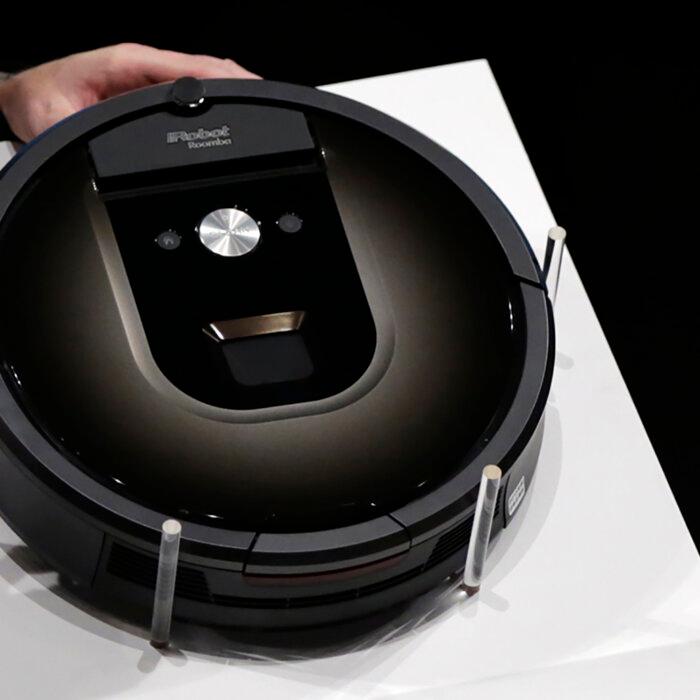
iRobot, the Massachusetts-based company best known for its Roomba robotic vacuum cleaners, filed for bankruptcy protection on Dec. 14.

The company said on Dec. 14 that it had entered into an agreement to be acquired by its secured lender and primary manufacturer, Picea Robotics, through a court-supervised process. The transaction would take iRobot private and end the listing of its shares on the Nasdaq.

Founded in 1990, iRobot became a household name after launching the first Roomba robot vacuum in 2002. Over the past several years, however, the company has struggled with declining sales, supply chain disruptions, and the collapse of a planned acquisition by Amazon, pressures that ultimately eroded its liquidity.
“Today’s announcement marks a pivotal milestone in securing iRobot’s long-term future,” Chief Executive Officer Gary Cohen said in a statement on Dec. 14. “The transaction will strengthen our financial position and will help deliver continuity for our consumers, customers, and partners.”

The bankruptcy filing followed a steady deterioration in iRobot’s financial position, as outlined in its most recent earnings reports.
In its third-quarter results released on Nov. 6, iRobot reported cash and cash equivalents of $24.8 million as of Sept. 27, 2025, down from $40.6 million at the end of the previous quarter. The company also reported $5 million in restricted cash, which was fully drawn on Sept. 30, 2025, leaving it with no remaining sources of additional capital.

Revenue performance deteriorated across key markets. In the third quarter, revenue fell 33 percent in the United States, 13 percent in Europe, the Middle East, and Africa, and nine percent in Japan compared with the same period a year earlier.

“Our third-quarter revenue fell well below our internal expectations due to continuing market headwinds, ongoing production delays, and unforeseen shipping disruptions,” Cohen said on Nov. 6.

“This shortfall increased cash usage and pressured profitability, as we were unable to fully leverage our fixed cost base.”

The acquisition of iRobot by Picea—a Chinese company headquartered in Shenzhen—could draw concerns over personal data collection and use. In 2022, privacy campaigners raised surveillance fears in a letter to the Federal Trade Commission (FTC), questioning whether Amazon’s proposed purchase of iRobot would allow the company to access maps of users’ homes generated by the vacuum’s navigation system and potentially “endanger human rights and safety.”

2024 Revenue Decline and Amazon Deal Collapse

The third-quarter results came after a sharp year-on-year decline in full-year revenue in 2024.
For the full year ended 2024, iRobot reported revenue of $681.8 million, down from $890.6 million in 2023, according to results released on March 12.

The company did not disclose profitability figures in the summary but had previously warned that cost pressures and weaker demand were weighing on margins.

The sustained revenue decline reduced the company’s ability to absorb fixed costs, making it increasingly reliant on external financing as sales volumes shrank.

iRobot’s financial struggles were exacerbated by the collapse of a proposed $1.7 billion acquisition by Amazon, first announced in 2022. The deal was abandoned after regulators, particularly in Europe, raised competition concerns.

Amazon said it called off the purchase, citing “undue and disproportionate regulatory hurdles,” after the European Union signaled its objections. After the deal was scrapped, iRobot said it would pursue a restructuring plan to stabilize the business.

As part of those efforts, the company announced plans to lay off roughly 350 employees, adding to cost-cutting measures already underway.

Operations to Continue

iRobot said the Chapter 11 filing is pre-packaged, meaning it has already negotiated key terms with creditors before entering court proceedings.

During the restructuring process, the company expects to continue operating in the ordinary course without disruption to its products or services.

iRobot added that there is no anticipated interruption to its mobile app functionality, customer programs, global partners, supply chain relationships, or ongoing product support. It has filed customary motions with the bankruptcy court seeking approval to continue paying employees and vendors and to honor obligations incurred before and during the process.

Management said the restructuring is designed to provide continuity while positioning the company for long-term growth under Picea’s ownership.


Google LogoMark Us Preferred on Google
Evgenia Filimianova
Evgenia Filimianova
Author
Evgenia Filimianova is a UK-based journalist covering a wide range of international stories, with a particular interest in foreign policy, economy, and UK politics.