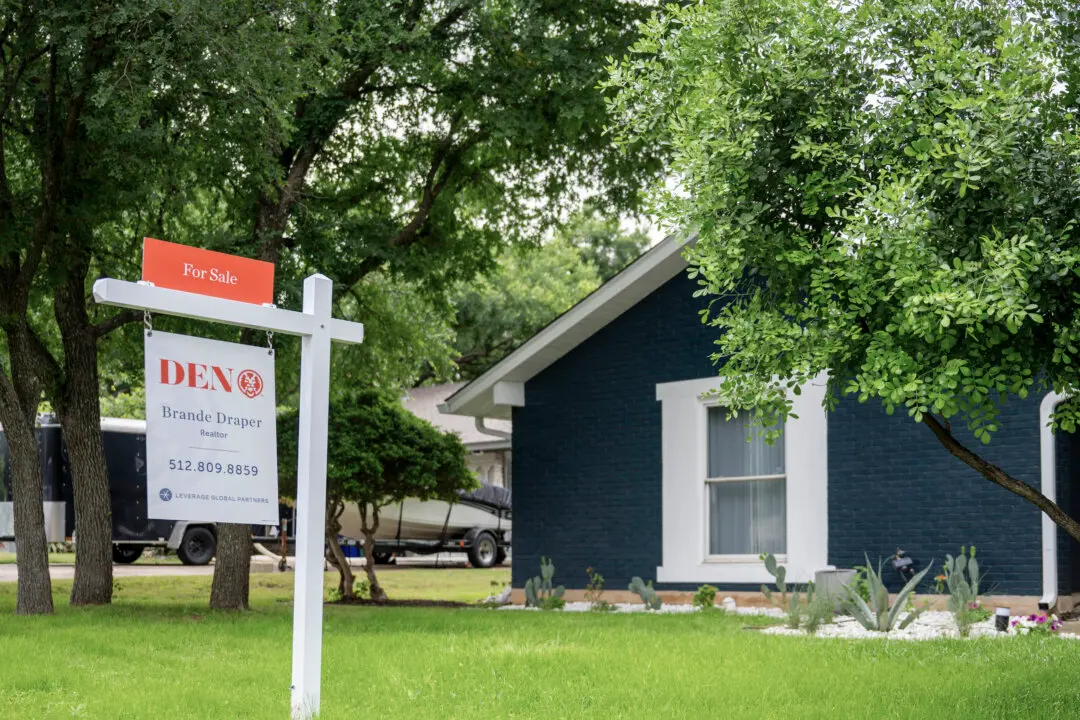
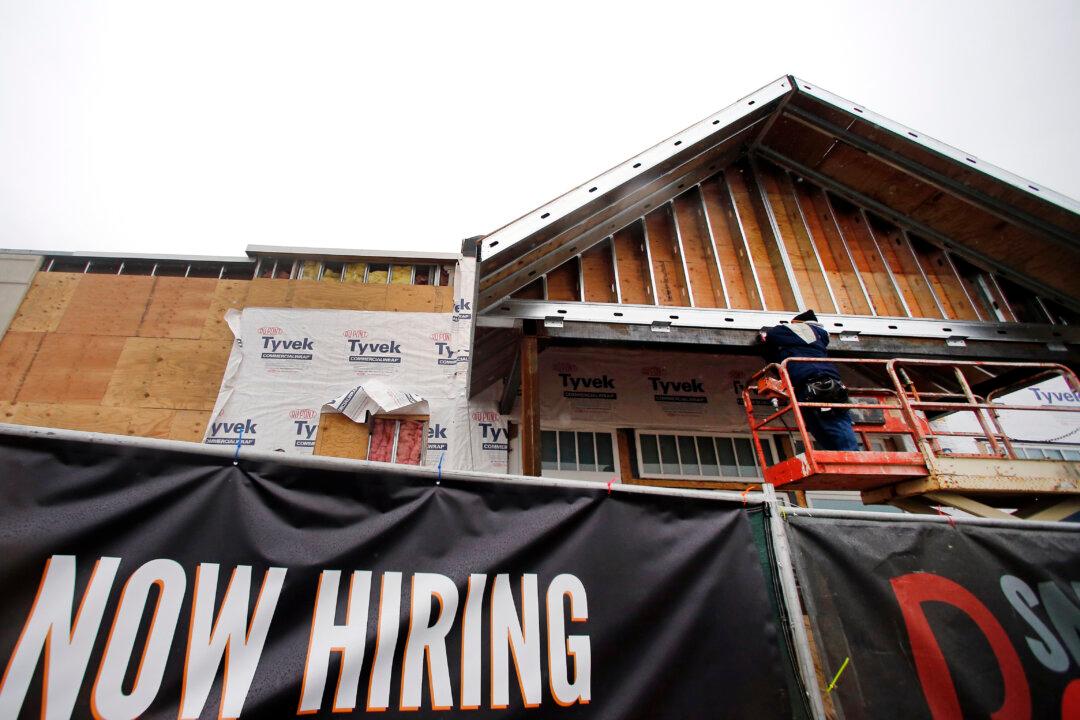
The United States is currently short millions of homes, according to various estimates. At the same time, with housing starts falling to their lowest level in six years in May, Robert Dietz, chief economist at the National Association of Home Builders (NAHB), recently predicted that 2026 will be another “down year” for new home construction.
He said many factors are impeding the pace of new homebuilding, but local legal and regulatory burdens are “the really big one,” particularly in states such as California and New York.
Entry-Level Housing Shortage
Speaking with Siyamak Khorrami, host of EpochTV’s “Market Insider,” Dietz said potential homebuyers are facing short-term challenges from rising mortgage rates resulting from higher inflation and oil prices, and long-term challenges from housing shortages caused by a decade and a half of underbuilding, which have pushed home prices to present high levels.
Using different methodologies, Realtor.com calculated in March that the United States was short by about 4.03 million homes in 2025, while NAHB put the number at 1.2 million based on 2024 data.
The short-term and long-term combination of factors has created the serious housing affordability issue Americans are facing, Dietz said, pointing to building more housing as the ultimate solution.
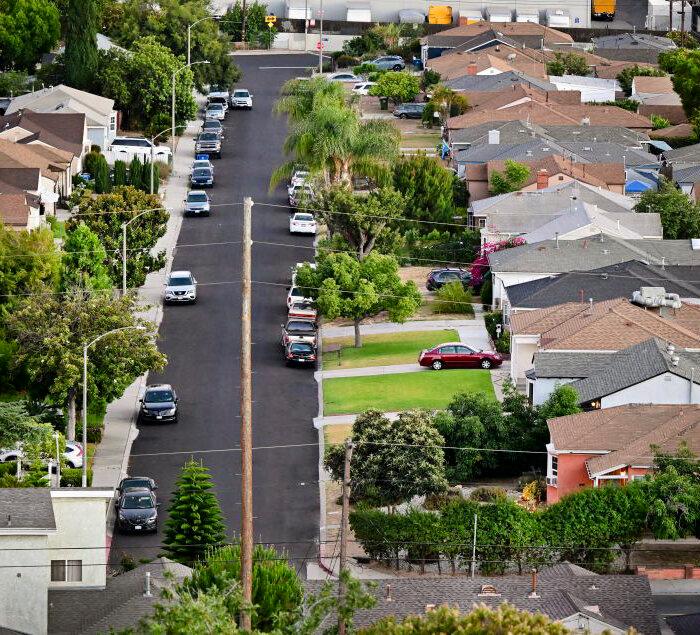

However, U.S. housing starts have declined continuously since their peak in April 2022 during the post-COVID-19 pandemic construction boom. The most recent Census Bureau data show housing starts in May fell to a seasonally adjusted annual rate of 1.18 million, the weakest level since the early stages of the COVID-19 pandemic.
Dietz said the shortage is more about entry-level housing, which prevents many young Americans from becoming homeowners, while the current economic climate has created “perfect storm conditions for home builders” to increase inventory.
“The big unicorn in the marketplace has been [trying] to build more entry-level construction,” he said.
Five ‘Ls’
Dietz said five “Ls”—a lack of labor, lots, and lending, along with lumber and building materials fragility, and legal and regulatory burdens—are restraining home builders’ ability to increase output quickly. Of the five “Ls,” he said, legal and regulatory costs are the most acute for builders, accounting for 26 percent of a new home’s purchase price.
A June 12 NAHB study found that government regulations can add up to $130,000 to the cost of a new home. This typically includes items such as zoning costs, taxes, and other fees.
The study also revealed that nearly 88 percent of developers said they are forced to comply with design standards imposed by local communities that go beyond basic zoning regulations. On average, this accounts for 8.8 percent of the lot price and 2.1 percent of the final home price.
In addition, the report indicates that 94 percent of developers experienced delays due to regulations—sometimes up to seven months. This, in turn, can often raise interest costs on development loans, increasing home prices.
“This study illustrates how excessive regulation is deepening the nation’s housing affordability crisis and making it harder for builders to deliver the affordable, attainable housing that our nation sorely needs,” NAHB President Bill Owens said in the report.
Construction Divergence
Dietz said these expenses are even higher in New York and California, where regulatory fees can range from $200,000 to $250,000 per single-family home.
“That’s before you’ve even stuck a shovel in the ground, so it is difficult to build a $500,000 to $600,000 entry-level home when you’ve got that kind of regulatory concern,” he said.
Consequently, he said, underbuilding of entry-level homes has led many Californians to move to places such as Austin, Texas, Denver, or Las Vegas.
“Then businesses chase those individuals in terms of thinking about job location and business location, so the regulatory costs, the natural geography, the availability of construction workers, all those factors dictate the cost of building and therefore dictate the volume of construction that takes place in individual markets,” Dietz said.
According to the California Department of Housing and Community Development’s website, the state is required to build 180,000 new homes each year to keep pace with demand. However, the production averaged fewer than 80,000 annually over the past decade, the agency says.
Dietz added that the majority of the current top 20 least affordable U.S. real estate markets are in California, including both single and multi-family housing.
Dietz said that more than half of new residential construction occurs in the South, where regulatory costs are lower, and permits and approvals are obtained more quickly than in the Northeast or coastal markets.
“We’ve seen a lot of growth in the mountain states, so you’re thinking about the markets like in Utah and Colorado and Idaho and Montana, where there’s been a big uptick in home building conditions,” he said.
New home inventory has increased in Texas and Florida, both of which are experiencing population and job growth, Dietz added.
“Some of the bigger Florida and Texas markets are two to three times [the] national averages, so there’s long-run demand, but the short-run supply is exceeding that right now,” he said. “So those are markets where builders are more likely to be using mortgage rate buy-downs or various kinds of incentive effects.”
Strong Remodeling Market
Meanwhile, Dietz noted that the home renovation market is strong throughout the Northeast and Mid-Atlantic states, which tend to have older homes and wealthier households.
“So one of the things we’re expecting to take place across the country, particularly in these older metropolitan areas, is a big growth in rehab and remodeling,” he said.
Dietz said NAHB has forecast that within the next 10 years, the remodeling market will grow by more than 30 percent.
Overall, he said, the custom homebuilding market is experiencing the most growth right now, increasing by nearly three percent last year.
“It’s reflecting the persistent demand by older, wealthier households, and so that is an area of opportunity,” Dietz said.
He also believes townhouse construction will continue to flourish, as less land is required, and often residential townhouse developments are replacing abandoned shopping centers.