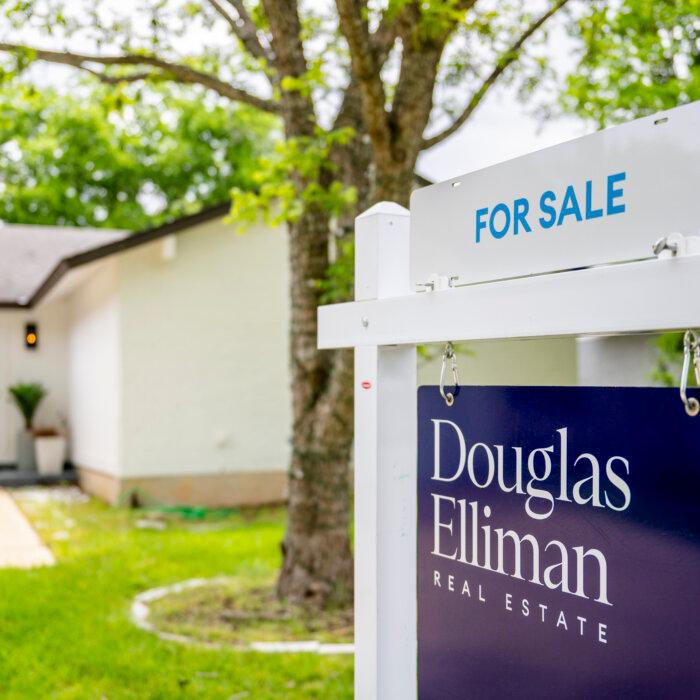
Mortgage market activity accelerated this past week despite rising interest rates amid the ongoing war in Iran.
For the week ending June 5, mortgage applications surged almost 11 percent, according to Mortgage Bankers Association data released on June 10.
Applications for purchases jumped 7 percent from the previous week, while refinancing demand increased 15 percent.
The rebound happened even as rates remained elevated.
The average 30-year fixed mortgage rate rose 9 basis points to 6.6 percent. While this is marginally down from the recent peak of 6.65 percent, it is firmly above the pre-Iran war level of 6.09 percent. At the same time, interest rates are about 30 basis points lower than a year earlier.
“Mortgage rates were volatile last week as news from the Middle East continues to drive markets,” Mike Fratantoni, chief economist and senior vice president at the Mortgage Bankers Association, said in a news release.
Borrowers were able to find mortgage opportunities at slightly lower rates, he added.
Elevated rates have somewhat stalled springtime housing momentum, according to Redfin.
Existing home sales surged 2.8 percent in May to their highest level since October 2022. This comes as new home sales also climbed to their best level in almost four years.
Conversely, pending sales were flat last month. Pending sales better reflect current market conditions, tracking homes that went under contract in May when mortgage rates rose to their highest level in nearly a year.
“The growth of home sales has been much slower than expected this year, largely because mortgage rates are stuck in the mid-6s because of the war in Iran,” Ted Rossman, principal analyst at Bankrate, said in a statement to The Epoch Times. “If not for the war-related spike in inflation, the average 30-year fixed mortgage rate could well be in the mid-to-upper 5s.”
Mortgage rates typically track yields on Treasury securities, particularly the benchmark 10-year.
The 10-year yield has backed off from its recent high of 4.66 percent, but it still trades above 4.5 percent, the highest in a year.
Rate Path
Renewed inflation pressures have spooked investors, forcing traders to increasingly price in an interest rate increase by the Federal Reserve, possibly as early as December.“Mortgage rates are back under pressure as stronger payroll data shifted the market away from rate-cut expectations and toward the possibility of a Fed hike later this year,” Jeff DerGurahian, head economist and CIO at loanDepot, said in an emailed note to The Epoch Times.
“With U.S.-Iran peace talks settling into a new status quo, inflation and the strength of the job market are back in focus as the key drivers for where rates go next,” he said.
When the Fed convenes its two-day policy meeting next week, officials will have a fresh tranche of employment and inflation data.
Monetary policymakers will likely emphasize the price stability side of the institution’s dual mandate, which could lead to a more hawkish stance.
Rate expectations could depend on whether the Iranian conflict lasts throughout the summer, says Jeffrey Roach, chief economist at LPL Financial.
“For next week, expect the Fed to remain on hold while removing any bias toward additional easing,” Roach said in an emailed note to The Epoch Times.
“Iran’s Military is a complete and total mess. Much of it, like their Navy and Air Force, doesn’t even exist anymore,” Trump said on his social media platform. “They have been completely defeated. Iran is all talk and no action. The Bully of the Middle East is DEAD!!!”
The president recently stated that a deal could be reached in “two or three days” and that the Strait of Hormuz—the global chokepoint for oil trade that has been at the center of the conflict—would reopen “immediately” following a resolution.