Moody’s Ratings on Tuesday downgraded its outlook on U.S. business development companies (BDCs) to negative, pointing to growing client redemptions that could pressure private credit.
Business development companies are publicly listed funds that provide debt and equity financing to small- and mid‑sized firms. Private lenders are one of the key gateways for investors to access the $2 trillion private credit market.
The mounting challenges, however, are falling primarily on non-traded BDCs, accounting for almost two-thirds of the sector.
Non‑traded funds collect money from investors, borrow additional capital, and use that combined pool to make loans to private companies. They are designed to continue raising new money over time, while giving investors only limited opportunities to cash out.
So far this year, these funds have registered an increase in outflows as a mix of institutional and retail investors submit withdrawal requests from their holdings. This, Moody’s says, is a notable reversal from a year ago when inflows were solid.
The reversal has put the non-traded BDCs on “defense” and has them “deploying additional capital until the current market shift and uncertainty resolve,” Moody’s stated.
As a result, the outlook was revised to negative from stable.
‘Negative Feedback Loop’
This year, a large number of private credit companies have received a flood of redemption requests. This has forced these firms to cap withdrawals or restrict drawdowns entirely.Apollo, for example, revealed last month that it received redemption inquiries equal to more than 11 percent of shares outstanding in the first quarter, higher than the 5 percent limit. In response, Apollo kept its 5 percent limit intact and returned about 45 percent of the capital to shareholders.
Industry experts have shrugged off concerns that the industry poses a risk to the financial system comparable to what occurred during the 2008 global crisis.
“There are many players who are late to this game, and it should be expected that some credit providers will do a far worse job than others,” Dimon said. “We have not had a credit recession in a long time, and it seems that some people assume it will never happen.”
Federal regulators, meanwhile, say they are monitoring the situation.
At a March 30 Harvard University talk last month, Federal Reserve Chair Jerome Powell stated that the central bank is watching for signs of stress but acknowledged that there are currently no issues that could topple the economic system.

“I’m reluctant to say anything that suggests that we’re dismissive of the risk,“ Powell said. ”We’re looking for connections to the banking system and things that might, you know, result in contagion. We don’t see those right now.”
Despite reassurances from market watchers, investors have been spooked by the latest developments, which could have implications for the broader market, says Justin Bergner, portfolio manager at Gabelli Funds.
“If people can’t take their money out of private credit, they might take their money out of public asset classes to some degree as an offset,” Bergner said in a note emailed to The Epoch Times.
“Private credit has created a potential negative feedback loop for the markets, although the size and spillover into public markets remain relatively opaque.”
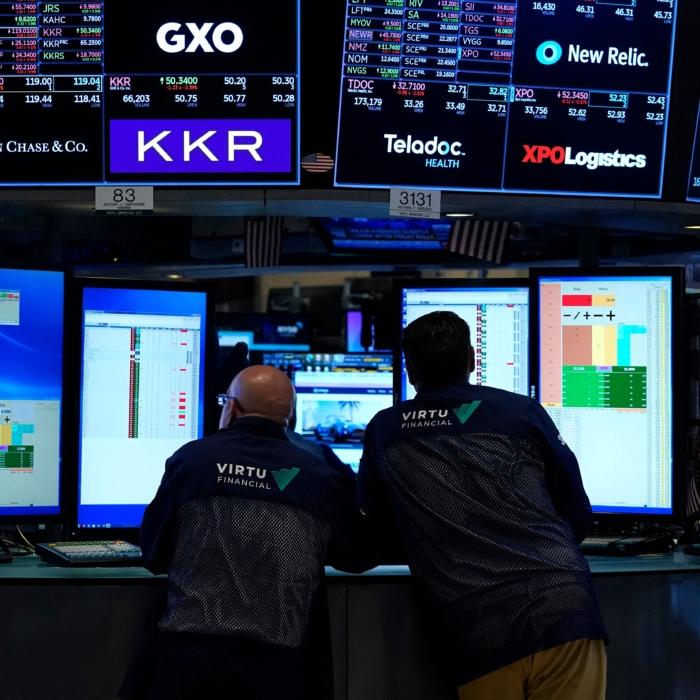
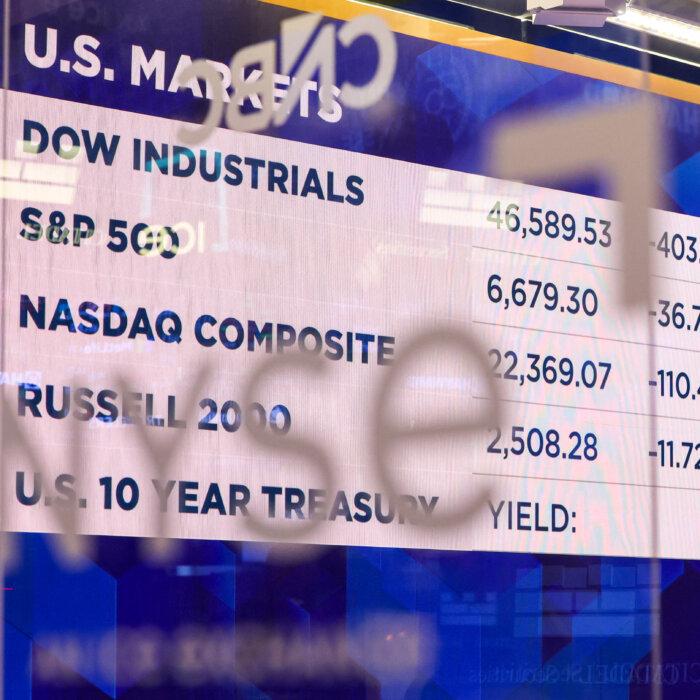
Shares of private investment firms were mixed during a red ink-filled April 7 trading session.
Blackstone and Carlyle shares rose 0.5 percent. Conversely, Apollo and KKR slipped 0.3 percent and 0.6 percent, respectively.