A low number of layoffs is keeping the U.S. labor market steady this summer, the government reported on July 16.
Initial jobless claims—the number of Americans filing applications for unemployment benefits—declined by 8,000 to 208,000 for the week ending July 11, according to new Department of Labor data.
This came in firmly below economists’ expectations of 217,000.
Weekly unemployment claims were edging higher heading into the summer, reflecting an increase in the number of school staff applying for benefits during the break. But they peaked in early June and have been venturing lower.
The four-week average, which omits week-to-week volatility, also eased to below 215,000.
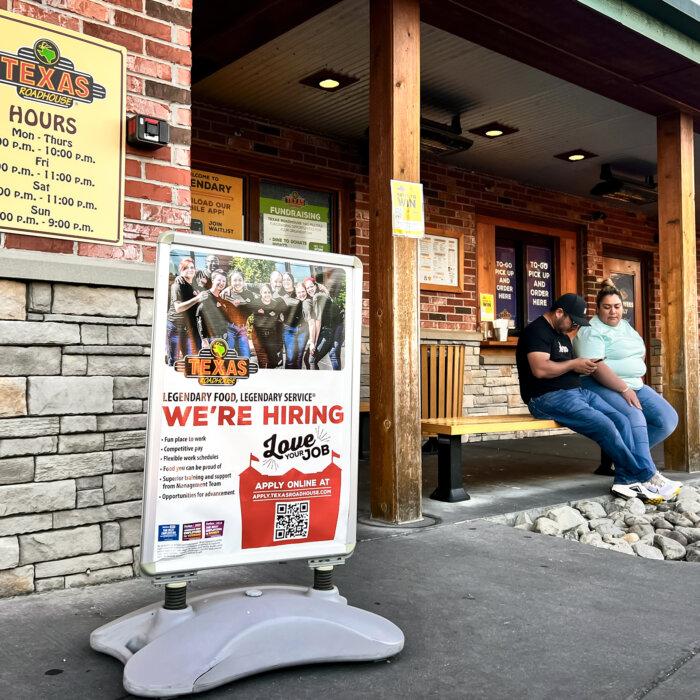
Hiring momentum has slowed in recent weeks, while U.S. firms remain reluctant to pursue mass terminations as they assess the fallout from the artificial intelligence (AI) boom.
Recent data from payroll processor ADP showed that U.S. private employers added an average of 19,750 jobs per week in the four weeks ending June 27, marking the third straight week of slowing job growth.
Still, workers may be having a better time finding employment opportunities.
Continuing jobless claims—a measure of the number of individuals currently receiving unemployment benefits—declined slightly to 1.805 million, lower than expected.
It could also reflect that Americans are exhausting their benefits, since many states cap eligibility at 26 weeks.
“The labor market is moderating, not collapsing, with hiring trends stable and wage growth contained,” Joe Seydl, senior markets analyst at J.P. Morgan Private Bank, said in a July 14 note. “Slowing labor demand and a dip in participation warrant monitoring, but the backdrop remains constructive for both the economy and markets.”
Workforce participation has been trending downward amid an aging population and changes in immigration policy.
Excluding the pandemic years, the labor force participation rate is at its lowest level since 1976, according to the Bureau of Labor Statistics.
This trend could keep a lid on rising unemployment.
The jobless rate continues to hover around a historically low 4 percent.
The breakeven rate represents the number of new jobs needed to keep unemployment low.
Jobs, Inflation, and Growth
Ultimately, current employment conditions will likely support the broader economy, says Bill Merz, head of capital markets research for U.S. Bank Asset Management Group.
“The labor market remains strong enough to support economic expansion and consumer spending. Recent payroll gains and above-target inflation reduce the Federal Reserve’s incentive to cut rates,” Merz said in a July 7 research note.
While traders have pared their interest rate hike bets for September, CME FedWatch data suggest investors still see a rate hike later this year to curb inflation.
Fed Chairman Kevin Warsh has insisted that persistent high inflation over the last five years “will be a thing of the past” under his watch.
The central bank received positive inflation data this week.
“The latest inflation data has eased one of the market’s biggest near-term risks. Inflation remains above the Fed’s target, so I don’t expect policymakers to declare victory, but the pressure for additional tightening has diminished,” David Miller, CIO and senior portfolio manager at Catalyst Funds, said in a note emailed to The Epoch Times.
The Fed will hold its next two-day Federal Open Market Committee policy meeting on July 28 and 29.