Treasury Secretary Scott Bessent unveiled a new $1 gold coin featuring President Donald Trump’s face to commemorate America’s 250th anniversary.
The U.S. Mint will start producing the coin to “honor the enduring legacy of liberty and a lasting symbol of patriotism,” Bessent said in a July 15 post on X.
“Featuring President Trump, it celebrates the strength of American values, and the promise of a nation dedicated to preserving freedom for all,” he said.
Since returning to the White House for a second term, Trump has been looking to leave his mark on a broad array of government buildings, institutions, and materials.
Over the past year, the current administration has been working to include Trump’s likeness on coinage and paper money.
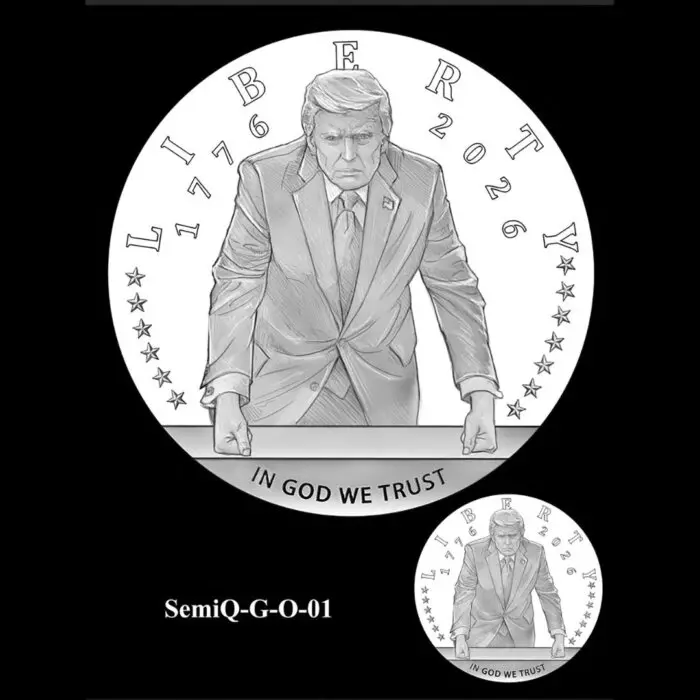
The $1 coin features imagery closely tied to Trump. On the tail side, he appears beside an American flag with clenched fists and the phrase “Fight, fight, fight,” echoing the moment he raised his fist after the July 13, 2024, assassination attempt against him in Butler, Pennsylvania.
It also includes the standard inscriptions “United States of America” and “E Pluribus Unum.”
The head side shows Trump’s profile along with “Liberty” and “In God We Trust.”
The department also said in May that it was considering a $250 bill featuring the president, but officials agreed it would require changes to federal law.
“It’s all in the hands of Capitol Hill,” Bessent told reporters at the time. “We prepared things in advance, but we will stick to the law.”
Examining the Law
Current federal law bars living individuals from appearing on U.S. currency unless Congress first changes the statute.
All U.S. currency must bear the motto “In God We Trust,” a mandate that applies regardless of any proposed redesigns or legislative efforts.
The White House says Trump can appear on a new coin, citing the Circulating Collectible Coin Redesign Act of 2020, which permits new designs to celebrate America’s semiquincentennial.
The Presidential $1 Coin Act of 2005, for example, restricts the series to presidents who have already died.
Additionally, 31 U.S. Code § 5112 restricts minting any coin that features “the image of a living former or current president,” as well as any deceased president within two years of their death.
President Calvin Coolidge was the last sitting president to feature himself on a U.S. coin to commemorate the 150th anniversary of the Declaration of Independence.
Other changes have been made to U.S. currency.
The Penny
The Treasury officially ceased the production of pennies for general circulation in November after 230 years. The justification is taxpayer savings, as it costs about 4 cents to manufacture a single penny.
While the one-cent coin will remain in legal tender, the penny—and other coins—are not commonly used.
A 2022 analysis by the Federal Reserve determined that about 60 percent of these coins, or as much as $90 for the typical household, sit in piggy banks and jars.
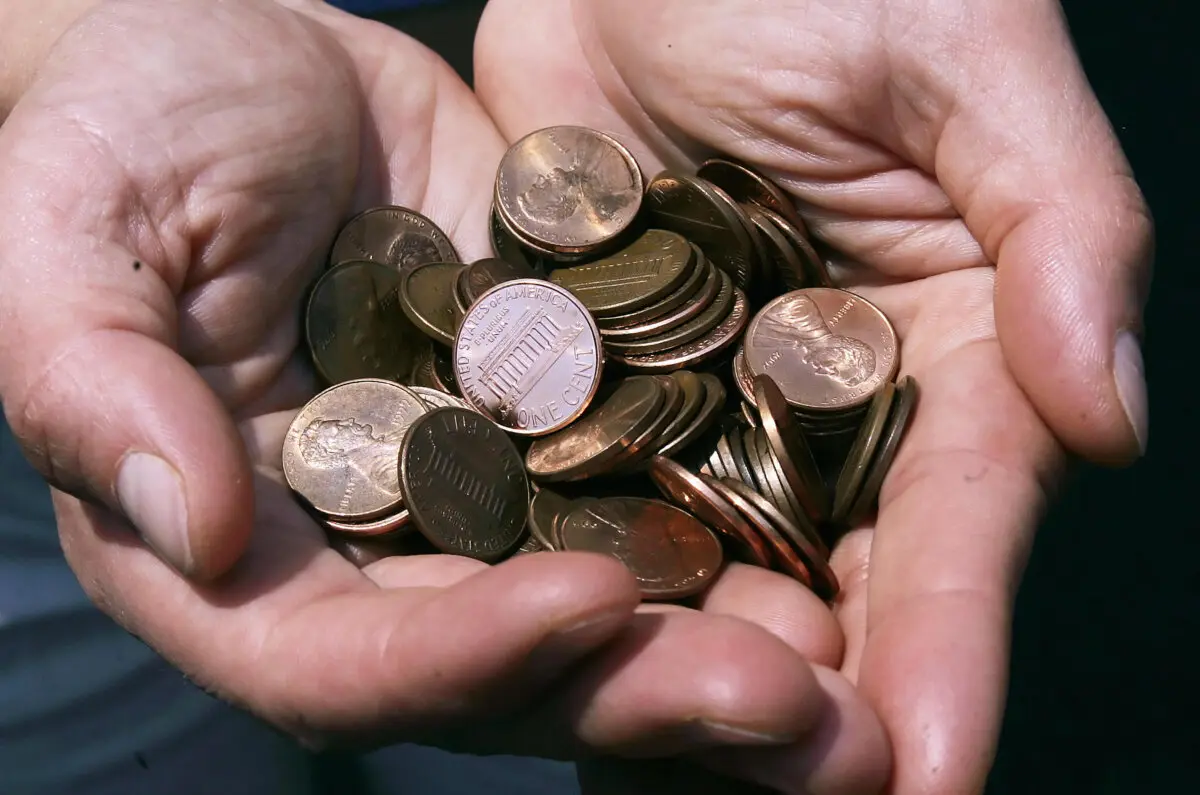
But abandoning the penny could adversely affect consumers.
Richmond Fed economists estimate that as businesses round up to the nearest 5 cents—also known as the rounding tax—shoppers could face about $6 million in added costs.
Whether the federal government will take another look at the nickel is unclear. With a face value of 5 cents, it costs almost 14 cents to manufacture.