“If it were to happen, it would be very bad for consumers, very bad for the economy,” Barnum said. “Our belief is that, actually, this will have the exact opposite consequence to what the administration wants.”
The bank would also likely have to alter its business and scale back, he added.
“Instead of lowering the price of credit, we’ll simply reduce the supply of credit, and that will be bad for everyone: consumers, the wider economy, and yes, at the margin, for us,” he said.
In a Jan. 9 Truth Social post, Trump said he wants a cap on card rates effective Jan. 20. It is unclear whether he will use executive action or rely on Congress to pass legislation.
“Please be informed that we will no longer let the American Public be ‘ripped off’ by Credit Card Companies that are charging Interest Rates of 20 to 30 [percent], and even more, which festered unimpeded during the Sleepy Joe Biden Administration,” Trump said.
Banks and industry associations have argued against introducing interest rate limits.
‘Potential Hazards’ for the US Economy
In a statement accompanying the earnings report, JPMorgan Chase CEO Jamie Dimon identified some economic risks that are looming.Dimon said he thinks investors should be worried over a broad array of “potential hazards.” He listed sticky inflation, elevated asset prices, and “complex” and “dangerous” geopolitical conditions.
Still, the United States remains “resilient,” he noted.
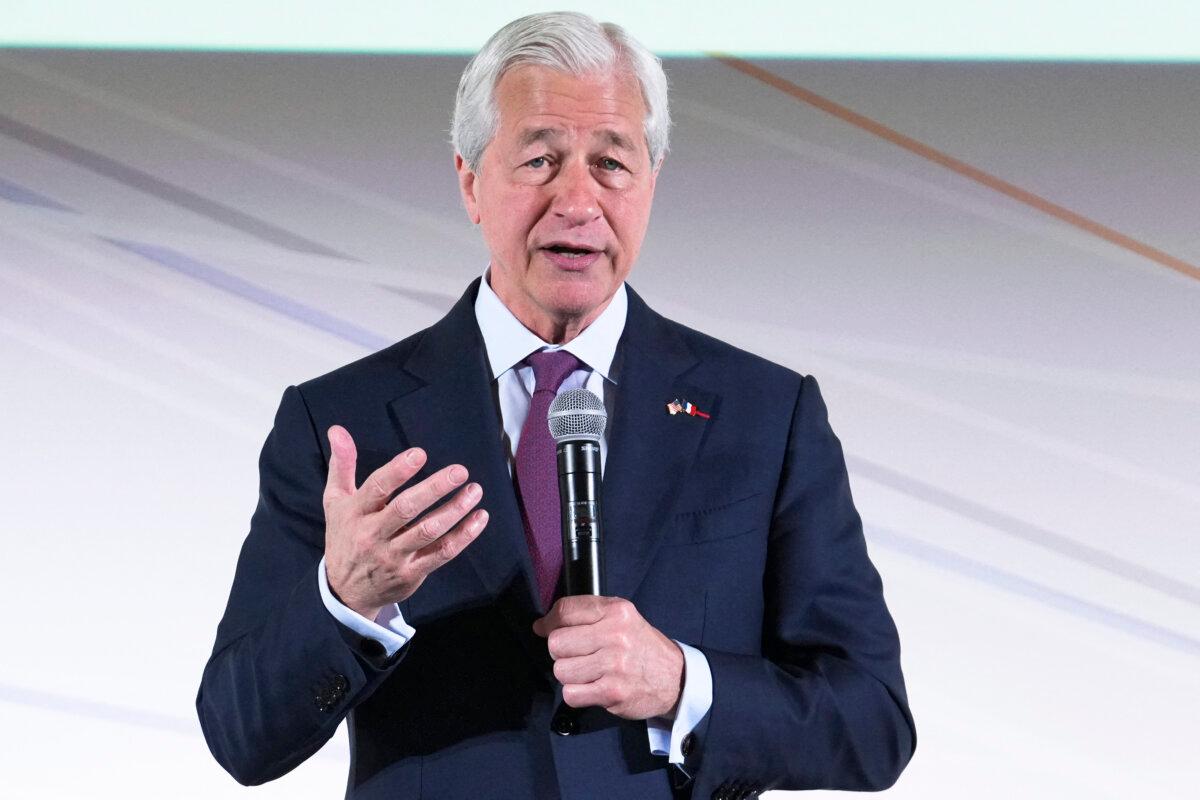
“While labor markets have softened, conditions do not appear to be worsening,” Dimon said in a statement.
“Consumers continue to spend, and businesses generally remain healthy. These conditions could persist for some time, particularly with ongoing fiscal stimulus, the benefits of deregulation, and the Fed’s recent monetary policy.”
Dimon also weighed in on the current situation involving Federal Reserve Chairman Jerome Powell.
The Fed head, whose term expires in May, suggested, however, that this is about cutting interest rates. While the administration said Trump was not involved in the probe, officials noted that the renovations have experienced sizable cost overruns.
“I don’t agree with what has been said and done. I have enormous respect for Jay Powell,” Dimon said.
Meanwhile, the bank’s fourth-quarter profit declined 7 percent to $13 billion—or $4.63 per share. Revenues climbed 7 percent to $46.8 billion. JPMorgan’s provisions for credit losses surged to $4.7 billion from $2.6 billion after establishing a $2.2 billion reserve to accept Apple’s credit card portfolio.
Shares of JPMorgan Chase fell more than 3 percent to around $314 at 10:26 a.m. EST on Jan. 13.
Other major banks will release their quarterly earnings reports, including Bank of America and Goldman Sachs.
“The street has high hopes for the banks, which have enjoyed some solid stock performance,” Mark Malek, CIO at Siebert Financial, said in a note emailed to The Epoch Times.
Market watchers will be paying close attention to how banks characterize household spending power, appetite for business loans, the outlook for infrastructure financing in Venezuela, and possible exposure to higher‑risk private credit, he added.
“It will certainly set the mood for the entire earnings season,” he said.