The first half of 2025 was a challenging period for U.S. retailers, marked by widespread consumer pessimism and intensifying competition fueled by the growing convergence of online and offline experiences. While consumer sentiment improved in June, experts anticipate that retailers will continue to face a rapidly evolving environment in the second half, driven by shifting consumer buying patterns and the acceleration of omnichannel marketing.
U.S. consumers began the new year facing multiple financial challenges, including elevated prices, rising debt that squeezed family budgets, and growing uncertainty about the state of the labor market.
Adding to the challenges facing retailers were rising trade tensions and intensifying competition from the convergence of online and offline experiences.
This trend has turned the retail sector into a tale of two stories: one about retailers thriving by successfully tackling the challenges, and the other about retailers struggling because they have not dealt with them.
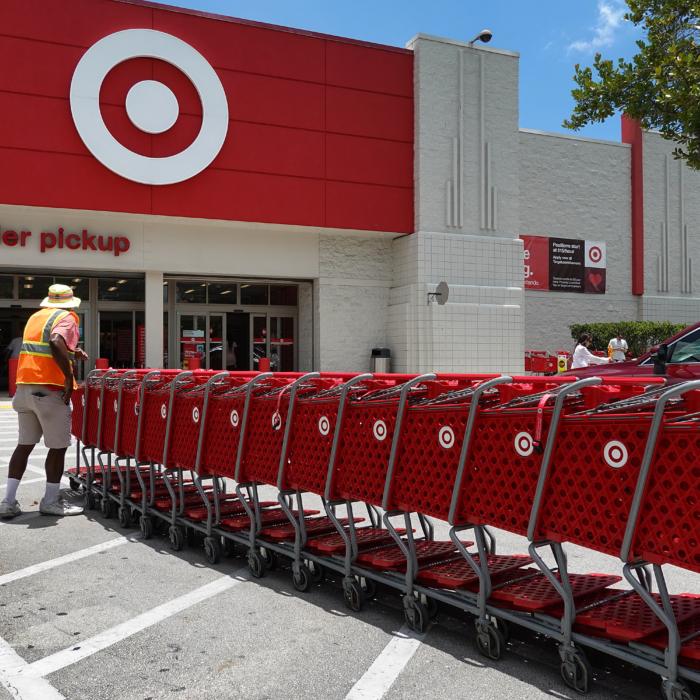
Walmart, Costco Wholesale Corp., and TJX Companies belong to the first category—all three have reported strong sales and earnings, pushing their shares higher year to date. Meanwhile, Target and Best Buy fall into the second category, reporting weak sales and earnings, with their shares sliding over the same period.
Meanwhile, the equity market is hitting record highs, which could further boost sentiment through the “wealth effect.”
Still, experts anticipate that U.S. retailers will face a rapidly evolving landscape for the remainder of the year, driven by shifting consumer buying patterns, greater adoption of new technologies, and the acceleration of omnichannel marketing. Retailers are expected to invest heavily in tools that seamlessly blend online and offline experiences, enabling customers to buy what they want, when they want, and where they want.“As we head towards the second half of the year 2025, the retail sector is confronted with a fast-evolving environment,” Lucia Lu, senior consultant at Nextpins, told The Epoch Times.
“E-commerce will only continue to dominate, but with a spin. Customers are now demanding an omnichannel experience that seamlessly blends online and offline buying.”
She said that stores need to invest more in digital infrastructure “to give customers who are switching between the digital and physical worlds a better and smoother experience. ”
“You can expect more sophisticated mobile apps, AI-based individualized buying, and same-day delivery,” Lu said.
Simon Robillard, partner and vice president at O2 Commerce, a leading e-commerce agency specializing in data-driven solutions for platforms such as Shopify, Magento, and BigCommerce, elaborated on the need for significant investments in unified data strategies.
“When data is connected, a store associate can recognize your online behavior and provide real-time, tailored support,” he told The Epoch Times. “That’s what drives loyalty today, not just a discount code in an email, but meaningful, consistent interactions.”
Robillard said he believes the growing cost of acquiring new customers makes it more critical than ever for retailers to take measures to drive repeat purchases.
“The second transaction is when brand loyalty begins to take hold. Unified commerce, which brings all customer and product data into a single source of truth, makes that possible,” he said.
Jason Tassie, business growth expert and CEO at Know Your Business, expects a rapid shift toward AI-powered retail platforms that utilize real-time data to personalize promotions based on behavioral analytics and the use of “AI-associates.”
“I think the rise of ‘AI store associates’ is set to continue and expand further in the second half of the year,” he told The Epoch Times.
“I expect AI to play an even larger role in the second half of 2025 in terms of retail reporting, supply chain management, and retail fraud prevention.”
Karen Moran, owner of Coral Strands, said she believes it’s time to get “scrappy.”
“As a small-batch jewelry designer and the founder of Coral Strands, I’m seeing customers pull back on impulse buys—but they’re still spending on meaning,” she told The Epoch Times.
“That means personalized pieces, custom requests, and heirloom-level quality. Mass-produced jewelry is getting passed over in favor of something they can connect with.”
She said the second half of the year “isn’t about discounting your way to survival—it’s about giving people a reason to choose you.”
Rebecca Homkes, faculty at London Business School and Duke and author of “Survive Reset Thrive,” said that leading a breakthrough growth strategy in volatile times requires understanding that the proliferation of new technologies and the rise of trade conflicts are creating a tale of two retail markets for the remainder of 2025—one in which a new generation of consumers is forming fresh alliances with brands and products, and another in which existing consumers are reassessing, or distancing themselves from, their relationships with retailers.
“This will be a great test of which retailers have differentiated their offering and built long-lasting brand associations versus those trading off in tactical plays,” she told The Epoch Times.
“One thing is clear—it won’t be smooth sailing into the holiday period, expect more rockiness ahead—and for retailers leaning into the uncertainty, winners and losers [will] emerge by the end of the year.”