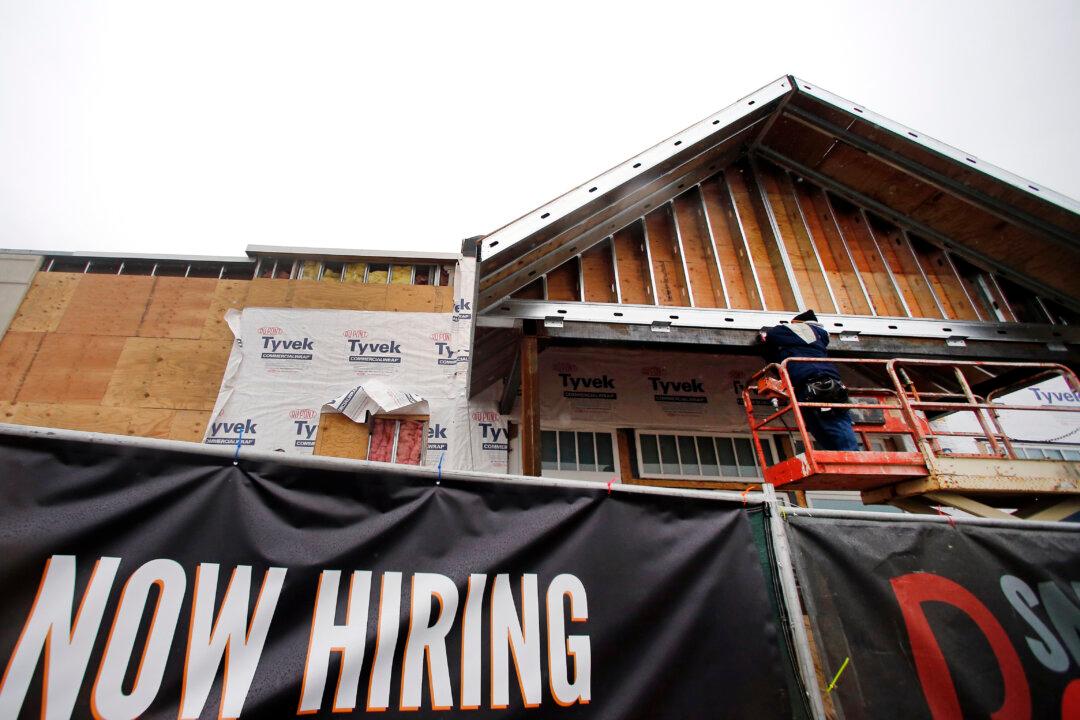
States in the Midwest and South received all of the “A” and “B” grades for affordability and new homebuilding awarded in Realtor.com’s 2026 Affordability & Homebuilding Report Cards released on June 15. Indiana took the top spot with an “A,” moving up from fourth place last year, while New York ranked last with an “F.”
Indiana homebuyers can purchase a typical single-family home for a median price of $295,810, spending about 28.3 percent of their average monthly income on mortgage payments—below the 30 percent threshold used to define affordability. In New York, potential buyers would need to spend 55.2 percent of their household income to cover the mortgage costs at a median listing of $668,173.
The report also indicates Indiana’s home-building is proceeding at a healthy pace, while New York is building at less than half the rate its population requires. It also notes that the Empire State is suffering from a 17 percent year-over-year slowdown in permitting and a new construction premium of 73.9 percent—keeping new homes out of reach for the average buyer.
Realtor.com chief economist Danielle Hale said the national real estate listings website launched the report to give both lawmakers and the public a clear idea about housing progress in each state.
“What the 2026 update shows is that the states making real headway are the ones doing both things well—keeping homes within reach of today’s median earners and building enough new supply to meet demand,” she said in the report. “With a nationwide housing shortage still near 4 million homes, the gap between America’s best and toughest housing markets isn’t narrowing, it’s growing.”
Other states ranking in the top five include Iowa, South Carolina, Texas, and North Carolina. Iowa offers the lowest share of income required to buy a median-priced home, at $282,886, and the highest affordability score. South Carolina, meanwhile, ranks highest for new home building with a permit-to-population ratio of 1.96. There, new homes are about 5.7 percent less expensive than existing ones.
The report noted that Texas leads all states in raw construction volume with 14.6 percent of all building permits issued, exceeding its 9.3 percent population share.
Still, only 11 states can currently offer an affordable median-priced home to a median earner under what the report describes as the “30 percent of income rule.”
“The regional divide we saw last year is a continuing structural feature of the American housing market,” Joel Berner, senior economist at Realtor.com, said in the report. “The states at the top of our rankings benefit from available land, lower regulatory barriers, and a building culture that prioritizes volume and accessibility.”
Nebraska, Delaware, South Dakota, Arkansas, and Oklahoma completed the top 10, with Delaware jumping 12 spots from last year to seventh place.
Conversely, Alabama, Maryland, and New Jersey all fell eight spots, representing the largest declines.
In addition to New York, other states receiving an “F” grade for both home affordability and new construction include Massachusetts, Rhode Island, Hawaii, California, and Connecticut.
In a May report, Realtor.com noted that nearly 80 percent of new construction for sale is located in the nation’s suburban, rather than urban, areas. Within major cities, just over 10 percent of homes for sale comprise new construction, often due to less available or more expensive land.
Nationally, urban new builds are priced about 78.4 percent higher than urban existing homes, with new construction premiums in popular metro destinations often soaring, such as the 461.8 percent premium in Miami-Fort Lauderdale-West Palm Beach. There, the median home price for new construction is $2.57 million, compared with the median existing home price of $459,000.
As a result of both escalating new-construction prices and rising existing-home prices, many Americans who would normally consider selling and moving up are instead choosing to renovate their current homes.
A May 26 report from Home Warranty Advocates noted that 94 percent of American homeowners are planning some types of “do-it-yourself” (DIY) upgrades this year. Some 87 percent will take on cosmetic projects such as painting or redecorating, 39 percent will plan expansions or major renovations, and 33 percent will replace appliances.
“For most homeowners, the DIY decision is fundamentally a financial one. 62% of those surveyed say the best part of DIY is the money it saves, and 61% say they take on projects themselves because they simply can’t afford to hire professionals,” the report states.