Many American families are struggling to make ends meet on their incomes alone and have resorted to credit cards, payday loans, and Buy Now Pay Later (BNPL) options for groceries, according to nonprofit research center Urban Institute.
The findings are based on a survey of 18-to 64-year-old working-age adults conducted in December 2025. About 8.7 percent of adults said they used a credit card for groceries and were unable to make the minimum payment, up from 7.1 percent in 2023, the Urban Institute said in a July 13 report. This suggests “worsening financial distress” among families.
Almost one in 10 used BNPL to pay for groceries, out of which more than a third missed a timely repayment last year.
About 19.6 percent used savings not meant for daily expenses to buy groceries, while 5.2 percent used cash from a payday loan.
The report highlighted that groceries are one of the largest household budget items for families and that food costs have jumped by about 32 percent over the past five years, posing a challenge for many households.
Adults who reported that their grocery costs increased significantly last year were more likely to use their savings or credit to buy food. According to the report, 51.3 percent of adults said grocery costs rose a lot during the 12 months preceding December 2025.


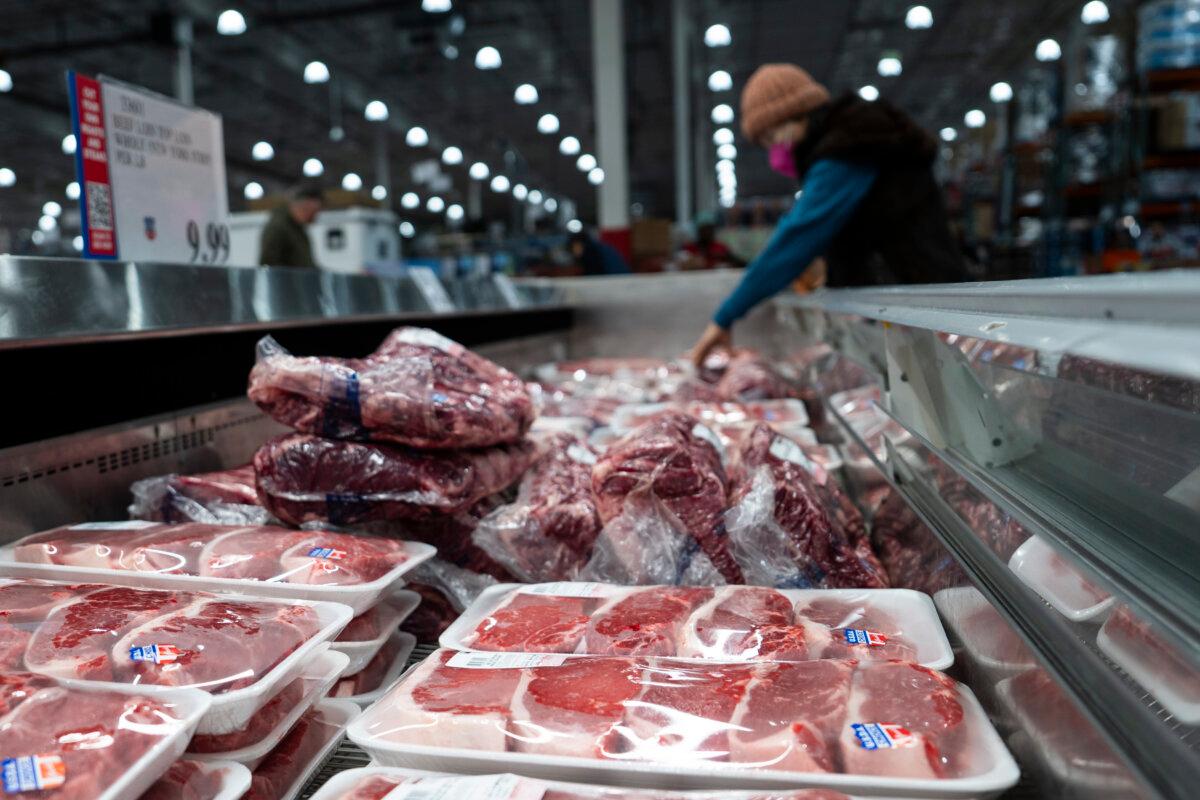
Data from the Bureau of Labor Statistics show that among bread, chicken, eggs, beef, and milk, only beef recorded a price increase between December 2024 and December 2025.
The price of a pound of ground 100 percent beef rose from $5.58 to $6.52 during this period. In contrast, the price of a pound of white bread declined from $1.91 to $1.83, a pound of fresh whole chicken fell from $2.06 to $2.02, a dozen large grade A eggs decreased from $4.15 to $2.71, and a gallon of fresh whole fortified milk declined from $4.10 to $4.05.
When families are unable to pay for groceries from their regular income, they resort to using credit, drawing down savings, and cutting down grocery spending, the Urban Institute report said.
Low- and moderate-income adults were more likely to report paying for groceries with a credit card, though they didn’t always pay the required minimum payment, the nonprofit said.
Amid straining finances, U.S. household debt rose last year. By the end of the fourth quarter of 2025, total U.S. household debt stood at $18.77 trillion, up $740 billion from a year ago, according to data from the Federal Reserve Bank of New York.
For the first quarter of 2026, household debt rose marginally by 0.1 percent from the previous quarter to $18.8 trillion, the bank said in a May 12 statement.
More Americans are also filing for bankruptcy. In 2025, individual bankruptcy filings rose by 12 percent from 2024, according to the American Bankruptcy Institute (ABI).
Unemployment, GDP Growth
For the week ending July 4, initial unemployment claims fell to 215,000, down from the previous week and the lowest level since late May. Overall employment conditions show signs of stability, with the four-week average of unemployment claims declining,According to minutes from June’s Federal Reserve policy meeting, the central bank believes the labor market will “remain stable in the near term, with the unemployment rate staying close to current levels.”
In a recent Consumer Checkpoint report, Bank of America noted that consumer spending momentum was “remarkably robust.”
Consultancy Deloitte predicted in a July 1 report that in its baseline scenario, real U.S. GDP growth is expected to grow by a “healthy” 2 percent this year and 1.8 percent in 2027.