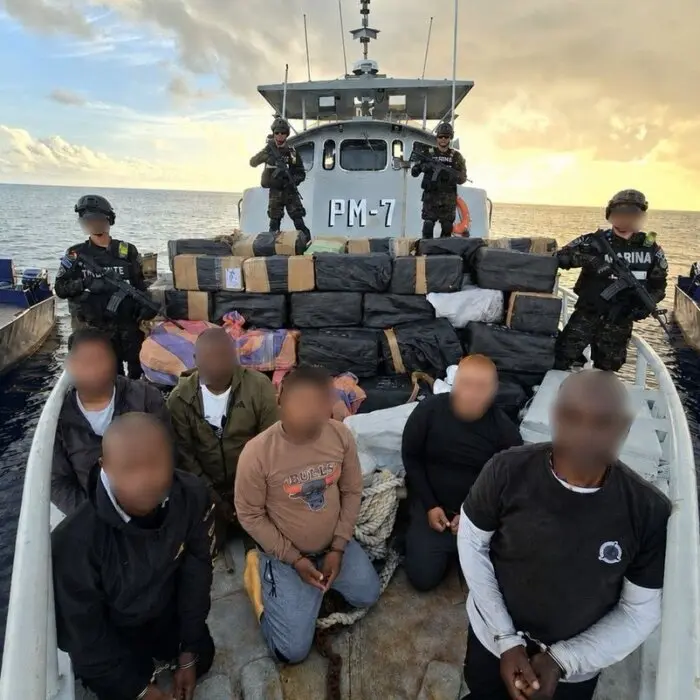
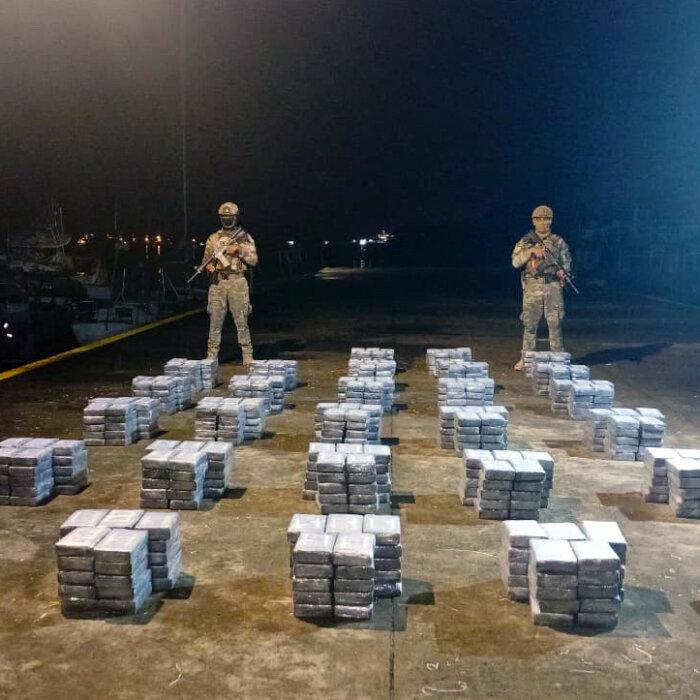
U.S. authorities have seized about 2,040 pounds of cocaine and almost 5,800 pounds of marijuana in three separate maritime interdictions carried out with international partners.
The most recent interdiction involved the Joint Interagency Task Force (JIATF) South and Panama’s National Aeronaval Service intercepting a go-fast vessel following a rapid aerial and surface pursuit, JIATF South said in a July 10 post on X. The operation led to the seizure of roughly 2,010 pounds of cocaine.
In a second interdiction, JIATF South and authorities from Costa Rica cooperated to intercept a drug smuggling vessel and capture a pick-up boat that was fleeing, according to a July 9 X post. The operation led to the seizure of 3,672 pounds of marijuana, and four suspects were arrested.
The third interdiction was a joint operation by JIATF South, Customs and Border Protection (CBP), and Dominican Republic partners that intercepted a vessel in the Caribbean Sea attempting to transport illicit cargo, the task force said in a July 8 X post.
Authorities seized 2,124 pounds of marijuana and about 30 pounds of cocaine and detained two smugglers in this incident. A smuggling route operated by a major transnational criminal organization was disrupted.
Drug seizures have risen under the Trump administration.
In a June 18 statement, the CBP said it had seized 56 percent more drugs in the current fiscal year through May than during the same period in fiscal year 2024 under the previous administration.
In the four months between February and May, marijuana seizures averaged 37,033 pounds per month, which is 61 percent higher than the same period in the 2024 fiscal year.
For the month of May, the nationwide seizure of cocaine, marijuana, fentanyl, heroin, and methamphetamine was 32 percent higher than in May 2024.
Northern Border Drug Trafficking
Last week, a Canadian national was sentenced to 240 months in prison for leading a criminal organization that trafficked hundreds of kilograms of cocaine and methamphetamine valued at up to $17 million from the United States into Canada, according to a July 9 statement from the Drug Enforcement Administration (DEA).The issue of drug trafficking at the northern U.S. border was highlighted by Michael J. Krol, Homeland Security Investigations’ assistant director for domestic operations, during a June 30 House committee hearing.
“Unique to the northern border, the flow of illicit drugs reflects both inbound and outbound dynamics,” Krol said.
A key concern “is the drug flow moving through the United States into Canada.”
“Cartel-owned cocaine and other controlled substances are routed north for domestic consumption and onward shipment to Europe,” he said.
During fiscal year 2024–2025, the Canada Border Services Agency reported seizing roughly 7,700 pounds of cocaine, compared with 2,700 pounds seized during fiscal year 2020–2021, Krol said.
“We see more precursors coming into the Port of Vancouver, coming into Canada,” Cole said.
Patel said that drug traffickers have gotten “smart” with improved security at the U.S. southern border, shifting operations to Canada.
The FBI was working with Canadian authorities to disrupt the production facilities that criminals have moved north, according to Patel.