Golden handcuffs in the U.S. housing market remain firmly locked, with COVID-19 pandemic‑era mortgage rates still accounting for about half of all outstanding loans.
At the onset of the COVID-19 pandemic in 2020, the Federal Reserve slashed interest rates to zero percent to cushion the economic blows of the public health crisis.
The decision fueled historically low borrowing costs across the economy. Homebuyers and homeowners who refinanced were some of the chief beneficiaries, as millions of households locked in 30-year mortgage rates as low as 2.65 percent.
Several years later, these loans continue to account for a large share of the U.S. mortgage market.
In the fourth quarter of 2025, the share of mortgages carrying a rate of below 3 percent stood at 19.7 percent, Realtor.com reported on April 15, citing the latest data from the Federal Housing Finance Agency. This is down from the 2022 peak of almost 25 percent.
Nearly 31 percent of U.S. mortgages carry rates between 3 percent and 4 percent, while loans in the 4 percent to 5 percent range make up close to 17 percent of the market.


Almost 11 percent have rates between 5 percent and 6 percent.
Since September 2022, the average fixed rate for 30-year mortgages has been mostly above 6 percent, so it is no surprise that they are representing a greater proportion of the market.
Mortgages at 6 percent or higher now account for more than one‑fifth of all outstanding loans.
According to Freddie Mac, 30-year rates have come down by about 25 basis points to below 6.4 percent. However, they have ticked up since sliding to 5.98 percent in February because of the impact of the Iranian conflict on Treasury yields.
Mortgage rates typically track the benchmark 10-year bond yield.
Still, the lock-in effect remains prevalent in the current housing climate, according to Hannah Jones, senior economic research analyst at Realtor.com.
“The very gradual erosion is a sign of just how durable the lock-in [effect] is,” Jones said in the April 15 report.
“The slow shift captures both ’swappers,' or borrowers exchanging a lower-rate mortgage for a higher-rate one, as well as buyers paying off their mortgages and owning outright.”
In various research papers, Federal Reserve economists have discussed how historically low interest rates have exacerbated an already-tight housing market.
“Consistent with a housing search model, we show that under certain conditions, lock-in tightens markets, driving up house prices—an effect that increases with a market’s initial tightness,” Fed economists said in a May 2025 paper.
Buyers Versus Sellers
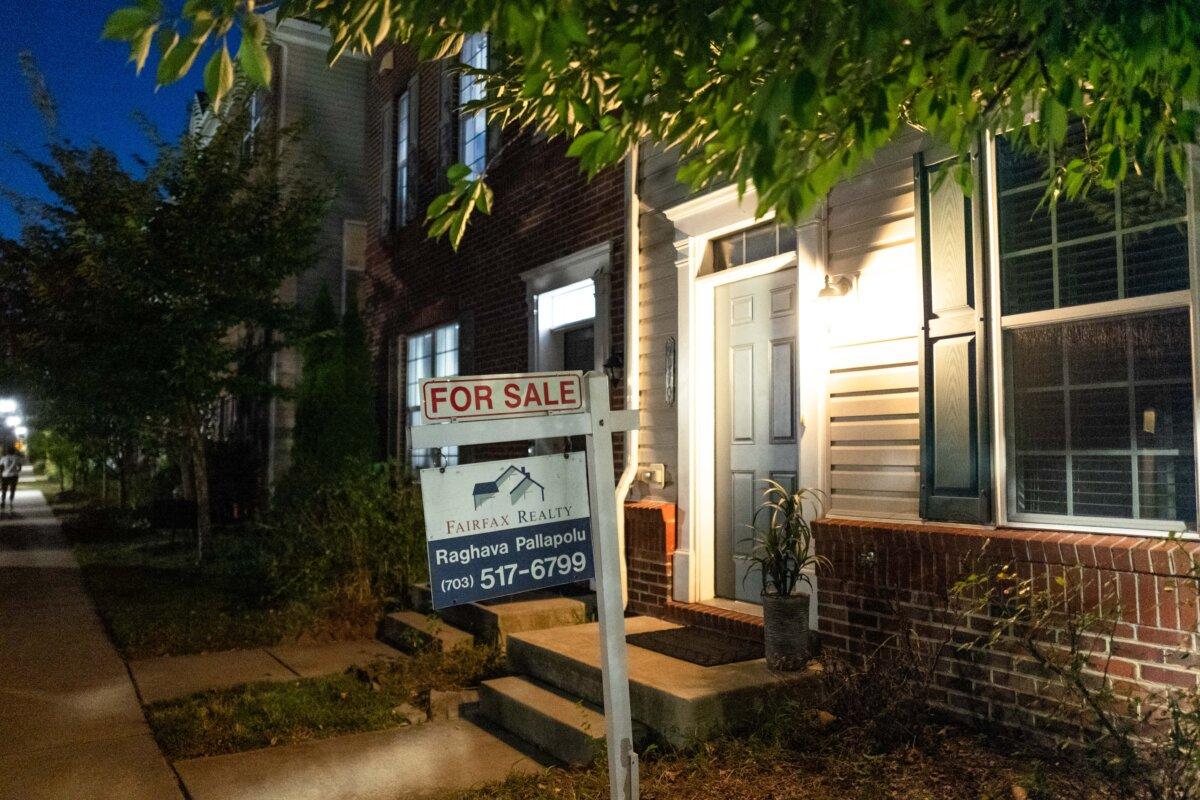
Elevated borrowing costs and high home prices have frozen the real estate market.Sellers, waiting for 2021 conditions to return, are unwilling to lower their price tags. Prospective homebuyers are biding their time, giving them bargaining power.
Today, there are nearly 630,000 more sellers than buyers, the largest gap on record, according to Redfin.
These developments are weighing on the data.
In March, U.S. existing home sales declined by 3.6 percent to an annualized lower-than-expected rate of 3.98 million—the lowest since June 2025, according to data from the National Association of Realtors released on April 13.
Lackluster activity could persist as more Americans become worried about the economy.
An April 15 Redfin survey found that 36 percent of U.S. workers are canceling or postponing a major purchase—such as a home or a car—because of concerns about job security.
Weakening consumer confidence could apply further pressure on the mortgage market, according to Jeff DerGurahian, head economist and chief investment officer at loanDepot.
“As savings remain under pressure and consumers grow more sensitive to higher gas prices and borrowing costs, mortgage rates may have a harder time moving meaningfully lower until there is either more stability in the Middle East or clearer signs of labor market weakness,” DerGurahian said in a note emailed to The Epoch Times.
The median sale price in March edged higher by about 1 percent year over year to above $436,000, Redfin data show.