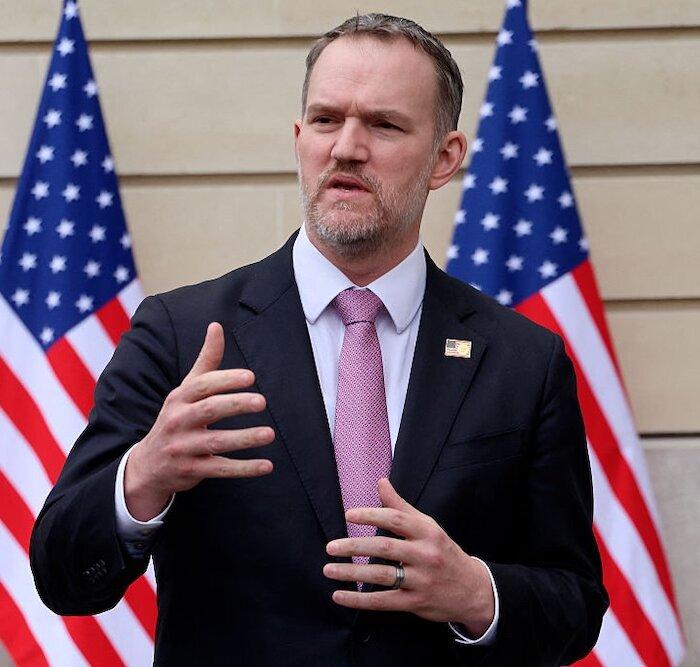
General Motors has not yet seen a major shift in sales as the ongoing war in Iran drives up gas prices, according to Paul Jacobson, the automaker’s chief financial officer.
Speaking on March 18 at Bank of America’s Global Automotive Summit, Jacobson said it typically takes several months of persistently high oil prices before consumers begin moving toward smaller or more fuel-efficient vehicles.
“If you look at the historical models, usually, it takes four to six months of sustained high oil prices before people start to think, ‘Maybe I should go for less mileage, or maybe I should buy down,’” he said. “We certainly don’t see it today where we are.”
Instead, Jacobson said factors such as weather and lower inventory—especially for trucks, as GM prepares to launch new full-size models—have weighed more heavily on the company’s first-quarter performance.
“If anything, we’re challenged a little bit with low inventory in some key products, particularly the Cadillac Escalade and some of the full-size trucks,” Jacobson said.

Gasoline prices have climbed sharply as oil markets react to supply disruptions stemming from the United States and Israel’s war with Iran. Shipping through the Strait of Hormuz, a critical logistic chokepoint through which roughly one-fifth of the world’s oil typically passes, faces constant threat from Iranian attacks, causing both crude oil prices and tanker shipping rates to soar.
Jacobson, meanwhile, has struck an optimistic tone about relations between the Trump administration and the auto industry.
“Just over 12 months ago, we were thinking that tariffs were gonna be the end of the business model and the success that we’ve seen,” Jacobson said at another point during the event, adding that the industry had absorbed much of the anxiety surrounding policy and market changes.
But at the end of the day, he said, “what we found is that the auto industry is really, really important to the [Trump] administration.”
“So even implementing tariffs, [the administration] wanted to make sure [the automakers] can maintain competitiveness,“ Jacobson said. ”And I think they’ve found a nice sort of narrow path to do that.”
GM offset more than 40 percent of last year’s tariff impact through what he described as go-to-market strategies, fixed-cost reductions, and changes to its manufacturing footprint, he said.