Ford, the company that brought the automobile to the masses by making it affordable, appears to be seeking to replicate that success by making low-priced electric vehicles (EVs), in a head-to-head competition against Chinese EV makers.
As Jim Farley, Ford’s president and CEO, explained, this significant business restructuring is the culmination of years of work and progress toward building the modern Ford—a unified organization “capable of scaling high-quality, software-defined vehicles with a choice of propulsion, distinctive digital experiences and features, and a personalized ownership experience that improves over time.”
Aiming for ‘Affordable’ EVs
At the heart of the new structuring is the “affordable” Universal Electric Vehicle (UEV) platform, which combines an ultra-efficient powertrain with a fully zonal architecture powered by in-house software, as well as battery chemistries techniques to cut weight and simplify manufacturing, according to the company.UEV has already produced notable, innovative components such as high-efficiency motors, and will provide the base to electrify the company’s product portfolio, with nearly 90 percent of Ford’s global nameplates offering electrified powertrains by 2030.
Secret Weapon
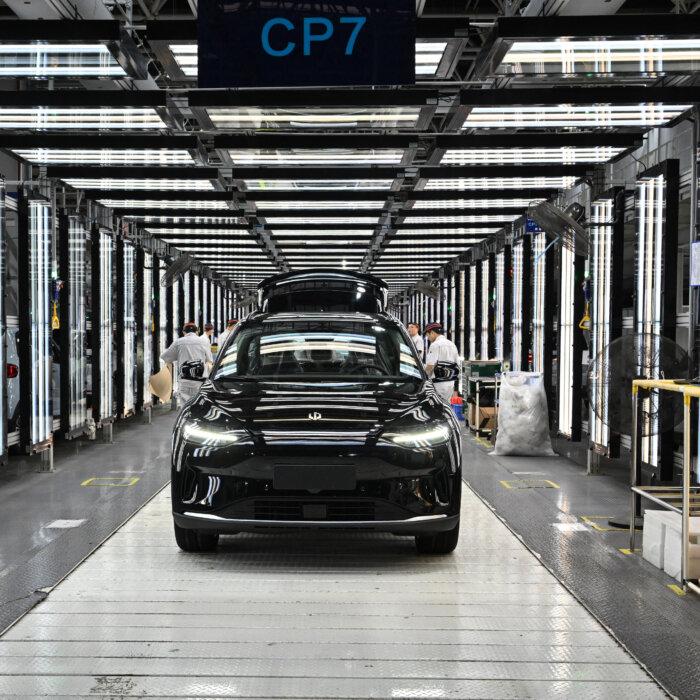
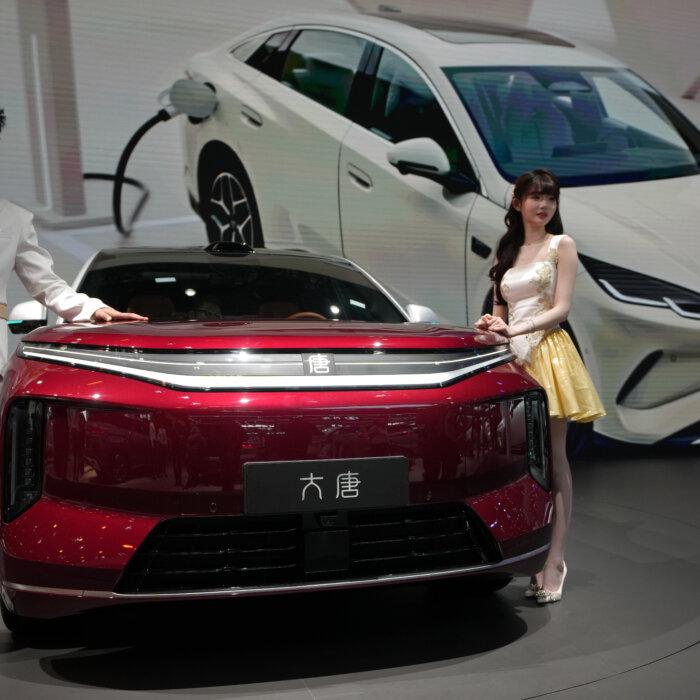
If executed successfully, Ford’s UEV may become the secret weapon in competing against China’s new energy vehicles (NEVs)—a portfolio of EVs that encompasses the battery-powered EV, the plug-in hybrid EV, and the fuel cell EV.Data from the China Association of Automobile Manufacturers show that China exported 7.1 million vehicles in 2025, up by 21.1 percent year over year. Of those, 2.62 million were NEVs—a 100 percent jump from 2024.
Ford is not the only legacy manufacturer announcing ambitious plans to bring EVs to the masses. In September 2025, the Volkswagen Group introduced low-end EV models to compete head-to-head with low-priced zero-emission vehicles from China that have flooded the European market.
Bold Bet
Patrizia Porrini, professor of management at Long Island University, described Ford’s new organization as a bold bet on the future of the automobile.“By creating a unified Product Creation and Industrialization organization under [chief operating officer] Kumar Galhotra, the company is attempting to break down the traditional silos between engineering, software, and manufacturing—barriers that have long prevented legacy automakers from fully integrating their most valuable resources,” Porrini told The Epoch Times.
“This bet on systematizing strategic resources might catapult Ford into early dominance of the [software-defined vehicle] era, where the car is becoming a rolling computer that receives over-the-air updates,” Porrini said, suggesting that the cross-functional integration that systematizes speed and intelligence will be modern Ford’s ultimate competitive advantage, for both early mover positioning and sustained dominance in the EV race.
Michael Satterfield, founder of TheGentlemanRacer.com, said Ford could compete with Chinese EV makers if it were to adapt its approach to today’s automotive and technology landscape.
A Structural Edge
Carol Boyer, professor of finance at Long Island University, echoed this sentiment.Boyer said she believes that Ford’s $30,000 electric truck could resonate with American consumers.
“Given the current geopolitical situation with high gas prices, this may be just the right time for Ford,” she told The Epoch Times.
Satterfield observed that Chinese companies such as BYD and NIO move at a pace at which Detroit traditionally has not.
“They treat cars like consumer electronics, constantly updating software, simplifying manufacturing, and cutting costs,“ he said. ”Meanwhile, U.S. automakers have been treating EVs like a standard vehicle rollout.”
Yet he pointed out where Ford holds a structural edge.
“What Ford has going for it is an understanding of the American market in a way many Chinese brands still do not,“ he said. ”Trucks, road trips, towing, lifestyle, heritage, and emotional connection still matter here. A pickup truck is not just transportation in America—it is identity.”
That advantage, Satterfield argued, makes Ford’s next move particularly consequential.
“That is why Ford’s upcoming affordable midsize EV truck may end up being more important than the F-150 Lightning,“ he said. ”If Ford can build a genuinely affordable electric truck people want—while making money on it—that changes the conversation entirely.
Execution Challenge
However, Satterfield cautioned that execution remains a challenge for Ford.“Because right now, the Chinese EV industry is moving at startup speed, while Detroit is still scheduling meetings about scheduling meetings,” he said.
Porrini said she is also skeptical about execution.
“An org chart change is not a strategy—execution in large legacy companies is notoriously difficult,” she said. “That is the real test of this reorganization’s brilliance: Can Ford practice what it preaches?”
Still, Satterfield said he thinks that Ford has something the Chinese companies do not: manufacturing history, dealer networks, brand loyalty, and deep knowledge of how Americans use vehicles.
“If they can combine that experience with faster development and better software, Ford has a real shot,” he said. “If not, the future parking lot may start looking a lot more like [Shenzhen, China,] than Detroit.”