Federal regulators have given Zoox, an Amazon-owned self-driving vehicle company, a temporary exemption from federal vehicle-safety standards, clearing the way for paid rides in its driverless taxis.
The National Highway Traffic Safety Administration (NHTSA) said on Thursday that Zoox may deploy up to 2,500 vehicles a year for two years. The exemption is subject to enhanced oversight requirements that the agency said could evolve as the company’s technology advances.
Specifically, the exemption covers portions of eight Federal Motor Vehicle Safety Standards, including requirements governing windshield defrosting and defogging, windshield wipers, rear visibility, lighting and braking systems. Those standards were largely written for vehicles designed to be operated by human drivers.
The decision makes Zoox the first company to receive federal approval to charge passengers in a purpose-built robotaxi that lacks conventional human controls such as a steering wheel or pedals.
The company’s boxy, toaster-shaped robotaxi features four carriage-style seats arranged face-to-face, giving the interior the appearance of a small shuttle. Unlike a conventional car, it has no designated front-facing driver’s seat.
That design has forced Zoox to follow a more complicated regulatory path than some of its rivals. Alphabet-owned Waymo, for example, operates modified conventional vehicles that retain human controls and already comply with existing Federal Motor Vehicle Safety Standards.

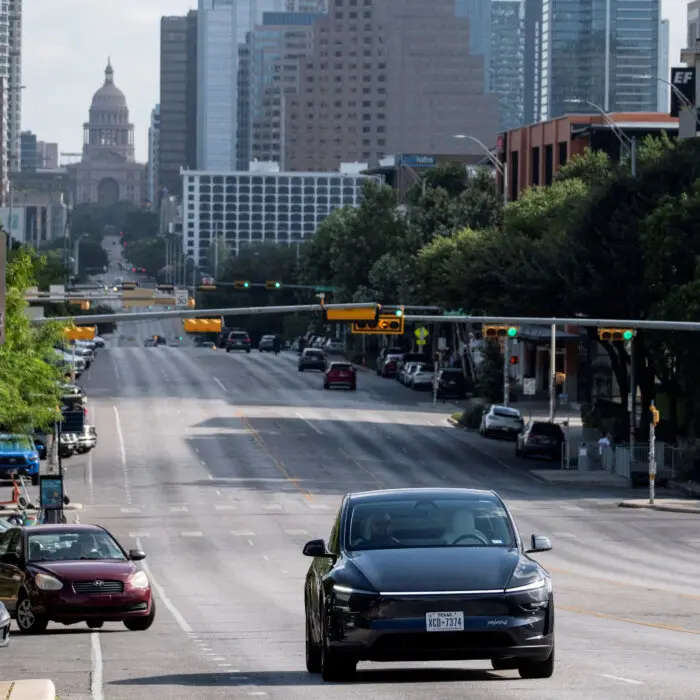
Zoox received a separate demonstration exemption from NHTSA in August 2025, allowing it to operate the vehicles on public roads for testing and noncommercial service. It has since offered free public rides in Las Vegas and limited service in San Francisco.
Zoox Chief Executive Aicha Evans called the commercial exemption an “important milestone” for both the company and the autonomous-vehicle industry.
“We are honored to receive the first-ever commercial exemption for a purpose-built robotaxi from NHTSA, enabling us to begin charging for our service,” Evans said in a statement. “This achievement reflects a shared commitment to enabling innovation while maintaining the highest standards of safety.”
The company said it plans to begin charging for rides in Las Vegas in August.
It also said it would continue working with federal regulators on broader changes to the Federal Motor Vehicle Safety Standards themselves, including updates that would accommodate autonomous vehicles without features needed only by human drivers.
The latest clearance comes less than two weeks after Zoox recalled the automated-driving software used in its entire fleet of 105 robotaxis following an incident at an active fire scene near Las Vegas.
On June 20, an unoccupied Zoox vehicle encountered heavy smoke that obscured the emergency scene. According to the company’s recall filing, the robotaxi entered the area, braked sharply, and ultimately required remote assistance to leave.
Zoox then issued a software update designed to improve its vehicles’ ability to detect and respond to heavy smoke.
The incident was followed by a July 8 warning from NHTSA Administrator Jonathan Morrison to all autonomous vehicles developers over what he called a “clear pattern” of interference with law enforcement or emergency responders. Driverless vehicles, he said, had gone into active emergency scenes, blocked ambulances and firefighters, and responded poorly when there were flashing lights, fire, and traffic cones.
“To state it bluntly: An AV that cannot safely interact with first responders is a danger to the general public,” Morrison wrote.
Under the commercial exemption, Zoox will face additional reporting requirements covering crashes, unexpected stops, and other unusual vehicle behavior. NHTSA may also suspend or revoke the exemption if safety problems emerge.