In a new brief extracted from the DOE’s short-term energy report, the Energy Information Administration (EIA) stated that residential customers in the United States can expect average monthly electricity bills of $178 between June and September, an increase of $5 from a year ago.
“We expect a slight decrease in consumption, driven by cooler forecast summer temperatures relative to last summer, which only partially offsets the expected increase in residential electricity prices in most areas of the country,” the EIA stated in its one-page summary.
According to the DOE’s energy analysis group, the number of cooling degree days—a measure of how hot the temperature is—influences the electricity demand for air conditioning. In its most recent forecast, the EIA expects temperatures to be slightly cooler this summer, with a 1 percent decline in total cooling degree days compared with summer 2024.
The EIA cautioned, however, that weather remains the primary source of uncertainty in the Energy Department’s annual forecast for summer residential electricity bills. If temperatures turn out to be much hotter than expected, households are likely to face higher-than-anticipated electricity bills, especially in the southern states, it stated.
That’s why two of the country’s largest grid operators recently warned that rising temperatures in some areas of the country this summer will lead to peak demand, which would also cause electricity prices to spike and put more stress on the nation’s power grid.
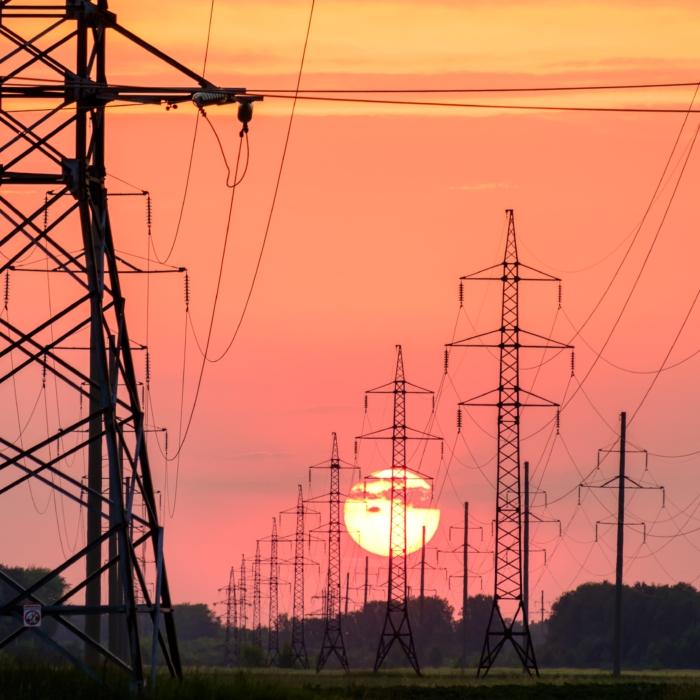

PJM, the grid operator based in Valley Forge, Pennsylvania, that serves 67 million residential and commercial customers mainly along the Atlantic Seaboard, said the National Weather Service has forecasted a hotter-than-normal summer across its operating region.
PJM’s record summer peak load was set at 165,563 megawatts (MW) in 2006. The company’s summer peak was about 152,700 MW and 147,000 MW in 2024 and 2023, respectively. PJM stated that it has approximately 179,200 MW of generation capacity this summer and 7,900 MW of contracted power to meet extra demand.
“This outlook at a record peak heat scenario reflects our yearslong and mounting concerns as we plan for enough resources to maintain grid reliability,” Aftab Khan, head of PJM’s operations, planning, and security, said in a statement provided to The Epoch Times.
In Little Rock, Arkansas, officials from regional grid operators Midcontinent Independent System Operator (MISO) and Southwest Power Pool are also prepared for peak demand this summer. MISO’s power transmission system serves parts of Canada and 15 states, spanning the Midwest and South.
In a statement shared with The Epoch Times, MISO is forecasting that peak demand across the grid operator’s transmission system could reach nearly 123 GW this summer. The system is overseen from three control centers in Carmel, Indiana; Eagan, Minnesota; and Little Rock, Arkansas.
“Part of our value proposition is maximizing existing resources to maintain reliability across a large, diverse region,” said Jessica Lucas, MISO’s executive director of system operations.
“At some point, we find ourselves in need of every available resource to keep the power flowing across our footprint almost every summer. The continued reduction in accredited capacity makes it much more challenging, especially during heat waves, hurricanes, or other extreme weather events.”
SPP, the Little Rock-based grid operator responsible for coordinating electric reliability across a 14-state region in the central and western United States, also forecasts higher-than-normal summer temperatures but expects to meet regional power demand.
“Although we anticipate no major concerns this season, we are working proactively with our member utilities to monitor the grid and execute contingency plans,” Bruce Rew, SPP’s senior vice president of operations, said in a statement provided to The Epoch Times.
According to the EIA, residential customers in New England are expected to see the largest bill increase, about $13 per month, because of higher natural gas costs for power generation. The West South Central region is also likely to face higher electricity bills this summer, mainly because of increased air conditioning use during the hot months.
Residents in the South Atlantic and East South Central regions can expect slight increases in their electricity bills, similar to what they experienced last summer. In contrast, bills in the Mountain and Pacific regions are likely to decrease because of reduced electricity use after near-record temperatures in the West last summer.