U.S. consumers managed to push through a choppy first half of the year—from higher gasoline prices to uneven employment conditions—and still kept spending.
Fuel costs and the labor market remain households’ biggest worries, surveys show, yet shoppers continued to power the broader economy well beyond the gas station.
Now, with pain at the pump subsiding and unemployment still hovering near historic lows, the question is whether the second half will offer consumers a smoother ride.
Employment Ups and Downs
The United States kicked off 2026 on a high note by adding 160,000 new jobs in January. A month later, the labor market reversed virtually all of those employment gains. This resulted in almost no payroll growth in the first two months of the year.
Economic observers and monetary policymakers expressed concern that the U.S. labor market would repeat last year’s disappointing numbers.
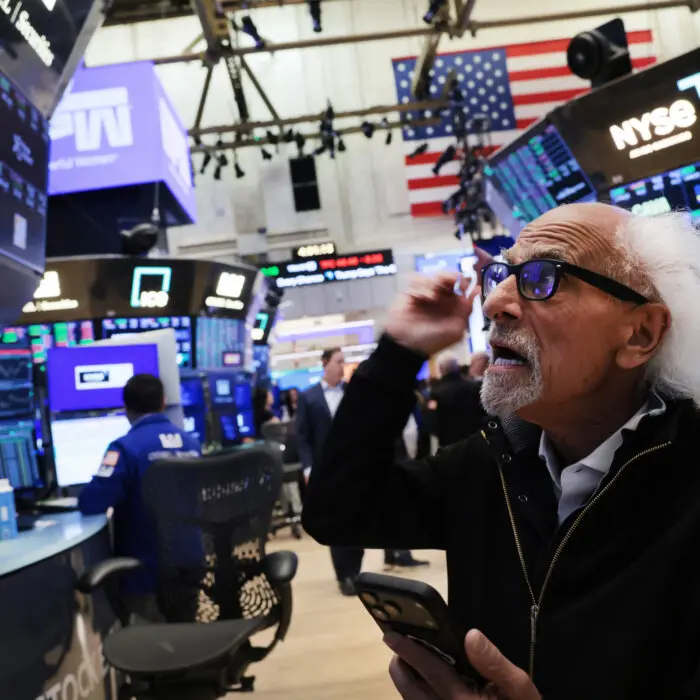
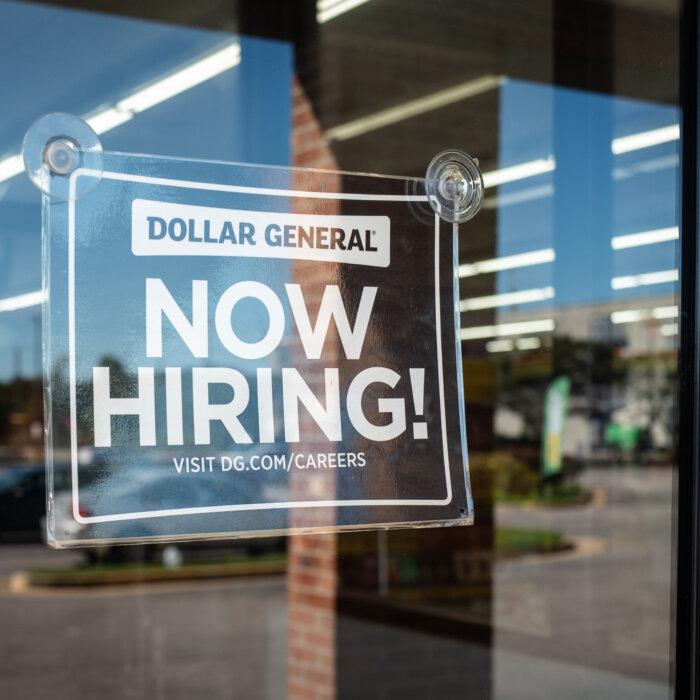
But data from March to May defied expectations. Even after revisions, employers added almost 500,000 jobs during those three months.
June’s payrolls came in below expectations, at 57,000 new jobs.
Because of changing labor market dynamics—lower immigration and declining labor force participation—the consensus view is that the jobless rate will continue to remain low.
“Despite June’s monthly setback, the job market is still thawing relative to 2025’s low-hire, low-fire freeze. The economy has room to make up for weak hiring in 2025,” Bill Adams, chief U.S. economist at Fifth Third Commercial Bank, said in an emailed note to The Epoch Times.
“Over time, this will help consumers feel more upbeat about the economy and boost consumer sentiment.”
How consumers feel about the economy may also relate to inflation, as recent price pressures have eroded wage gains.
Nominal (non-inflation-adjusted) hourly wages have risen by 1.3 percent cumulatively in the year’s first half. Consumer prices, however, have climbed by 2.1 percent in the same span.
Inflation Watch
The war in Iran upended global energy markets, sending the price of a barrel of crude oil to as high as $119. As a result, gasoline prices hit an average of $4.50 per gallon in May, before dropping to $3.80 as of July 6.
Frustrated by another bout of inflation pressures, consumer sentiment collapsed to an all-time low in May, according to the University of Michigan.
But a downbeat outlook for the labor market also weighed on consumer confidence.
Heading into the second half, the geopolitical and economic situation is stabilizing.
As investors price in a resolution between Washington and Tehran, global energy prices have been calming, providing inflation relief for the American people.
“We believe inflation is on the wane,” Nancy Tengler, CEO and chief investment officer at Laffer Tengler Investments, said in a note emailed to The Epoch Times. “We have argued that inflation will print flat to negative during Q3.”
June’s consumer inflation is projected to fall by 0.1 percent, and July’s reading is expected to decline by 0.2 percent, according to the Cleveland Federal Reserve. On a 12-month basis, the June and July numbers are anticipated to be 3.9 percent and 3.5 percent, respectively.
Although employment expectations have been subdued, continued job growth could bolster views, Adams said.
“If job growth holds at this rate in the second half of the year, the unemployment rate should fall, providing a further boost to consumer sentiment,” he said.
Opening Wallets
Like the labor market, retail sales were mixed in the first two months of the year. The holiday hangover resulted in no growth in January, but consumers barreled through a severe winter storm in February and opened their wallets.
Excluding spending at gasoline stations, retail sales still expanded at a solid pace, as seen in government and private-sector statistics.
Even the K-shaped trend—a divergence in economic performance across income categories that has captured economists’ attention over the past three years—has narrowed for both spending and wages, according to the Bank of America.
This could be driven, in part, by the FIFA World Cup, but consumer behavior has shifted only minimally throughout the year, the bank’s economists noted in their latest Consumer Checkpoint report.
“Consumer financial health remains strong, with no clear signs of households resorting to borrowing to support spending,” they wrote. “While the savings rate has fallen, households’ level of savings is relatively elevated. And the seasonal upswing in deposit balances from tax refunds has been larger in 2026 than it was in 2025.”
Additionally, some of the latest measurements can be attributed to baby boomers rather than the wider country, Tengler said.
Real (inflation-adjusted) disposable income has declined by almost 1 percent this year. The personal savings rate stands at 3 percent, down from 4.4 percent in January.
“The worries around flat real [disposable personal income] and a declining saving rate should be attributable to the boomers who control over half of the nation’s new worth and are done working and saving,” she said.
“This is not a macro trend but localized to the richest generation in history.”
Ultimately, a record stock market, low unemployment, and slowing inflation could fuel consumers’ appetite to spend in the second half of the year.