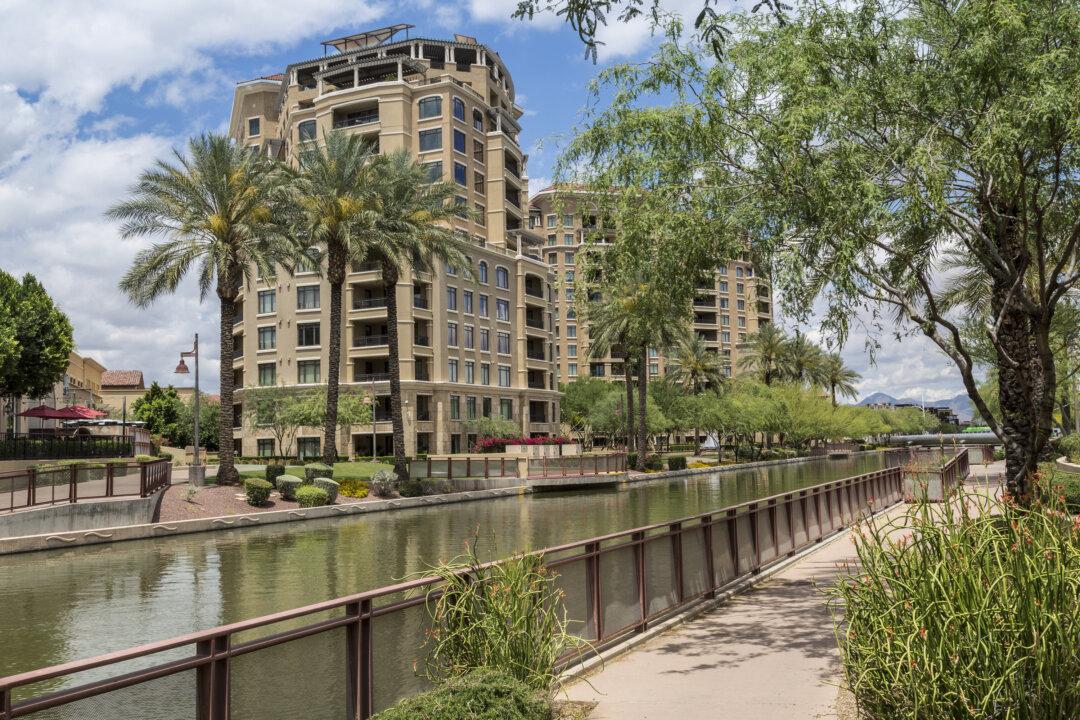
As housing affordability has become a central concern in the United States in recent years, the construction of affordable housing has risen sharply, according to a new analysis. Programs from both the federal and local governments helped support that development.
In compiling the analysis, RentCafe analyzed data from 146 markets nationwide, including only “fully-affordable” buildings—those with at least 90 percent of units subject to income restrictions.
The analysis shows that from 2020 to 2024, the nation added nearly 310,000 new affordable apartments, with nearly a third completed in 2024, setting a record with 91,000 new rental units.
Bipartisan Effort
A May 2025 report by the National Low Income Housing Coalition shows that there was a shortage of 7.1 million affordable rental homes for low-income families in the United States, noting that more than 70 percent of the “extremely” low-income renters were “severely cost-burdened.”
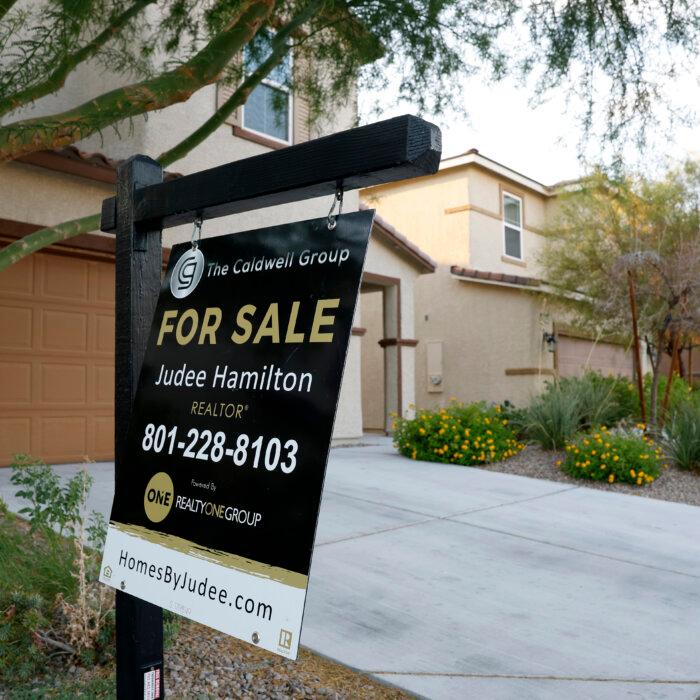
According to HUD, families paying more than 30 percent of their income in rent are considered cost-burdened, and those paying more than 50 percent are considered severely cost-burdened.
Both major parties are pushing for more affordable housing to lower the cost of living for Americans.
“For example, Texas’ Republican leadership advanced housing supply reforms with Democratic backing,” the report stated.
Blue Cities Dominate Top 20 Markets
According to RentCafe’s analysis, the top 20 markets accounted for more than half of the nearly 310,000 affordable apartments added over the five years ending in 2024.Seattle ranked first with 14,290 completed units, followed closely by New York with 14,240. Austin placed third with 13,343 units, followed by Minneapolis–St. Paul with 10,722 and Atlanta with 10,486.
Other notable large metros on the Top 20 list include Los Angeles, Denver, San Francisco, Miami, Chicago, Portland, Charlotte, Dallas, Nashville, and Phoenix. All of these metros added between 5,000 and 9,000 new affordable apartments during the same period.
Among the top 20 metros with the largest increases in new affordable housing, San Antonio ranked first, with a 223 percent increase in completed apartments over the previous five-year period. The Texas metro added 9,000 new housing units between 2020 and 2024.
Phoenix experienced a 206 percent surge, while Charlotte’s affordable units grew by 191 percent. New York added 14,000 units during the same time period, increasing its affordable apartment building by 185 percent.
Additional fast-growing markets included Atlanta, Portland, Nashville, Austin, and San Francisco—all with increases over 100 percent.
Doug Ressler, manager of business intelligence for RentCafe’s parent firm, Yardi Matrix, told The Epoch Times that they rely strictly on the data.
The analysis noted that the “American Rescue Plan” directed billions of dollars into affordable housing construction through local fiscal recovery funds. Meanwhile, many states also encouraged the development of affordable rental units by introducing or expanding their own tax credit programs.
Under the plan, state and local fiscal recovery funds assist developers in providing affordable housing through new construction or adaptable reuse projects.
Legislation permitting accessory dwelling units (ADUs) has also facilitated more affordable housing options. ADUs are self-contained, smaller residential units located on the same lot as an existing single-family home.
Blaz Korosec, founder and CFO of Investorade, agrees that improving restrictive local zoning policies is key to enabling more affordable housing construction. Based in Dallas, Investorade buys and sells property in all 50 states, from RV parks to residential homes to land.
“Left-leaning cities tend to have larger teams, target higher densities, and already have more robust housing authorities to shepherd projects to completion,” he told The Epoch Times.
“Right-leaning cities typically have less dense allowances but embrace private market players more. The issue is they often take longer to approve projects and diminish their own incentives.”
Korosec added that municipalities also need to upgrade regulations for qualifying tenants, income limits, and housing tax credits.
New York real estate analyst Jonathan Miller told The Epoch Times that the Top 20 city list may have more to do with population than politics.
“Most urban centers are more ‘blue,’ and often the surrounding suburbs are more ‘red,’ but I believe that has more to do with the density of the urban centers,” he said.
Trump Administration Actions
Since the beginning of his second term, President Donald Trump has focused on reducing housing costs for Americans and has proposed a range of measures.On Jan. 7, he said he would take action ‘immediately’ to ban institutional investors from purchasing single-family homes and would call on Congress to enact the proposal.
Though institutional purchases of homes are small overall, they are concentrated in specific areas and can significantly raise prices for potential homebuyers during periods of tight inventory, the report said.
Meanwhile, the Trump administration is seeking to reduce regulatory hurdles it says have constrained the housing supply, with HUD focusing on zoning rules and financing pathways as key areas of focus.
“Under President Trump’s leadership, we are fulfilling our mission of fostering strong communities by supporting access to quality, affordable housing, expanding the housing supply, and unlocking homeownership opportunities for the American people,” he said during the testimony.
Turner added that, as part of its campaign against overregulation, HUD eliminated the Affirmatively Furthering Fair Housing rule, which had stripped certain zoning powers from local communities.
Turner acknowledged that, historically, it has been difficult for individuals to obtain loans for modular housing and that HUD would continue to work with its partners to pave the way for such financing.
Multi-Pronged Approach
While New York ranked high in the number of apartments added, Ressler noted that most of that housing was built in the Bronx, Brooklyn, Queens, and Staten Island, with very few in the priciest borough, Manhattan.“Affordable housing development in New York City is not evenly distributed; it’s concentrated where the city has rezoned neighborhoods, invested public land, or targeted transit-rich areas,” he said.
“The Bronx consistently builds more affordable housing per capita than any other borough, driven by large rezonings, city-owned sites, and nonprofit developers.”
Miller agreed that adding affordable housing in high-priced areas such as Manhattan is more difficult.
“Without enough tax credits, these buildings are not possible due to the high cost of land, labor, and materials,” he said. “It’s a big challenge.”
Led by a bipartisan group of co-chairs, including state and local government executives, the Task Force focuses on land, construction, capital, regulation, policy, and government in its quest to create more affordable housing.
Working with local cities and states, it encourages municipalities to relax regulatory requirements, upgrade zoning around transit corridors, and shorten the time for permit approvals.
Miller believes that the lack of sufficient affordable housing is a national problem that needs to be solved.
“So many people who work within the metro areas can’t afford to live there, and that makes it more difficult for businesses to attract employees,” he said. “Ultimately, that can impede a municipality’s growth.”
More seriously, noted Miller, insufficient affordable housing can harm businesses and the economy overall.
“This challenge doesn’t have just one answer,” he said. “There has to be a multi-pronged approach to the solution with local governments and businesses working together.”
Ressler added that the bulk of the demand is among lower and middle-income groups.
“Service workers are often being priced out of both owning and renting a home, and this is a clear indication for government and business to help close the gap,” he said.