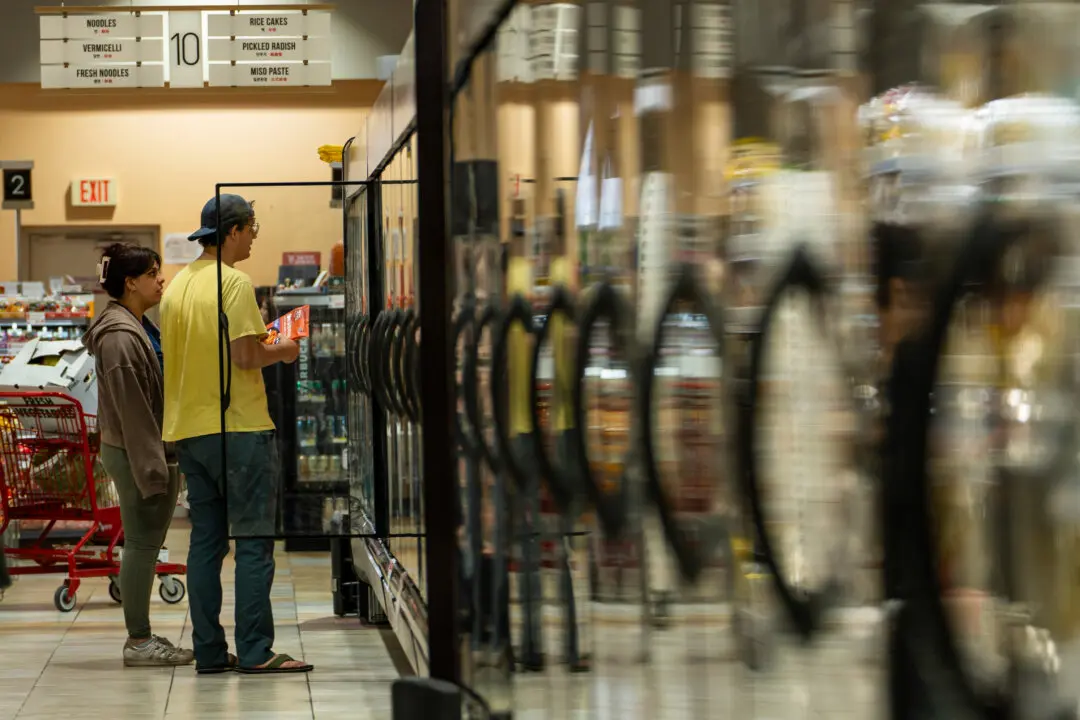
The turkey has been devoured, and now millions of shoppers will be hitting the malls and walking off the Thanksgiving calories. But they may not have the appetite to spend as much as in previous years.
Black Friday has arrived, the day retailers transition their balance sheets from red ink to black.
In recent years, it has become a multi-day extravaganza, with shoppers also eyeing Cyber Monday for deals to save money.
Consumers will spend their time navigating the retail landscape—in-store and online—sniffing discounts and ready to check off gifts from their naughty-or-nice Christmas shopping list.
Black Friday will remain the most popular day. Seventy percent of shoppers are expected to patronize brick-and-mortar stores and online platforms on Nov. 28.


“The holidays are an important part of many consumers’ budgets, and that trend is especially true this season,” Katherine Cullen, Vice President of Industry and Consumer Insights at the National Retail Federation, said in a news release.
Tighter budgets, economic uncertainty, and price pressures may be forcing Americans to be a bit more cautious when opening their wallets this year.
Survey respondents cited financial constraints and the cost of living as reasons to curtail their spending.
Those earning less than $50,000 per year plan to spend 12 percent less, while households making $200,000 or more anticipate reducing their consumption by 18 percent.
Still, 82 percent of surveyed consumers plan to shop this weekend, up from 79 percent in 2024.
Additionally, Generation Z shoppers plan to make their presence known, as 92 percent of the 13–28 demographic expects to participate in the annual tradition.
“While we expect shoppers to plan to pull back on spending, we also anticipate strong participation throughout the holiday week, with many planning to blend the convenience of online shopping with the energy of the in-store experience,” Natalie Martini, vice chair and U.S. Retail and Consumer Products sector leader at Deloitte, said in a news release.
Cyber Monday will remain the largest online shopping day of the season, rising 6.3 percent year over year to $14.2 billion.
However, Black Friday growth is anticipated to outpace Cyber Monday, surging more than 8 percent to almost $12 billion.
Mobile devices are forecast to account for 56 percent of online spending, compared with the more conventional desktop shopping.
Additionally, as household budgets come under pressure, Buy Now Pay Later programs are expected to drive $20.2 billion in online spending, a 11 percent increase.
Boosting the Economy
The U.S. economy is fueled by two-thirds consumption, which may need shoppers to bolster their spending to make up for the anticipated government shutdown-driven fourth-quarter weakness.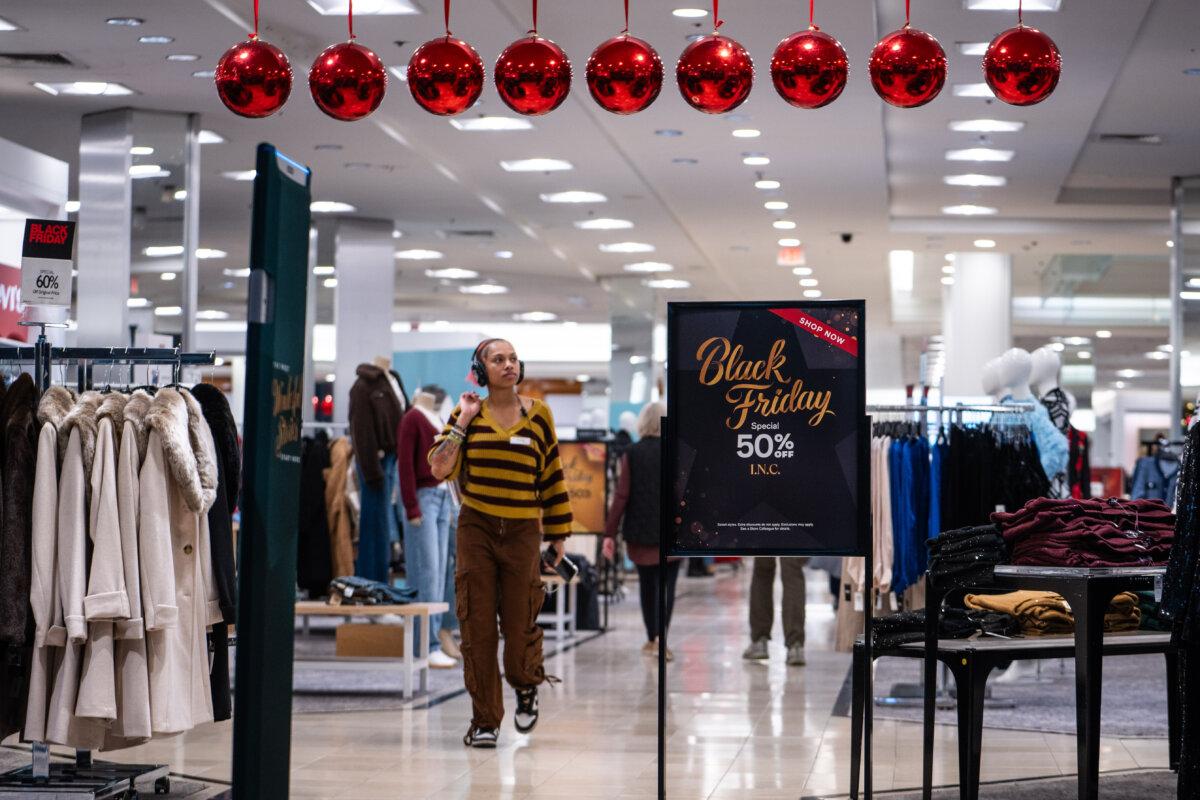
Still, increasing financial anxiety around the holiday season could weigh on growth prospects.
“My famous line, ‘Confident consumers consume,’ is oft repeated by me for a reason. It is real, and consumption makes up the bulk of economic growth,” Mark Malek, CIO at Siebert Financial, said in a note emailed to The Epoch Times.
“Are consumers confident?”
Beyond consumers’ feelings, their actions are also appearing in the hard data.
This fell short of the market estimate of 0.4 percent.
Most notably, the retail sales control group—a measure that excludes building materials, car dealerships, food services, and gasoline stations and contributes to GDP calculations—dipped 0.1 percent.
Historically, Christmas and holiday spending have been a significant component of growth in the final three months of the year, adding between 2 and 3 percentage points to the gross domestic product.
Consumers will be opening their wallets before Santa Claus arrives, but they may be a bit more cautious than in previous years, which could weigh on GDP to close out a raucous 2025.