Belarusian President Vladimir Lukashenko threatened opposition political candidates and journalists with the use of repression, as hundreds of people who took part in mass protests on Sunday’s election were arrested.
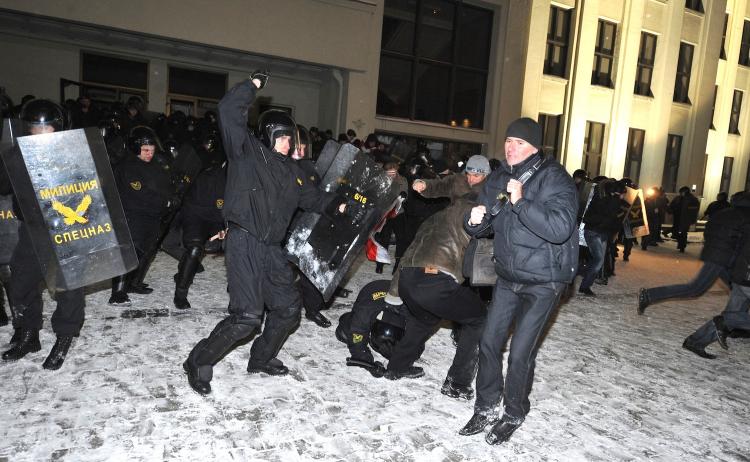
During Sunday’s presidential elections, thousands of people who supported opposition candidates held large demonstrations in the capital of Minsk, protesting election results, which they believed were rigged. The Belarusian Electoral Commission said that incumbent President Lukashenko won the elections with almost 80 percent of the vote.
Media reports said that there were many demonstrators beaten and arrested, including journalists and at least six opposition political candidates.
“The battles ended yesterday. There will be no connivance to destabilize the situation in the country. Calm and security needs to be provided,” said Lukashenko at a press conference, according to the BBC.
“We will improve the social model that has been created in the country despite any radical breakdown,” he said, according to the presidential website.
The Belarusian Interior Ministry stated that unarmed policemen had faced aggressive people on Sunday, most of whom were drunk. Policemen were to use force in order to calm protesters, which caused some heavy injures among policemen, the ministry said.
Reporters Without Borders (RSF) stated that the police had arrested about 20 journalists and some of them were beaten because the police did not distinguish among those present at the protests.
RSF, citing the Belarusian Association of Journalists, said that the victims among journalists included foreign reporters from Ukrainian, Russian, and German media organizations as well as some reporters working for media such as Agence France-Presse and the New York Times. Some of the reporters lost their equipment through police seizure.
“We urge the authorities to publicly condemn the use of violence and to identify and punish those responsible,” RSF said in a statement.
“We finally also deplore the official media’s one-sided coverage of the events of the past few days, which has prevented the public from having an informed view of this key moment in Belarus’ political life,” it added.
The United States and the Organization for Security and Cooperation in Europe (OSCE) has condemned the violence taking place during the elections and the following arrests by the government.
“This election failed to give Belarus the new start it needed. The counting process lacked transparency,” said a statement by Tony Lloyd, who leads the short-term OSCE observer mission in Belarus.
“The people of Belarus deserved better. And, in particular, I now expect the government to account for the arrests of presidential candidates, journalists, and human rights activists,” he added.
Lukashenko, the current president, has been elected four times since 1994. However, some Belarusians say that their voices make no difference, because it is clear the country still essentially retains a communist-style regime inherited from the Soviet Union.
“I talked to local people … many of them did not go to vote at all. Some went, but voted against Lukashenko,” says Ekaterina Pavlova, 30, who lives in the western town of Hrodna and works as a marketing manager there.
“In villages, people were forced to vote, otherwise they would be taken to a drug abuse clinic. Policemen told them to go to vote and convoyed voters to polling stations,” she added.
“Public workers were forced to vote or they would be fired, or to vote ahead of a scheduled voting day under control,” she continued.
“A lot of people did not want to participate in the voting because the outcome is already known. It has happened several times,” she said.
During Sunday’s presidential elections, thousands of people who supported opposition candidates held large demonstrations in the capital of Minsk, protesting election results, which they believed were rigged. The Belarusian Electoral Commission said that incumbent President Lukashenko won the elections with almost 80 percent of the vote.
Media reports said that there were many demonstrators beaten and arrested, including journalists and at least six opposition political candidates.
“The battles ended yesterday. There will be no connivance to destabilize the situation in the country. Calm and security needs to be provided,” said Lukashenko at a press conference, according to the BBC.
“We will improve the social model that has been created in the country despite any radical breakdown,” he said, according to the presidential website.
The Belarusian Interior Ministry stated that unarmed policemen had faced aggressive people on Sunday, most of whom were drunk. Policemen were to use force in order to calm protesters, which caused some heavy injures among policemen, the ministry said.
Reporters Without Borders (RSF) stated that the police had arrested about 20 journalists and some of them were beaten because the police did not distinguish among those present at the protests.
RSF, citing the Belarusian Association of Journalists, said that the victims among journalists included foreign reporters from Ukrainian, Russian, and German media organizations as well as some reporters working for media such as Agence France-Presse and the New York Times. Some of the reporters lost their equipment through police seizure.
“We urge the authorities to publicly condemn the use of violence and to identify and punish those responsible,” RSF said in a statement.
“We finally also deplore the official media’s one-sided coverage of the events of the past few days, which has prevented the public from having an informed view of this key moment in Belarus’ political life,” it added.
The United States and the Organization for Security and Cooperation in Europe (OSCE) has condemned the violence taking place during the elections and the following arrests by the government.
“This election failed to give Belarus the new start it needed. The counting process lacked transparency,” said a statement by Tony Lloyd, who leads the short-term OSCE observer mission in Belarus.
“The people of Belarus deserved better. And, in particular, I now expect the government to account for the arrests of presidential candidates, journalists, and human rights activists,” he added.
Lukashenko, the current president, has been elected four times since 1994. However, some Belarusians say that their voices make no difference, because it is clear the country still essentially retains a communist-style regime inherited from the Soviet Union.
“I talked to local people … many of them did not go to vote at all. Some went, but voted against Lukashenko,” says Ekaterina Pavlova, 30, who lives in the western town of Hrodna and works as a marketing manager there.
“In villages, people were forced to vote, otherwise they would be taken to a drug abuse clinic. Policemen told them to go to vote and convoyed voters to polling stations,” she added.
“Public workers were forced to vote or they would be fired, or to vote ahead of a scheduled voting day under control,” she continued.
“A lot of people did not want to participate in the voting because the outcome is already known. It has happened several times,” she said.