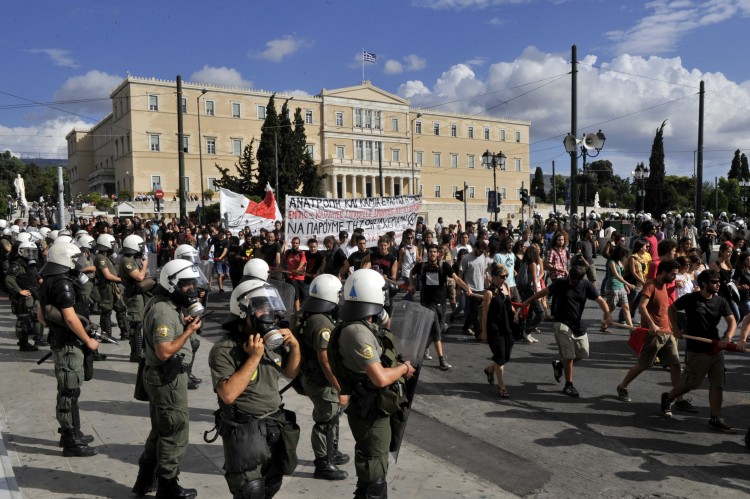
Austerity Measures Prompt Transit Worker Strike in Greece

September 22, 2011 Updated: October 1, 2015
Police stand guard as students and teachers protest in front of the Greek parliament on September 22, 2011. (Louisa Gouliamaki/AFP/Getty Images)

The Greek government introduced new austerity measures on Thursday, prompting a nationwide strike by public transit workers, according to media reports.

The new measures include cuts to government workers’ pensions, and putting thousands of civil servants on furlough in order to pay back a $10 billion aid loan from the European Union, BBC reported.

Buses, trains, and subway systems throughout the country were shut down after the austerity cuts were put in place.

In Athens, the strike made commuters use their own vehicles to get to work, creating massive traffic jams. 

“The situation is dramatic, all major streets are jammed,” a traffic police official, who remained unnamed, told Reuters.

If Greece cannot repay its debt, the country risks becoming the first to leave the eurozone, whose 17 members have adopted the euro as their currency.

The European Economic and Monetary Affairs Commissioner, Olli Rehn told BBC that
“An uncontrolled default or exit of Greece from the eurozone would cause enormous economic and social damage.” 

Rehn said that the EU “will not let this happen,” according to the report.

One Greek campaigner told EuroNews that, “The government is trying to terrorize workers through suspending civil servants on reduced pay, with merger and closure of organizations,” 

Two of Greece’s major public unions said they will jointly hold two 24-hour-long strikes next month in response to the austerity measures.