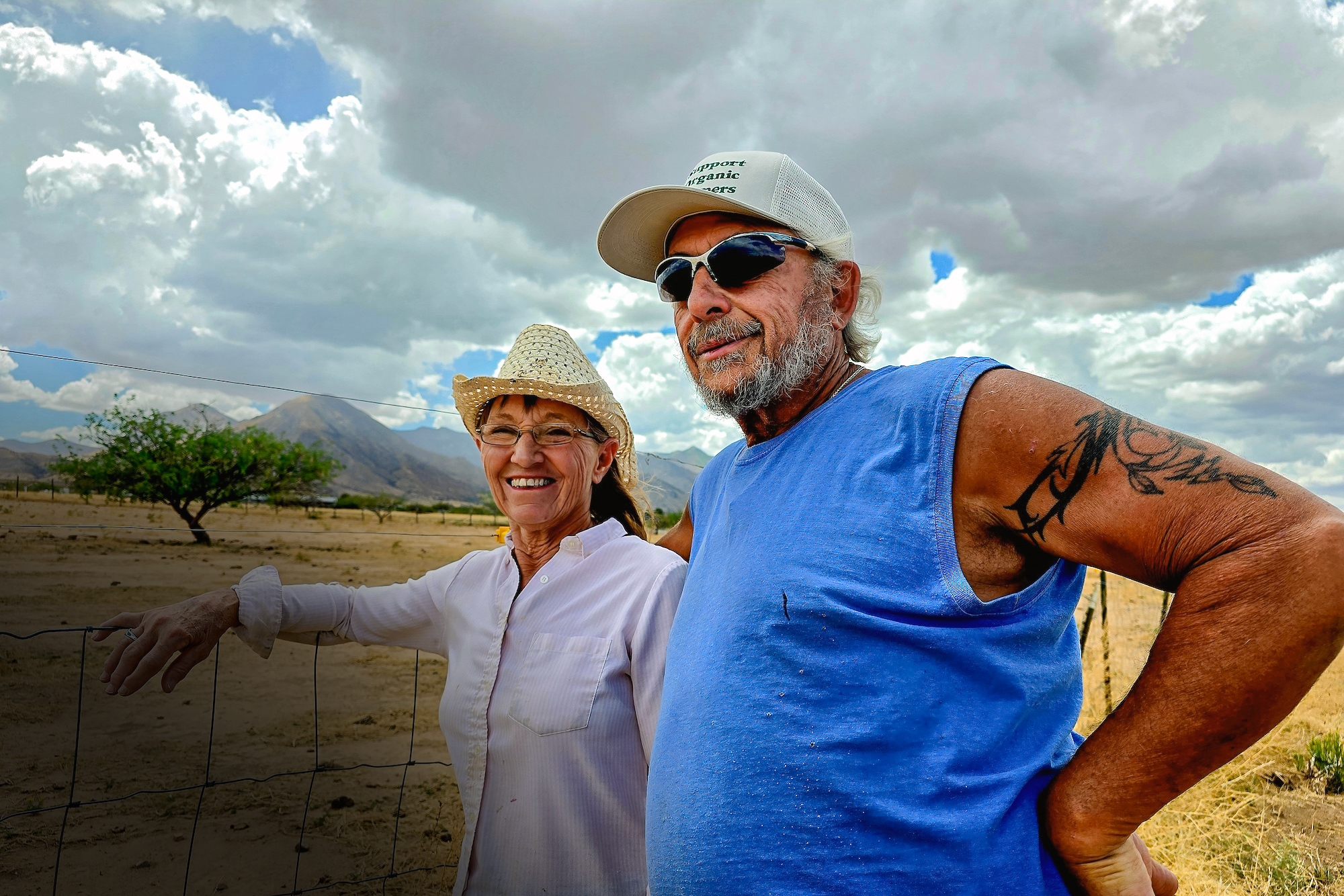
HEREFORD, Ariz.—With his arms wide open, Lloyd Trachtenberg welcomed every drop of water from a passing summer drizzle as if it had not rained in years.
The shower ceased as quickly as it had begun, and a brisk desert breeze stirred in the sweltering 90-degree heat.
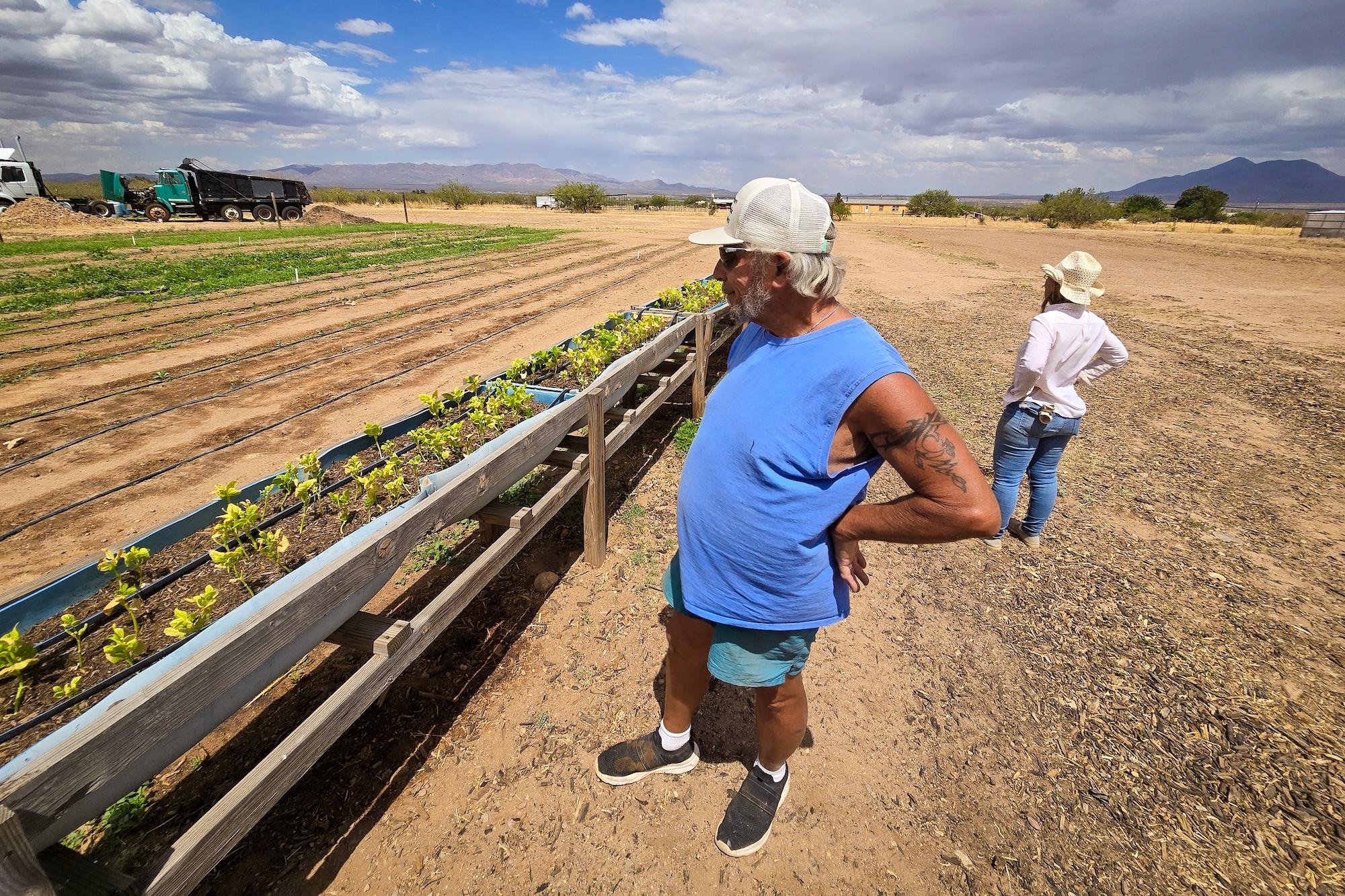
It was a welcome break from the blazing sun he experiences while working on the crops at Laine Organic Farms in Hereford, Arizona, just four miles from the Mexico border.
Organic farming is hard, according to Trachtenberg.
“It’s dirty. It’s hot—and you work your butt off seven days a week,” he said.
“Machinery is always breaking. Something needs this; something needs that.”
Trachtenberg, 75, and his wife, Terrie DePoy, 71, run their organic farm to generate income and create a lasting legacy for their retirement.
They work as hard and as strategically as they can, spending more hours than they would prefer. Their work embodies their belief that nature responds justly to how it is treated.
You get back what you put in, DePoy said.
Trachtenberg said organic farming would be almost idyllic if not for the rising costs, lower yields compared with modern agriculture, and excessive paperwork.
He has seen a significant rise in organic farming over the years due to federal support and more consumers wanting food without chemicals and pesticides. But it’s getting tougher and more expensive to meet the regulatory burdens, he said.
Nature’s Way
Before they started the farm in 2004, Trachtenberg and his wife had a passion for gardening. It was a healthy activity that kept them connected to the earth.Trachtenberg staunchly opposes the chemical and pharmaceutical companies and their links to large-scale agriculture and the wholesale and retail food industries.
He was a mental health therapist until he retired in 2000. He also worked as an Food and Drug Administration livestock inspector covering the six New England states.
From this experience, he gained knowledge about organic food and believes that it is healthier than the processed and chemically contaminated products that most grocery stores stock today.
“We started just growing our own under the organic umbrella,” Trachtenberg said, “but without any certifications. We decided that was the way to go.”
DePoy, who grew up on a farm in Michigan, recently retired from her nursing career to focus on organic farming and healthy living.
People are becoming increasingly aware of the dangers of processed foods and are tired of feeling unwell, according to DePoy. Organic farming offers a natural solution to modern agriculture, which often prioritizes profits over health.
“The kids are sick, the schools are sick. We have lots of physicians who buy from us. We have one [customer] who’s really fanatical about what’s going on,” she said.
Trachtenberg said Laine Organic Farms has managed to remain profitable as a small organic farm, while similar-sized businesses have struggled during a period of industry growth.
“We’re profitable to the point that we’ve paid for everything on the farm—feed and stuff. We make enough to pay for that. Until last year, everything had come out of pocket. And now we’re starting to build [out] even higher,” he said.
Trachtenberg believes that federal grant and tax incentive programs often favor larger organic farms rather than small farms like his.
“If you’re 20 acres, you’re considered a small guy,” he said. “You fight and fight and fight, but you’re not big enough. You’re not ’this’ enough. You’re not ’that' enough. You don’t get the breaks.”
The largest certified organic farm in the United States is Cal-Organic Farms in California’s San Joaquin Valley, with about 40,000 acres of certified land.
Too Much Red Tape
Bureaucracy and regulatory barriers can make it particularly challenging for new farmers to start an organic farm, Trachtenberg said.Many people find the work more taxing than the rewards from production and investment, which makes them think twice about pursuing it, according to Trachtenberg.
“Organic requires a lot more work because you don’t have the chemicals. You’re fighting the weeds—the weather,” he said.
In the past few years, the farm has received very little rain. However, their 300-foot-deep well remains certified clean for organic farming.
“It has to be tested every year to make sure there’s no contaminants in the water,” Trachtenberg said.
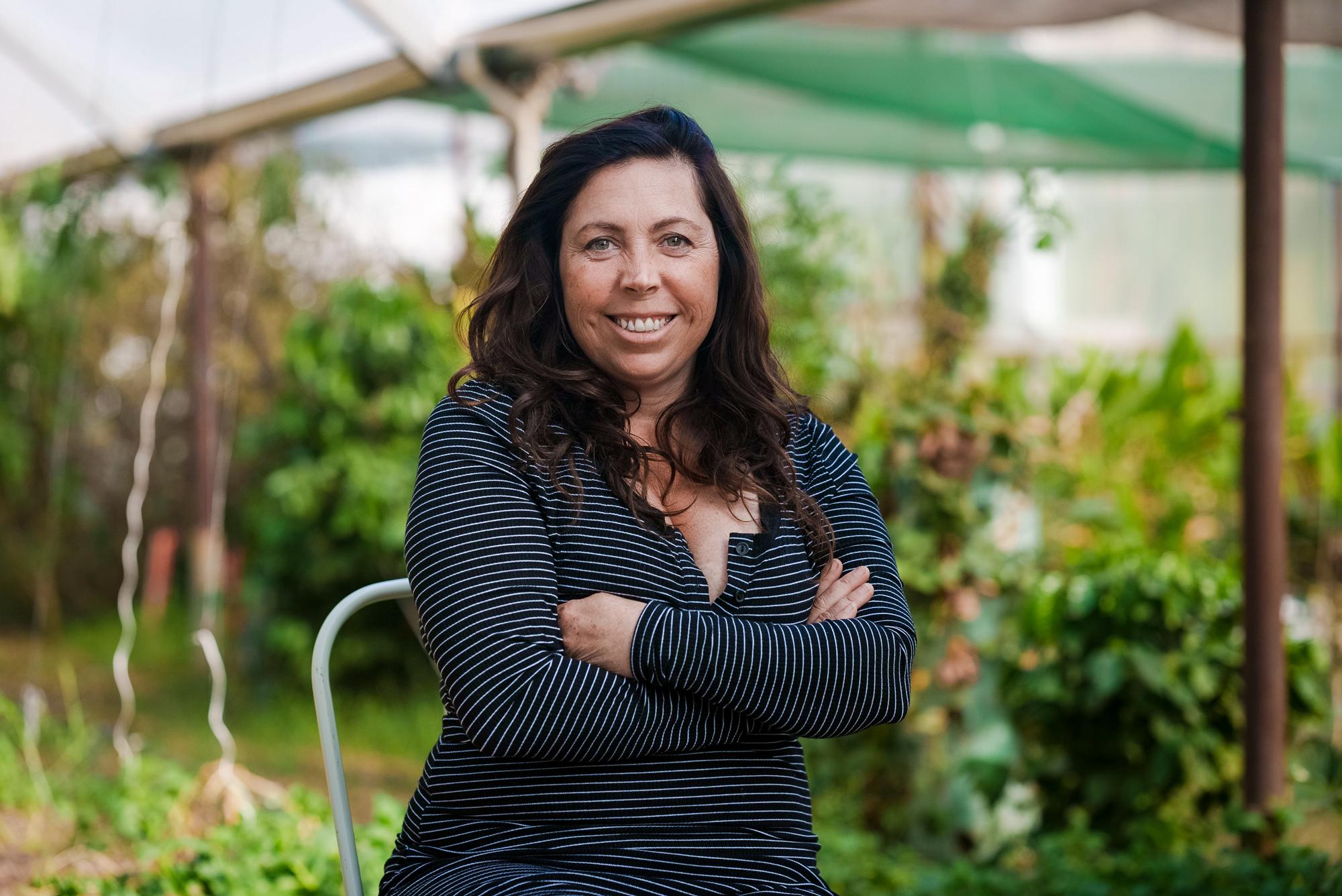
In 2022, Mollie Engelhart opened Sovereignty Ranch in Bandera, Texas, a 206-acre working ranch and certified regenerative farm, after managing a 56-acre farm in California.
The farm grows various crops in greenhouses and fields and raises cattle, pigs, goats, and sheep. It also has a restaurant and a stand for selling meat and produce.
While organic farming avoids synthetic inputs like chemical pesticides and fertilizers, regenerative agriculture aims to restore and enhance soil quality, water resources, and biodiversity, according to Engelhart.
“Certified organic is essentially a list of what you can and cannot do. It is largely about not spraying chemicals,” she said.
“For smaller farms, the main issue with organic certification is that you have to track every seed purchase. That’s not a problem. But if you’re a market farmer growing 200 different kinds of stuff, it’s very hard to keep track of all those seeds.”
Older organic seeds can pose a significant problem because records may be incomplete or missing. Because of this, farmers need to provide a sworn statement in addition to other paperwork.
Engelhart said this process can be very time-consuming.
“The regenerative certification is more based on soil testing, and you make agreements to use less chemicals or no chemicals, depending on what your certification level is,” Engelhart told The Epoch Times.
“It’s also about integrating principles of regenerative agriculture, so that’s cover crops, biodiversity, no tilling, animal integration, and less chemicals or no chemicals, and so on.”
Engelhart views the added paperwork and government scrutiny as a type of “fine” on small organic farms.
“We’re fining the person who’s using less chemicals and giving the benefit to the one that is using chemicals.”
Engelhart said that without a lobby representing organic farmers, the government tends to prioritize larger mainstream agriculture interests with grants and political support.
She believes that more local control and less government intervention would best serve the interests of small organic farms.
“I am hopeful for small farmers to continue, but it’s really hard,” Engelhart said. “I’m struggling to pay my mortgage and all the rest of the bills that we have.
Higher Costs
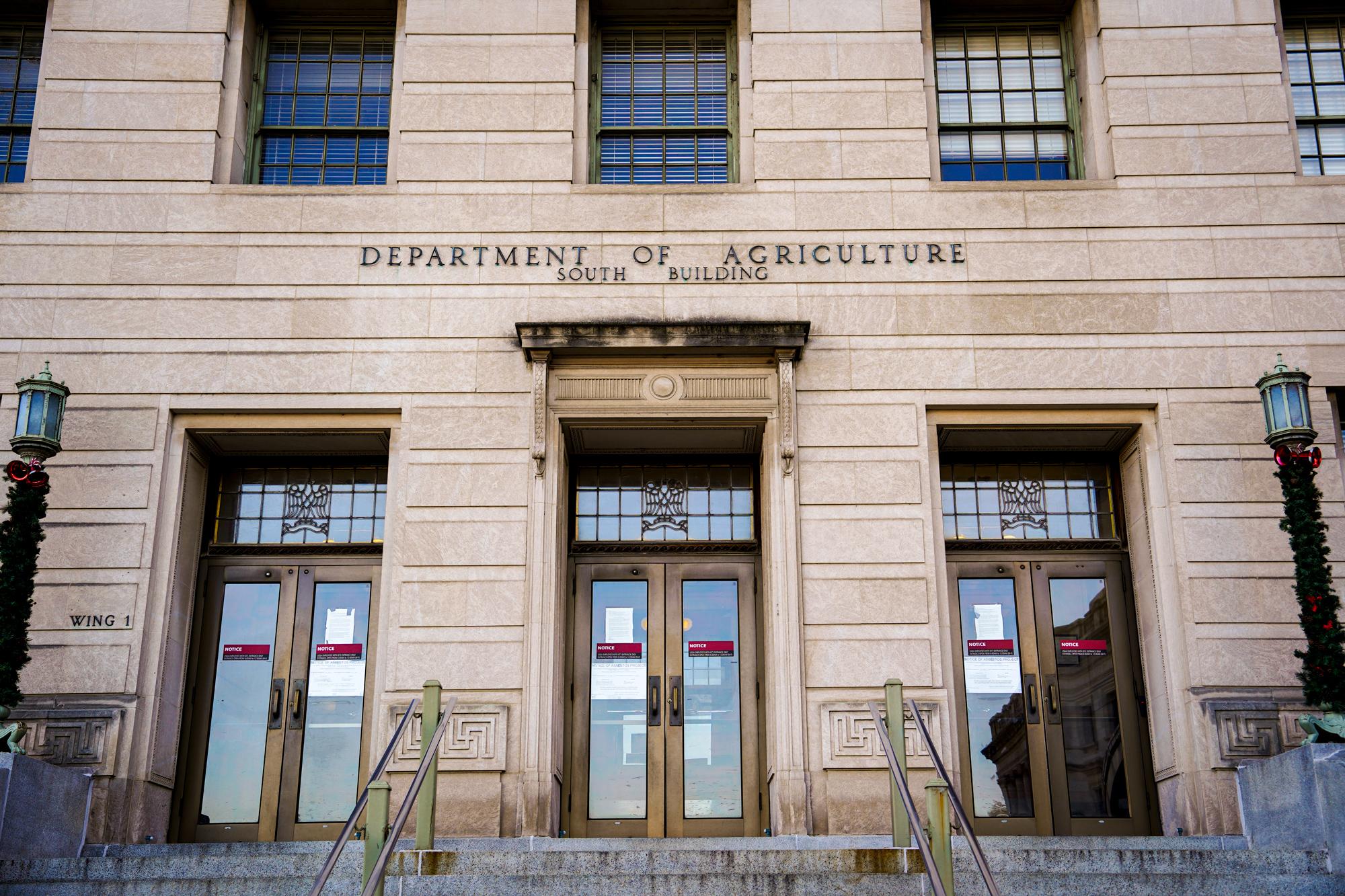
ProduceLeaders.com found that obtaining USDA certification can be expensive, making it challenging for new organic farms and those transitioning to organic practices.Unlike their generally larger mainstream counterparts, small certified organic farms often struggle to maintain healthy soil using natural techniques.
These costs include application and site inspection fees, as well as annual certification fees.
“We wanted to get certified for a long time,” Trachtenberg told The Epoch Times. “It was costly with lots of paperwork. It’s government paperwork.
“When we first looked into it, it was about $12,000 just to sign up. Not a lot of people have $12,000—not to shell out upfront.”
Trachtenberg said maintaining organic certification requires annual inspections, which incur additional out-of-pocket costs.
“We have to pay the inspector fee for [their] travel, hotel—the whole nine yards,” he said.
“She spends a whole day here, eight hours to do 20 acres. She walks around and looks at everything. Then, it’s an hour or so of paperwork on the computer.”
He said if they buy seeds, they must be organic or heirloom.
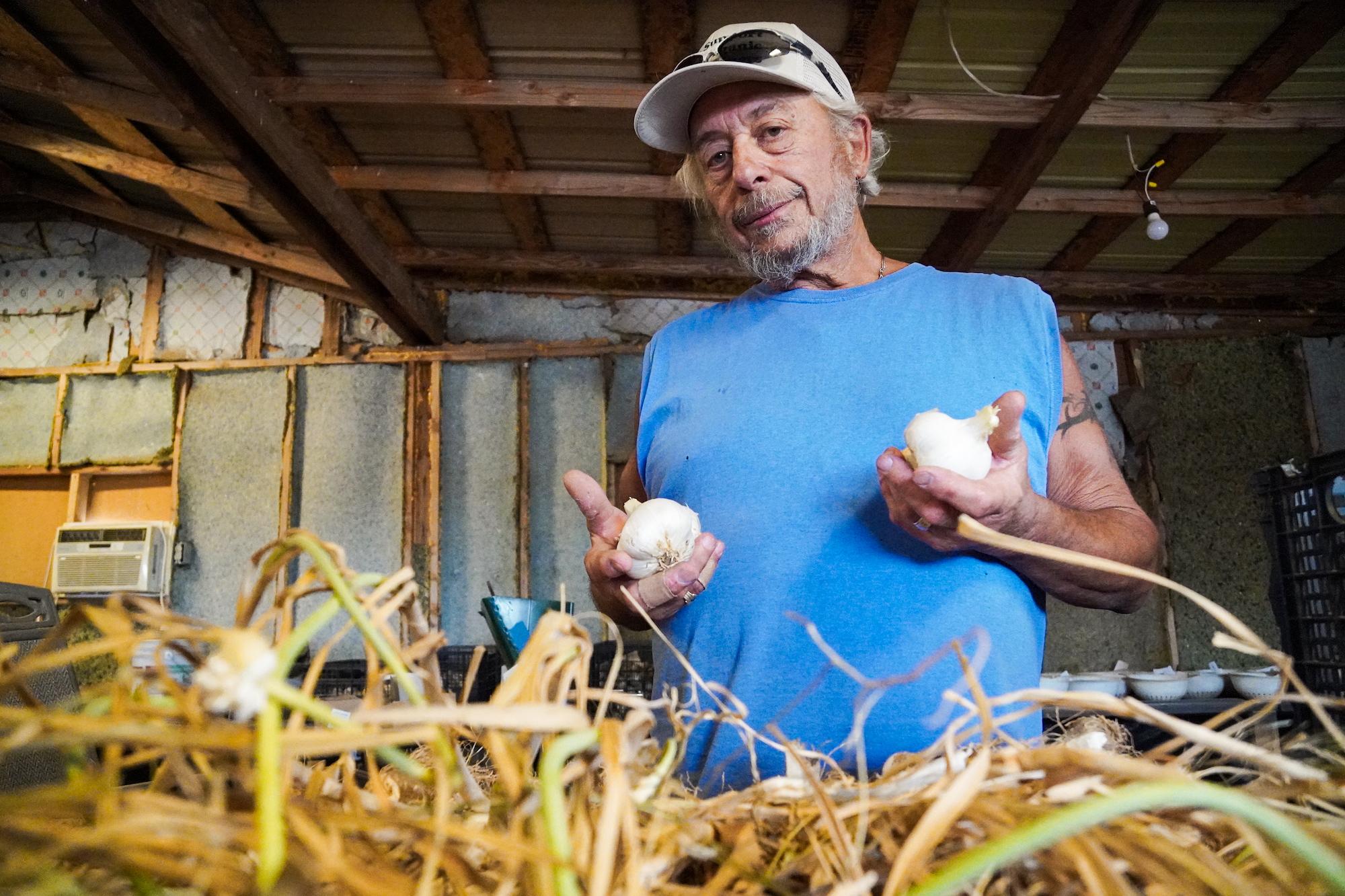
“We usually save all of our seeds. Once they’re in our ground, they’re certified organic so that we can use them. We have to document everything,” Trachtenberg said.
Once the USDA approves a product as organic, it verifies that the product genuinely meets the established standards, Trachtenberg said.
He acknowledged that there is a considerable amount of deception in the organic market. Many products labeled as “organic” come from countries with less stringent or nonexistent regulations for organic farming.
USDA organic regulations prohibit the use of specific conventional tools, including synthetic fertilizers and pesticides.
The state had 245,333 acres of certified organic farmland, with an average farm size of 169 acres, compared to the national average of 281 acres. Milk from cows was the top organic commodity, generating $107 million in sales.
Vermont had the highest percentage of organic farms at 11 percent, while California, Maine, and New York each accounted for 4 percent.
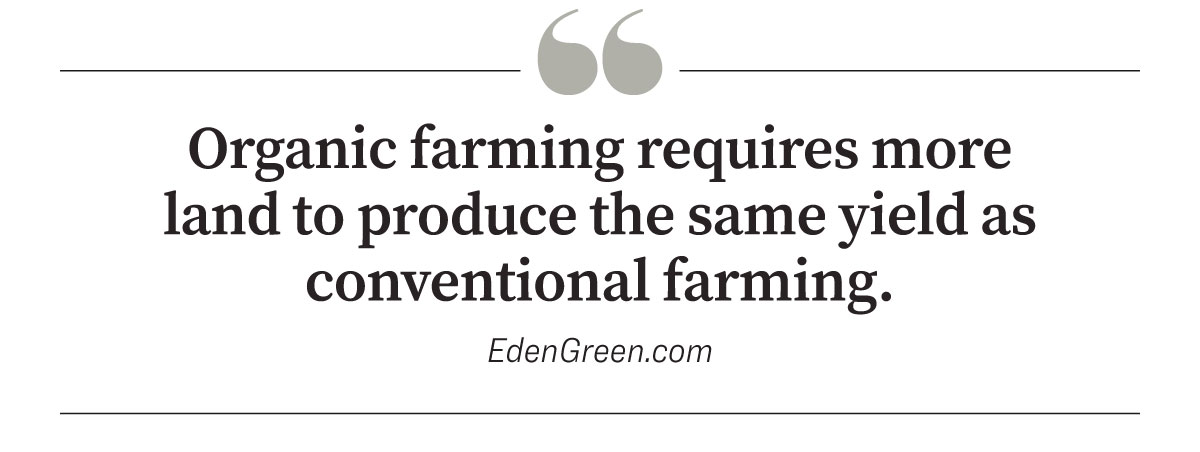
“Organic farming requires more land to produce the same yield as conventional farming,” the outlet wrote.
This increased land use can potentially lead to deforestation if not managed carefully. Organic farms often need more water because of less efficient irrigation systems.
Soil-Free Alternative
The USDA’s recent decision to certify hydroponics as organic presents another challenge for organic farming.Hydroponics is a method of growing plants using a nutrient-rich solution, rather than soil.
The lawsuit seeks to prohibit the sale of hydroponic produce labeled as USDA organic.
Trachtenberg and DePoy see themselves as enthusiasts—rather than obsessed—when it comes to raising animals and growing crops using organic methods.
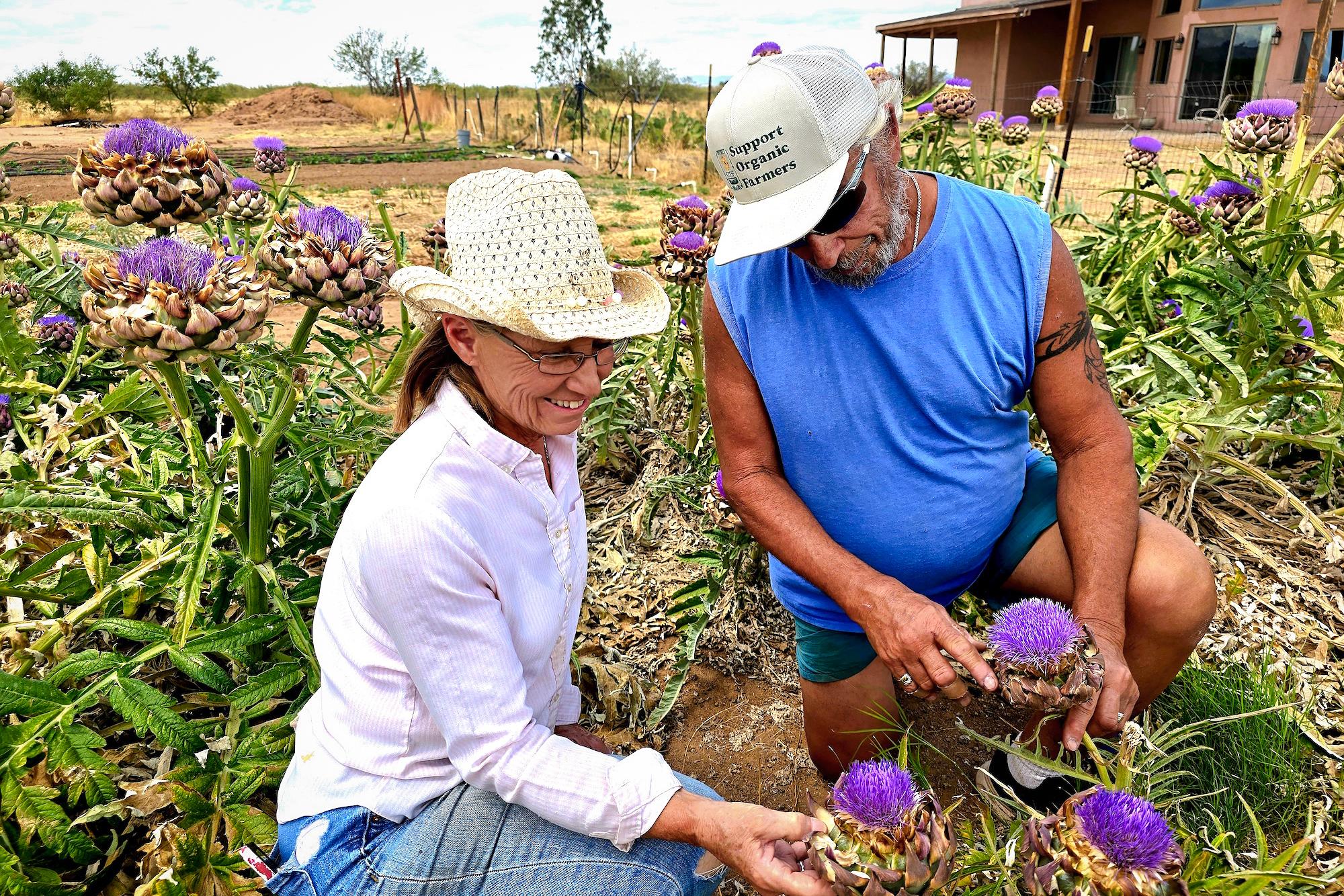
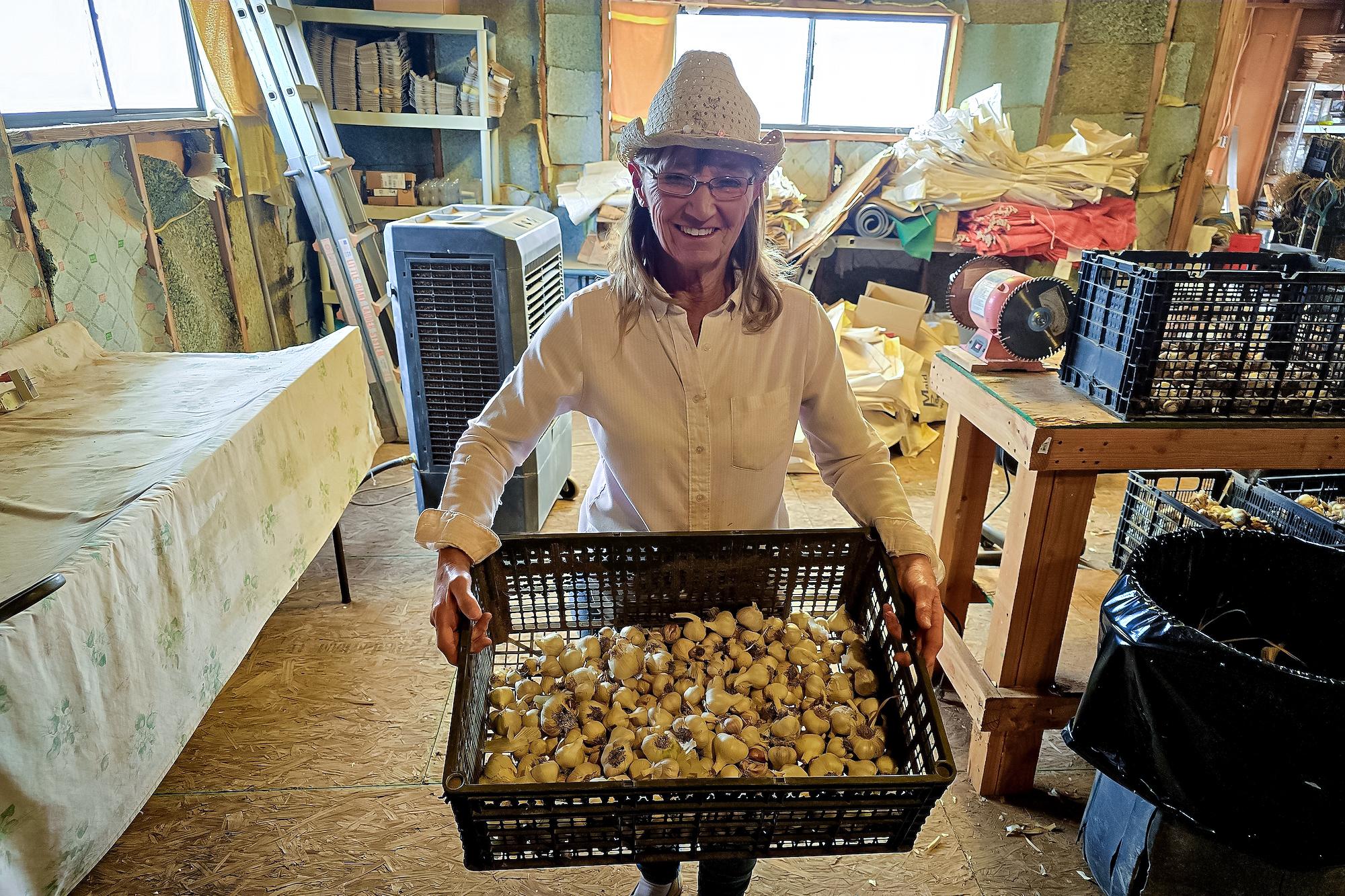
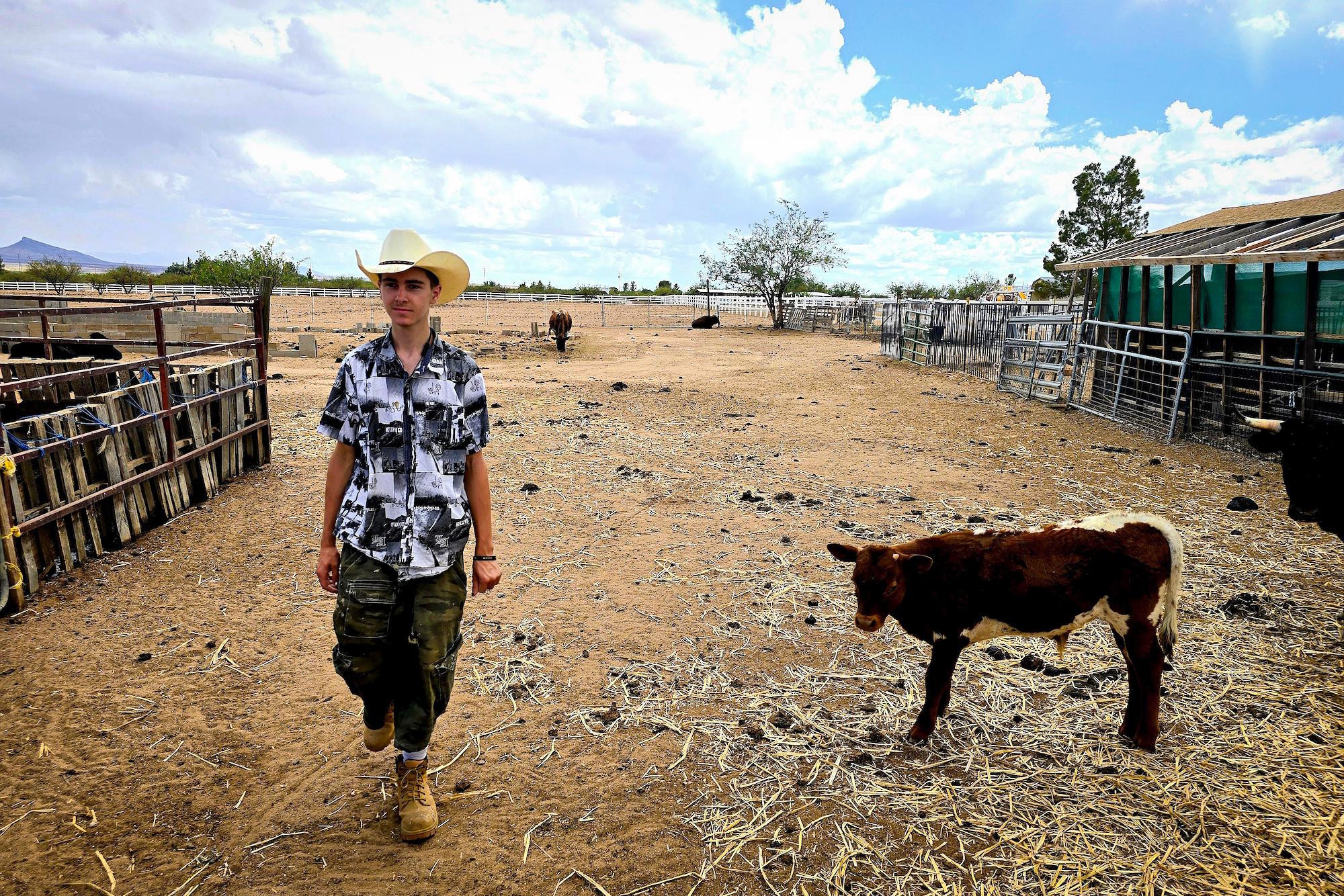
They enjoy watching their plants thrive in a natural environment, using an irrigation system that draws 15 gallons of water per minute from a natural well. The flowering artichokes, watermelons, asparagus, and leafy greens flourish in soil fertilized with livestock manure and fish oil.
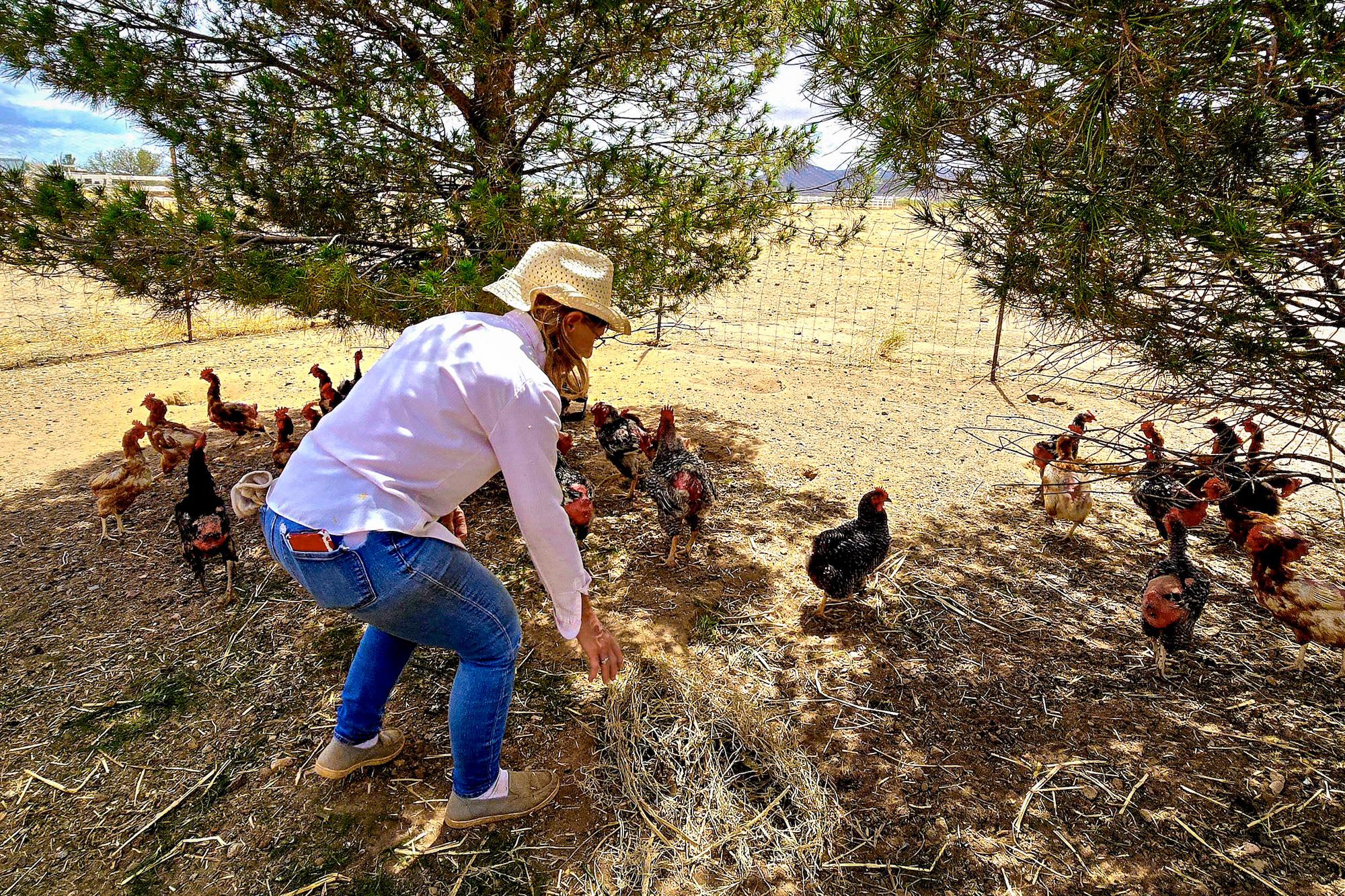
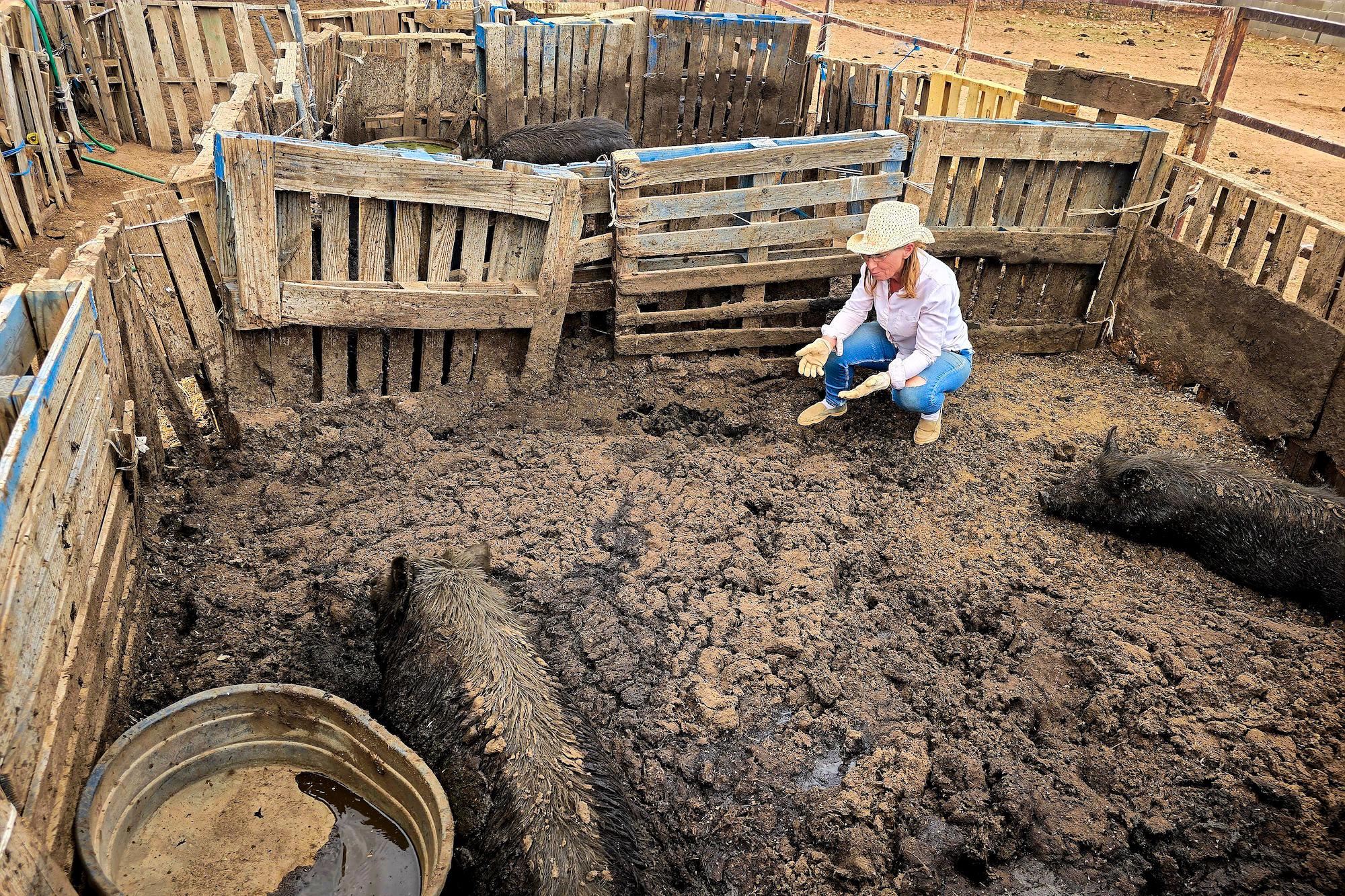
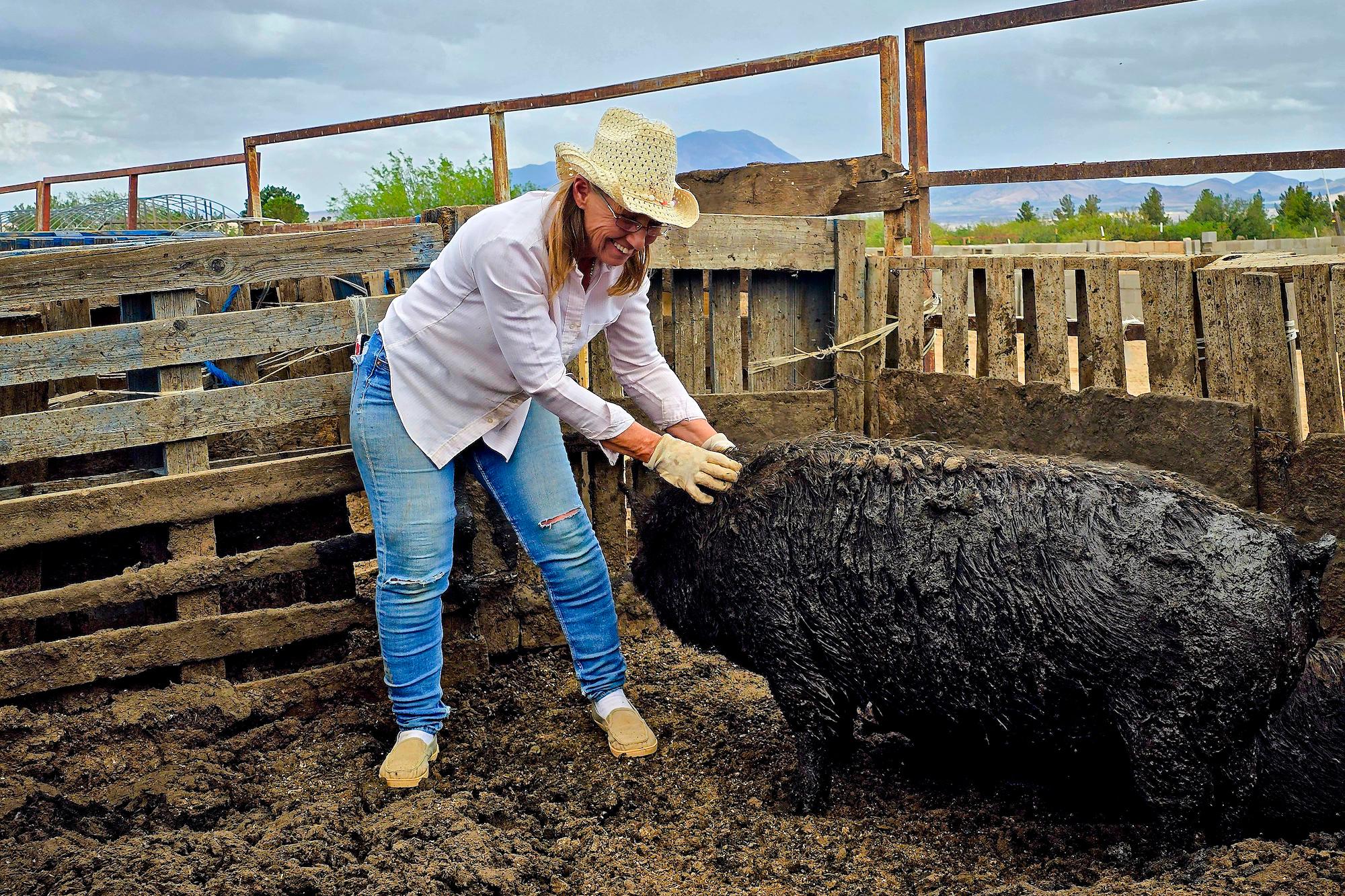
Outside, the hens are healthy and clucking, while the roosters crow in the coop. The pigs lazily wallow in the pungent mud of their enclosure, and the farm-bred cattle roam freely.
Trachtenberg believes that it is a moral duty to operate the business in harmony with nature. He’s committed to this mission, even with all the hurdles in the industry.
“Morally, it’s worth the investment. You don’t do it unless you have the background. It just infuriates me when money and power are more important,” Trachtenberg said.