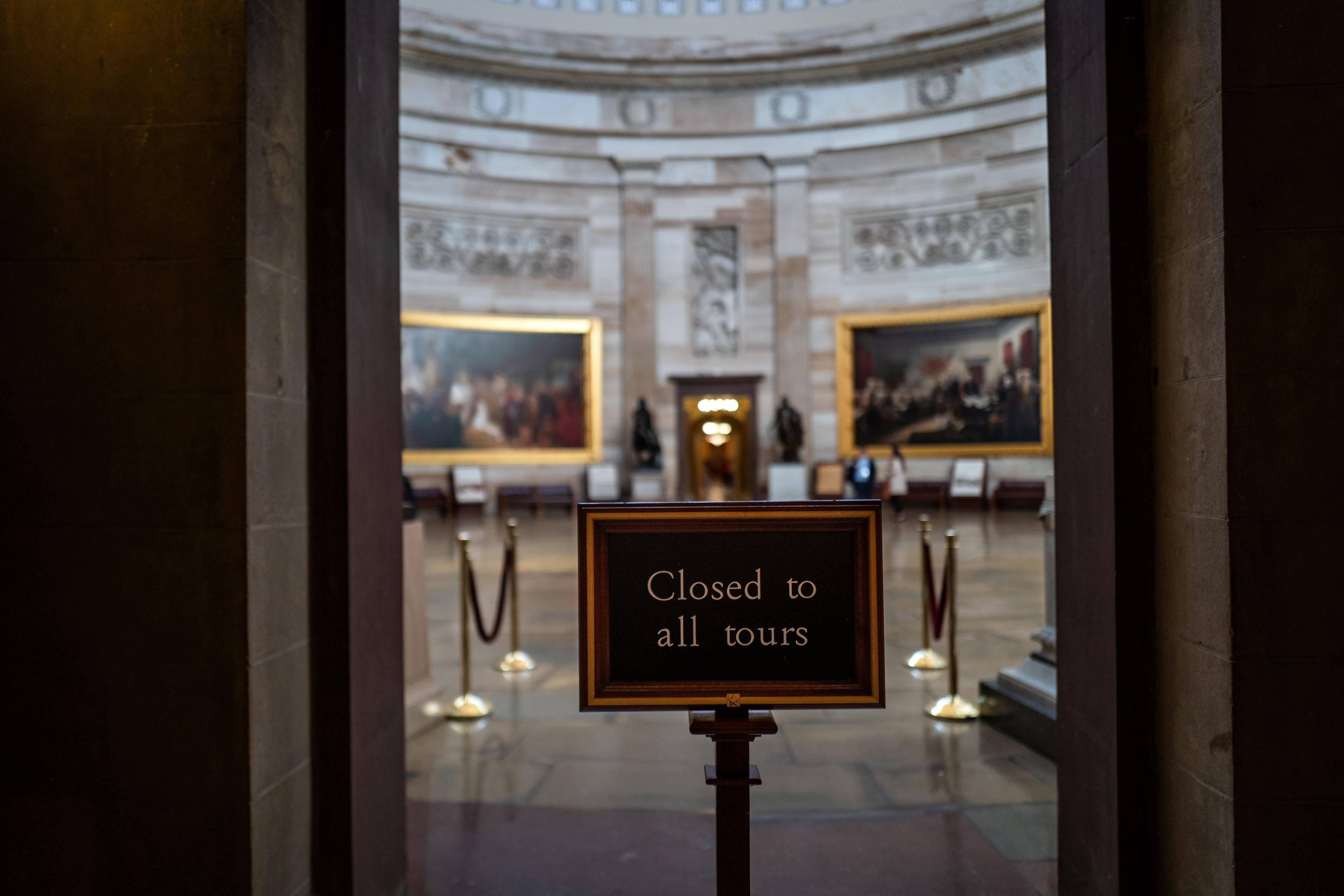
The Senate has been deadlocked for over a month as Democrats refuse to approve the short-term agreement, passed by the House, that would allow the government to reopen.
Democrats insist that Republicans first negotiate on health care spending, especially extending subsidies for the Affordable Care Act Marketplace.
Republicans say that should be worked out during the normal appropriations process.
Why is this happening? Is it worth the cost? And how will it end?
Validity
The majority of poll respondents did not believe government shutdowns are a valid tool for governing.Eighty-six percent agreed that government shutdowns should never be used as a bargaining tactic. More than two thirds (68 percent) strongly agreed.
The strength of that opinion wavered when the question was phrased differently. While a strong majority (67 percent) disagreed with the idea that government shutdowns are necessary to force lawmakers to find bipartisan solutions, the number strongly disagreeing was lower at 37 percent.
One third (33 percent) either agreed or were neutral on whether shutdowns are sometimes necessary.
The vast majority, 88 percent, agreed that shutdowns are a tactic politicians use to gain an advantage ahead of elections.
A similar number, 84 percent, believed the current shutdown shows that the appropriations process itself is broken.
Process

Readers believed clear ground rules should be established for shutdowns but showed mixed opinions on who should set them.
Eighty-eight percent affirmed that Congress should define in advance which federal services are considered essential and should continue during a shutdown.
Yet a vast majority, 81 percent, also agreed that the president should have authority to keep essential functions operating without new congressional approval.
Impact
The current shutdown is doing much more harm than good, readers affirmed. But a minority reported being personally affected.Seventy-eight percent of respondents agreed that the harm caused outweighs any political gain. And 79 percent agreed that the shutdowns make America appear politically unstable to the rest of the world.
Sixty-eight percent said this shutdown is seriously harming the U.S. economy.
However, less than half, 39 percent, reported that they or someone they know had been affected by the shutdown. About one in six respondents (17 percent) strongly affirmed that the shutdown had impacted them or someone they know.

Resolution
We asked readers about the terms for ending this shutdown, and they had strong opinions.A large number, 86 percent, of readers agreed that a temporary funding bill that simply continues current spending levels without negotiating next year’s spending details should be passed.
At the same time, nearly half of respondents (49 percent) were open to a compromise solution that combines spending restraint with selected program extensions.
As to the Democrats’ primary proposal, extending the COVID-19 era Affordable Care Act subsidies, 96 percent of respondents agreed that Congress should first require full transparency and an independent audit of the use of the subsidies.
The same number agreed that all Affordable Care Act subsidies should be limited to U.S. citizens and lawfully present immigrants.
On the question of who is most responsible for the shutdown, respondents had a clear answer: 83 percent blamed congressional Democrats. The president and congressional Republicans were named by 4 percent and 2 percent, respectively.
However, 10 percent of respondents named “all of the above,” indicating that, in all, about one in seven think the president is at least partly responsible, and one in eight partly blame Republicans.
This shutdown, the longest in history, is now in its 39th day.