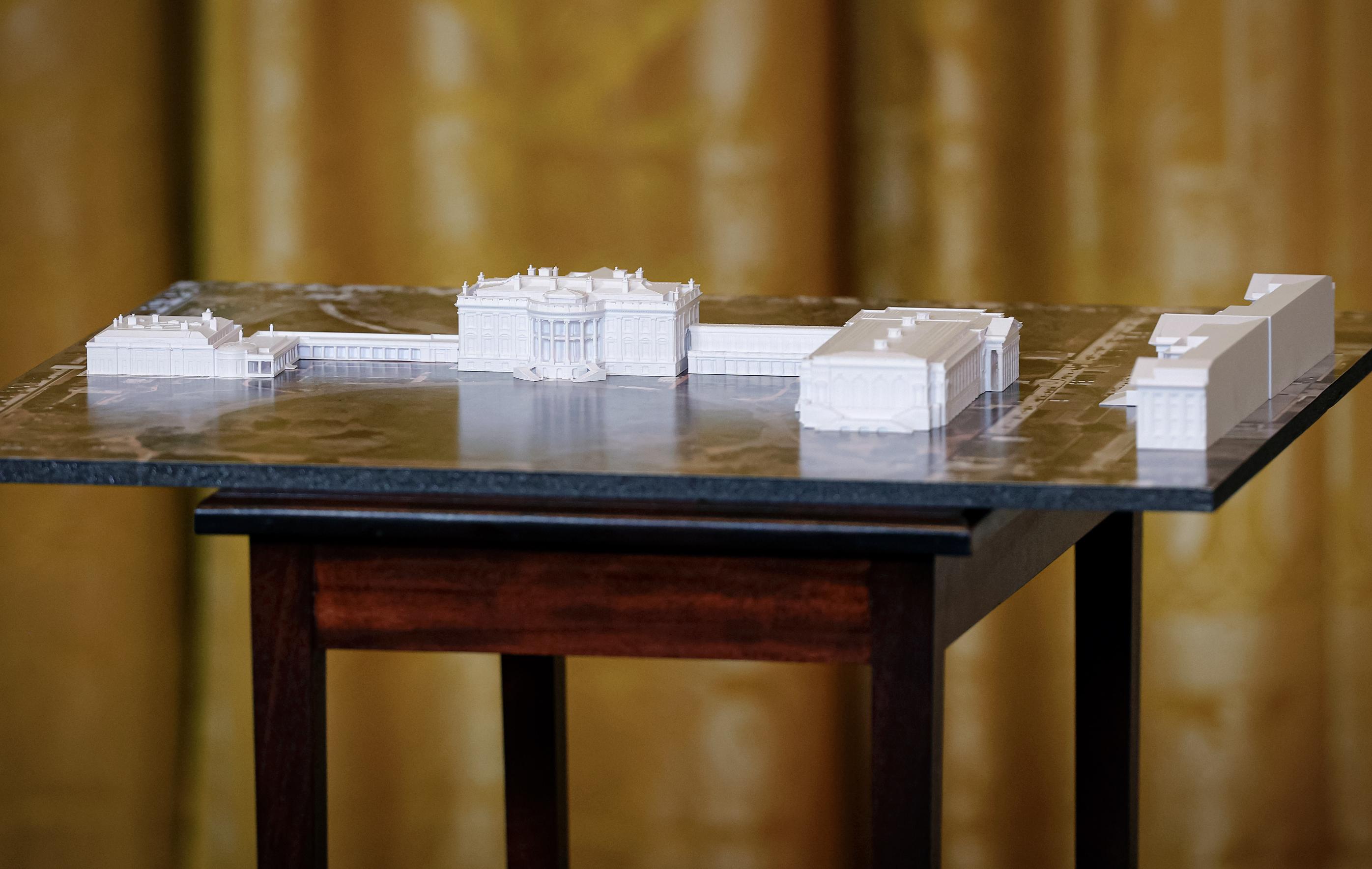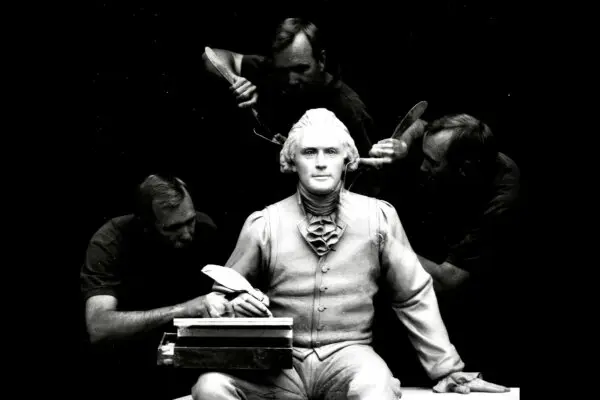
WASHINGTON—Long before he became president, Donald Trump envisioned a White House ballroom and even offered to build one at his own expense. The Obama administration turned him down.
Now, as the current resident of 1600 Pennsylvania Avenue, Trump is bringing that long-held dream to life in the traditional, classical design he favors most.
“We’ve retained the best architects and engineers,” he said.
Trump said that presidents had wanted a ballroom for 150 years but that none had his experience in building them.
Despite being a national landmark, the White House has limited space to accommodate large gatherings.
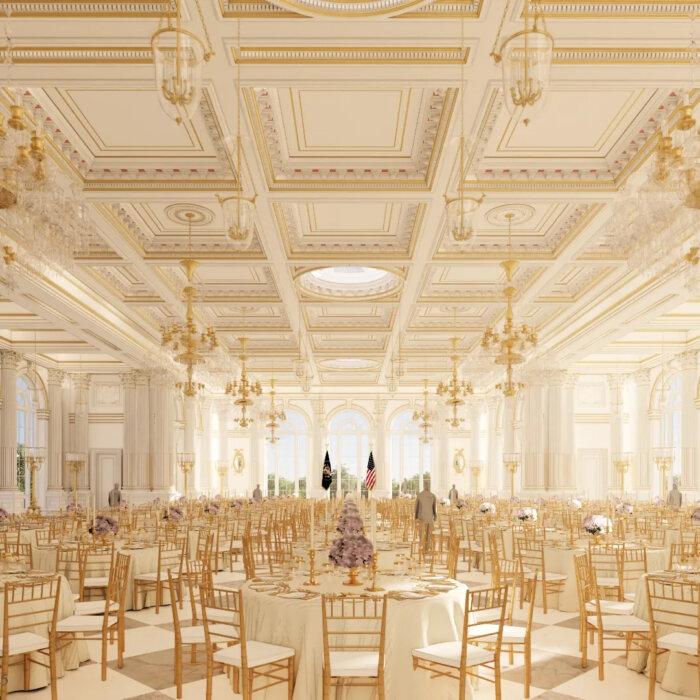
The new ballroom will be 90,000 square feet and be able to host up to 999 guests.

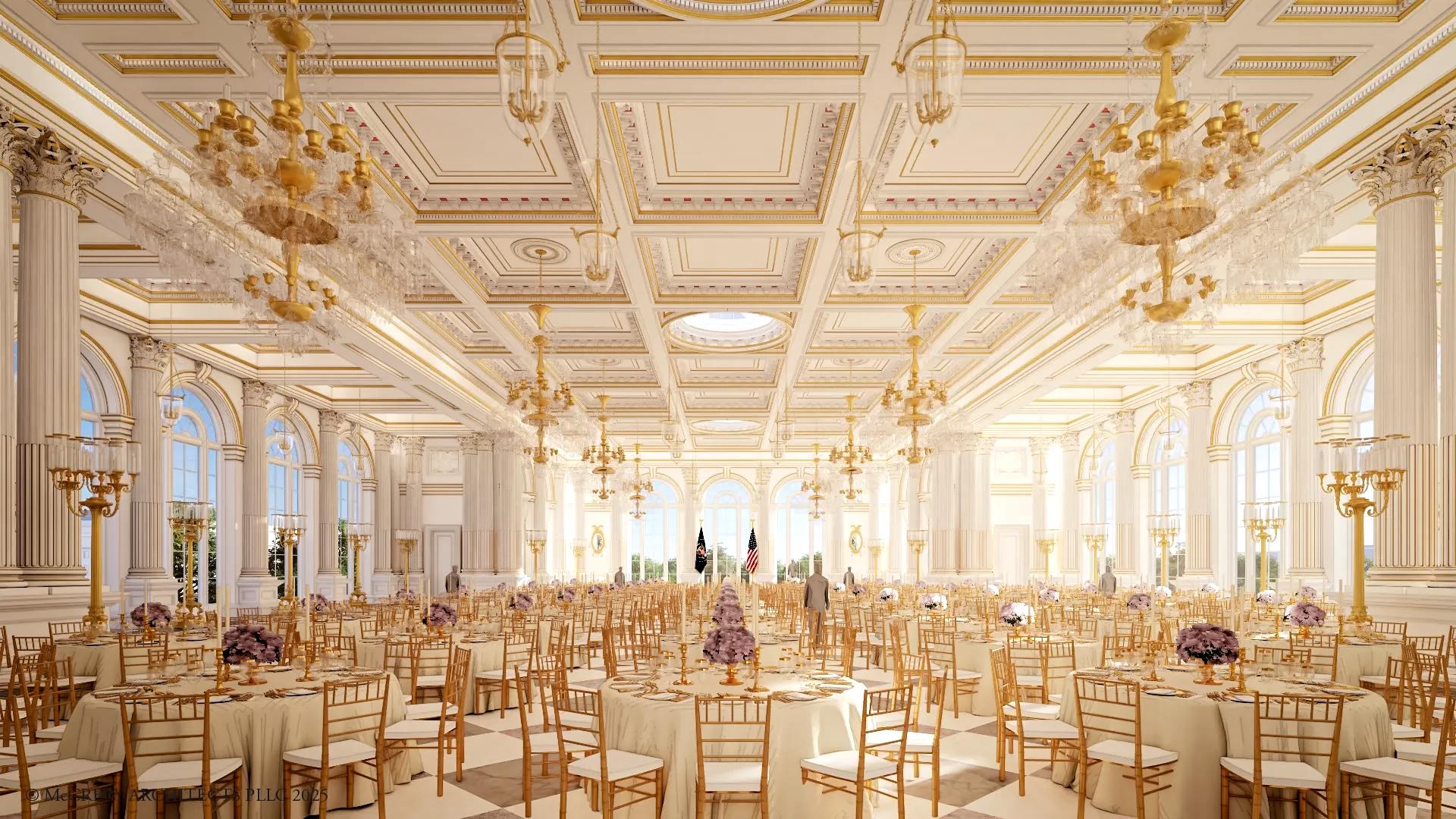
“Adding a large ballroom makes good sense—it’s an intelligent project to do,” Richard Cameron, architectural designer and cofounder of RWC Atelier & Co. in the New York City borough of Brooklyn, told The Epoch Times.
He said the White House has long been too small for a country with immense global power and influence, especially when it comes to hosting major diplomatic gatherings.
Architect Behind Project
Trump has tapped James McCrery, 60, a leading architect in classical and traditional design, to lead the project. McCrery is a professor of architecture at The Catholic University of America and founder of McCrery Architects, a Washington-based firm.Cameron, who has worked with McCrery in the past, said he believes that he is the right choice for the job, given his experience in classical design.
“I was very encouraged, actually, to hear about the project,” Cameron said.

“I am honored that President Trump has entrusted me to help bring this beautiful and necessary renovation to The People’s House,” McCrery said.
McCrery has inspired students nationwide to embrace classical design, according to Eric Kerke, an architectural designer who previously led the Students for Classical Architecture club while earning his master’s degree at the University of Notre Dame.
He told The Epoch Times that although many students arrive with little understanding of classical architecture, through McCrery’s passion and teaching they come to appreciate and advocate for the tradition.

Kerke likened classical architecture to a language.
“When you look at classical architecture, it conveys a sense of elegance and majesty,“ he said. ”It’s meant to uplift the spirit. People have been practicing this for thousands of years, unlike modern architecture, which always seems to reinvent itself.”

According to the White House, Clark Construction will lead the construction of the project, while infrastructure consulting firm AECOM will oversee the engineering work.
The project has an ambitious timeline, as the White House predicts that its completion will occur “long before the end of President Trump’s term.”
On Aug. 25, Trump reinstated a policy from his first term that makes classical and traditional architecture the preferred style for federal government buildings, rather than modernist designs.
As defined in the order, classical architecture refers to design rooted in the forms and principles of ancient Greece and Rome, expanded through the Renaissance and Enlightenment, and reflected in later styles such as Neoclassical, Georgian, Federal, Greek Revival, Beaux Arts, and Art Deco.
House Speaker Mike Johnson (R-La.) dismissed the concerns, noting that “the White House has been renovated many times over the years.”

Funded by Private Donors
The president made it clear that the addition to the White House would involve no cost to taxpayers. Trump and private donors will be footing the $300 million bill for the new building.Tech giants, defense contractors, and billionaires are among those contributing, according to a list released by the White House last week.
Prominent donors include Amazon, Apple, Google, Caterpillar Inc., HP Inc., Lockheed Martin, Meta Platforms, Microsoft, and Palantir Technologies, among many others.
Court documents show that YouTube, a subsidiary of Google, will pay $22 million toward the construction as part of the settlement of a 2021 lawsuit Trump brought against the company over the suspension of his account.
The White House has not disclosed how much other donors have committed but noted that additional contributors are expected to join the effort.

Democrats have criticized the new ballroom project. On the Senate floor on Oct. 23, Senate Minority Leader Chuck Schumer (D-N.Y.) said Trump was not focused on health care as he should be, but instead on “vanity projects, like this one.”
Siri Terjesen, associate dean at the Florida Atlantic University College of Business, views the fundraising differently.
“There is an incredibly rich long history in the United States of private philanthropy for all causes,“ Terjesen, who focuses on entrepreneurship and philanthropy, told The Epoch Times. ”And the White House is just the latest and greatest example.”

Many well-known companies participate in all kinds of philanthropic projects in Washington, across the nation, and around the world, Terjesen said, noting that individuals and organizations are also involved in 501(c)(3) charitable activities and 501(c)(4) political advocacy efforts.
“That’s not illegal; that’s the way our system works,” she said.
Wealthy individuals who have contributed to the ballroom project include Blackstone CEO Stephen Schwarzman, oil tycoon Harold Hamm, private equity investor Konstantin Sokolov, and Edward Glazer, who owns the Tampa Bay Buccaneers and Manchester United.
Tyler and Cameron Winklevoss, cofounders of cryptocurrency exchange Gemini; Commerce Secretary Howard Lutnick and his family; and Kelly Loeffler, administrator of the Small Business Administration, and her husband, Jeffrey Sprecher, chairman of the New York Stock Exchange, are also among the donors.