White House senior trade adviser Peter Navarro at a press conference last month cited Sun Tzu’s classic treatise “The Art of War”: “The acme of warfare is to win without firing a shot.”
At the same event, Agriculture Secretary Brooke Rollins unveiled the National Farm Security Action Plan, which positions American agriculture as a critical component of national security.
Agriculture is “not just about feeding a family but about protecting our nation and standing up to foreign adversaries who are buying our farmland,” Rollins said.
Navarro and Rollins were referring to the purchase by Chinese investors of large swaths of U.S. land, often near military bases.
The purchases are attracting growing pushback at both the state and federal levels.
Agricultural land includes both forest and farmland. The USDA doesn’t record foreign-owned land that isn’t considered agricultural.
Chinese investments in U.S. agricultural land are dispersed nationwide, with the largest concentrations in Texas (123,708 acres), North Carolina (44,263 acres), Missouri (42,905 acres), Utah (33,035 acres), and Florida (12,798 acres). Those five states collectively accounted for 93 percent of the acreage held by Chinese entities.
Meanwhile, 30 U.S. military installations now have Chinese-owned agricultural land within 150 miles, according to USDA data. Fourteen of those parcels are located in the same county as a military base.
A small number of companies dominate Chinese ownership of U.S. agricultural land.
Murphy-Brown holds the largest land area, totalling 132,310 acres, which includes 43,091 acres in its Missouri division. The company is a major U.S. hog producer and a subsidiary of Smithfield Foods, which is controlled by Chinese state-owned WH Group Limited.
The second-largest landholder is Brazos Highland Properties, with 86,994 acres.
Rounding out the top five are Harvest Texas (29,705 acres), U.S. AgriChemicals Corp. (11,263 acres), and Syngenta Seeds (2,452 acres). The five companies hold 95 percent of all reported Chinese-owned agricultural land in the United States.
Chinese ownership of agricultural land in the United States has undergone three surges over the past three decades, according to USDA data: the first in 1989, another in 2013, and a final wave from 2017 to 2019, each marked by notable acquisitions.
In 1989, Sinochem, a Chinese state-owned chemical company, acquired 11,263 acres of land in Florida by purchasing U.S. Agri-Chemicals Corp.
In 2013, Chinese state-owned enterprise WH Group acquired more than 130,000 acres through its purchase of Smithfield Foods, the country’s—and the world’s—largest pork producer. The acquisitions were primarily concentrated in North Carolina, Missouri, and Utah. Through subsequent minor land additions, its total land holdings reached 132,442 acres.

WH Group, through Smithfield’s subsidiary Murphy-Brown, now owns 48 percent of Chinese-owned land in the United States.
In North Carolina, WH Group owns nearly 45,000 acres in 24 of the state’s 100 counties, according to the USDA.
Two parcels of land owned by the Chinese pork giant are located in the same counties as the U.S. Army’s Fort Bragg and the Marine Corps’ Air Station Cherry Point.
In Raeford, North Carolina, Smithfield owns a farm less than 25 miles from Fort Bragg. Both are in Hoke County. The company also operates a meat processing plant in neighboring Bladen County, about 30 miles from Fort Bragg.
In Craven County, home to the Cherry Point air station, Smithfield owns 81.5 acres of agricultural land.
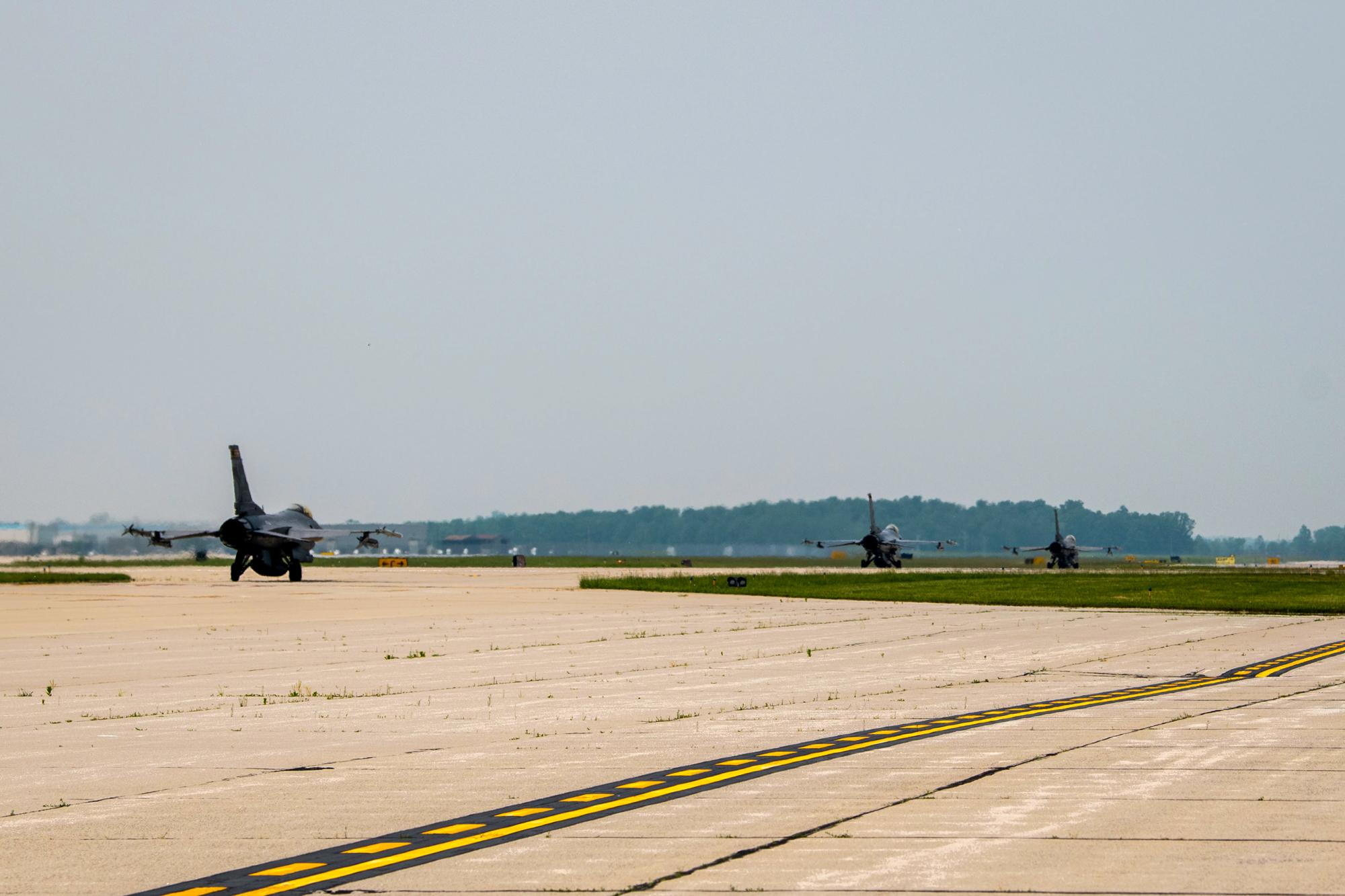
In 2017, ChemChina acquired 2,453 acres of U.S. land through its purchase of Syngenta Seeds. The acquisition was smaller in size but deemed significant because the company’s holdings are in counties with military installations, including Fort Wayne Air National Guard Base in Indiana and Fort Riley Army Base in Kansas.
Val Verde County is located on the U.S.–Mexico border and is home to Laughlin Air Force Base.
World’s Largest Pork Producer
WH Group bought Smithfield Foods in September 2013 for $7.1 billion ($4.7 billion plus debt), according to a report by the U.S.–China Economic and Security Review Commission. The state-owned Bank of China provided a $4 billion loan to WH Group for the purchase.WH Group chairman Wan Long has maintained a close relationship with the Chinese Communist Party (CCP) and served on China’s National People’s Congress from 1998 to 2013.
WH Group is open about its status as a state-owned enterprise.
At the July press conference, Navarro raised specific concerns about the Chinese purchase of Smithfield Foods.
“This one really troubled me when it happened,” he said. “[They] basically control about an eighth of the world’s pork supply now.”
Former Chinese Military Officer’s Texas Land Acquisitions
Xinjiang-based billionaire Sun Guangxin is a former officer of the People’s Liberation Army, the military wing of the CCP. Over two years, Sun spent $118.7 million to purchase land in Val Verde County, Texas, through his subsidiaries, with the intent to build a wind farm on the property by 2019 and connect it to the state’s electric grid.Subsequently, Sun sold the wind project to a Spanish renewable energy firm, Greenalia. However, Sun’s subsidiary GH America Energy (GHAE) maintained an interest in the project through contractual agreements.
Chinese State-Owned Company Buys Seed Giant
In 2017, China National Chemical Corp. (ChemChina), a state-owned enterprise, bought Swiss-based seed and chemical company Syngenta Seeds for $43 billion.At the time, Syngenta was the world’s second-largest seed and pesticide company, according to Statista. The company had a significant presence in the United States, with its North American headquarters located in Chicago.
Navarro highlighted Syngenta in his comments on July 8.
“We are indeed in a new world where kinetic warfare is not the first choice of our rivals anymore,” he said.
“Rather, it is things like sending us seeds or trying to steal our seeds or trying to change the seeds. It is acquiring our supply chain in agriculture; it’s setting up spy shops on land next to military bases.
“Seeds really can be the revolution that keeps the world fed, and China now owns a key part of that.”
In May 2021, ChemChina and Sinochem Group combined to form Sinochem Holdings, which now owns Sygenta.
Sinochem Holdings is a leading state-owned enterprise in China, operating under the oversight of the state-owned Assets Supervision and Administration Commission of the State Council, which receives its directives from the CCP’s Central Committee.
Walton Global and US Military Bases
Walton Global was founded in Alberta in 1979. Today, the real estate investment and land management company has offices around the world. Its projects and investor base are spread across numerous international locations, including the United States, Canada, Singapore, Japan, China, and the United Arab Emirates.Most of Walton’s holdings are Chinese, according to USDA data. Those holdings include some that might not immediately appear to be Chinese but have secondary Chinese ownership.
Three subsidiaries of Walton, directly owned by Chinese investors, along with five others with secondary Chinese ownership, acquired 1,216 acres of farmland across Colorado, Texas, Florida, Arizona, and Maryland.
One of those subsidiaries, Chesapeake View, purchased 107 acres in Harford County, Maryland, where the U.S. Army’s Aberdeen Proving Ground is also located.
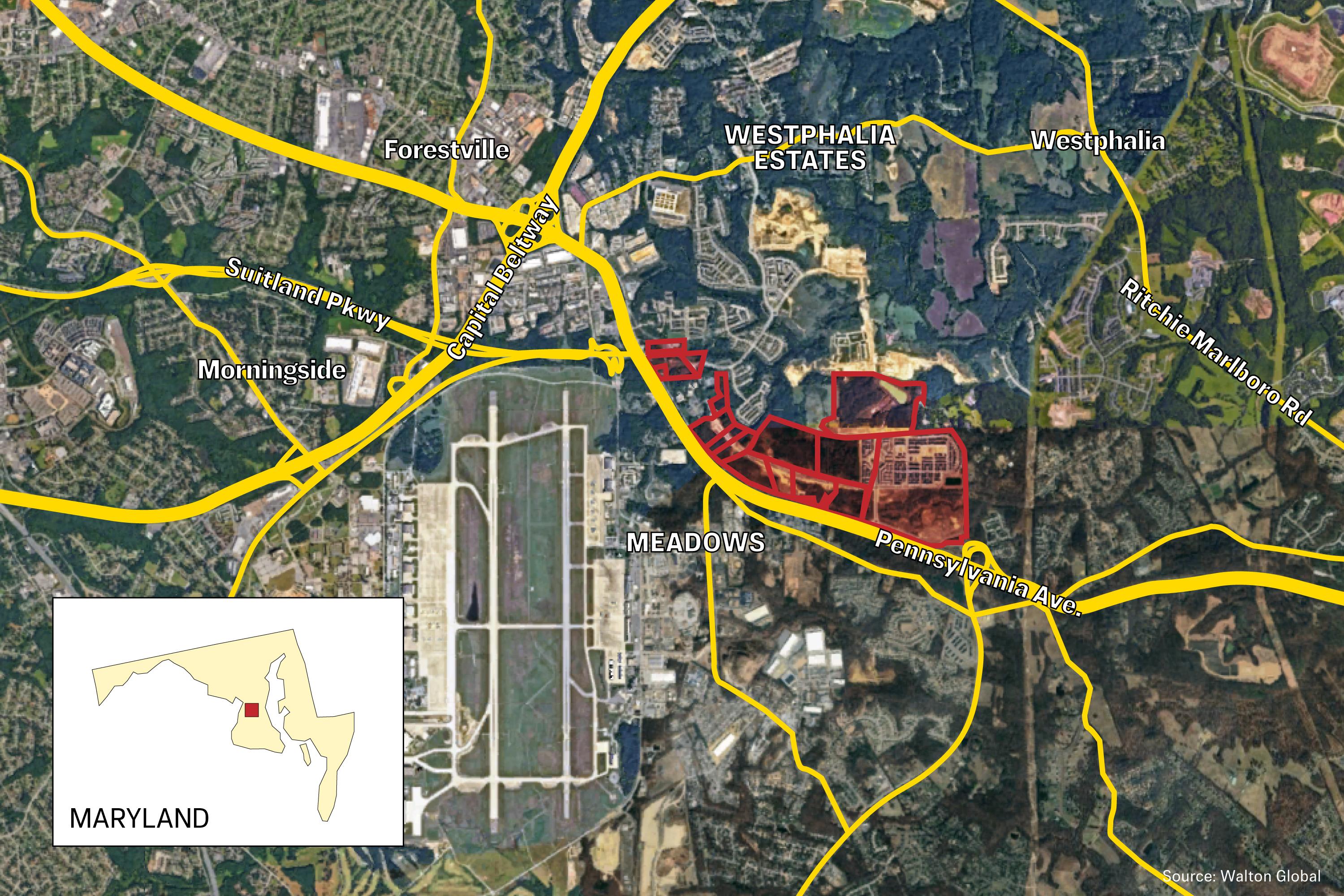
Walton owns at least 23 sites within 15 miles of military bases, including two near Maryland’s Joint Base Andrews, the hub of presidential travel.
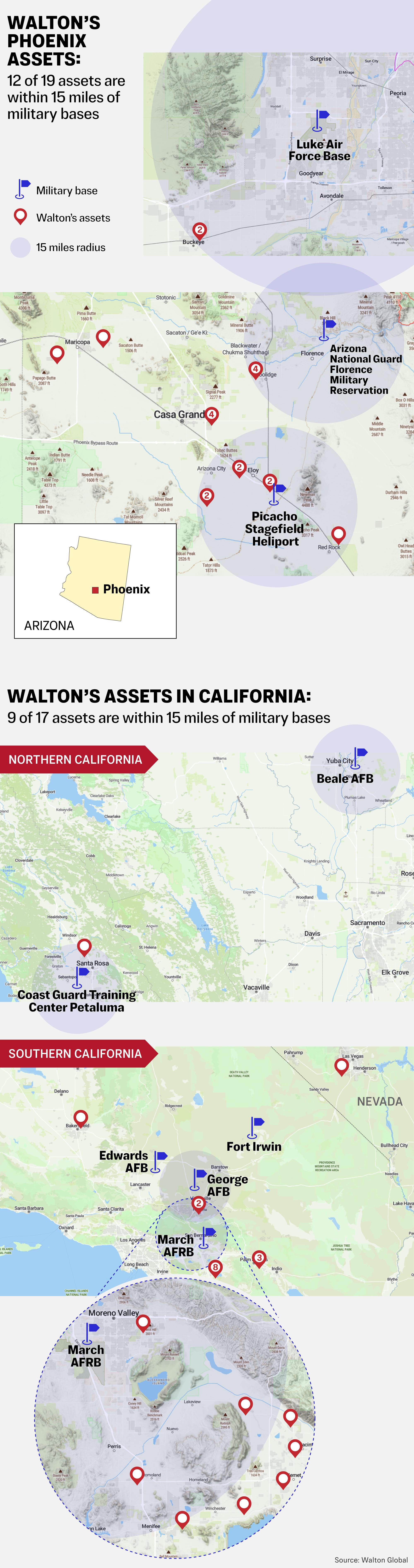
A company spokesman told The Wall Street Journal in 2024 that two Walton sites with more than 90 percent Chinese ownership and situated near military bases are not included in the USDA database because the land is not designated as agricultural.
In its advertising materials, Walton Global frequently touts its developments’ proximity to military bases.
The company described the Westphalia Town Center, a major development in Maryland, as “directly across from the Joint Base Andrews-Naval Air Facility.”
Canter Creek, another major development, is “only one mile south of Joint Base Andrews,” the company stated.
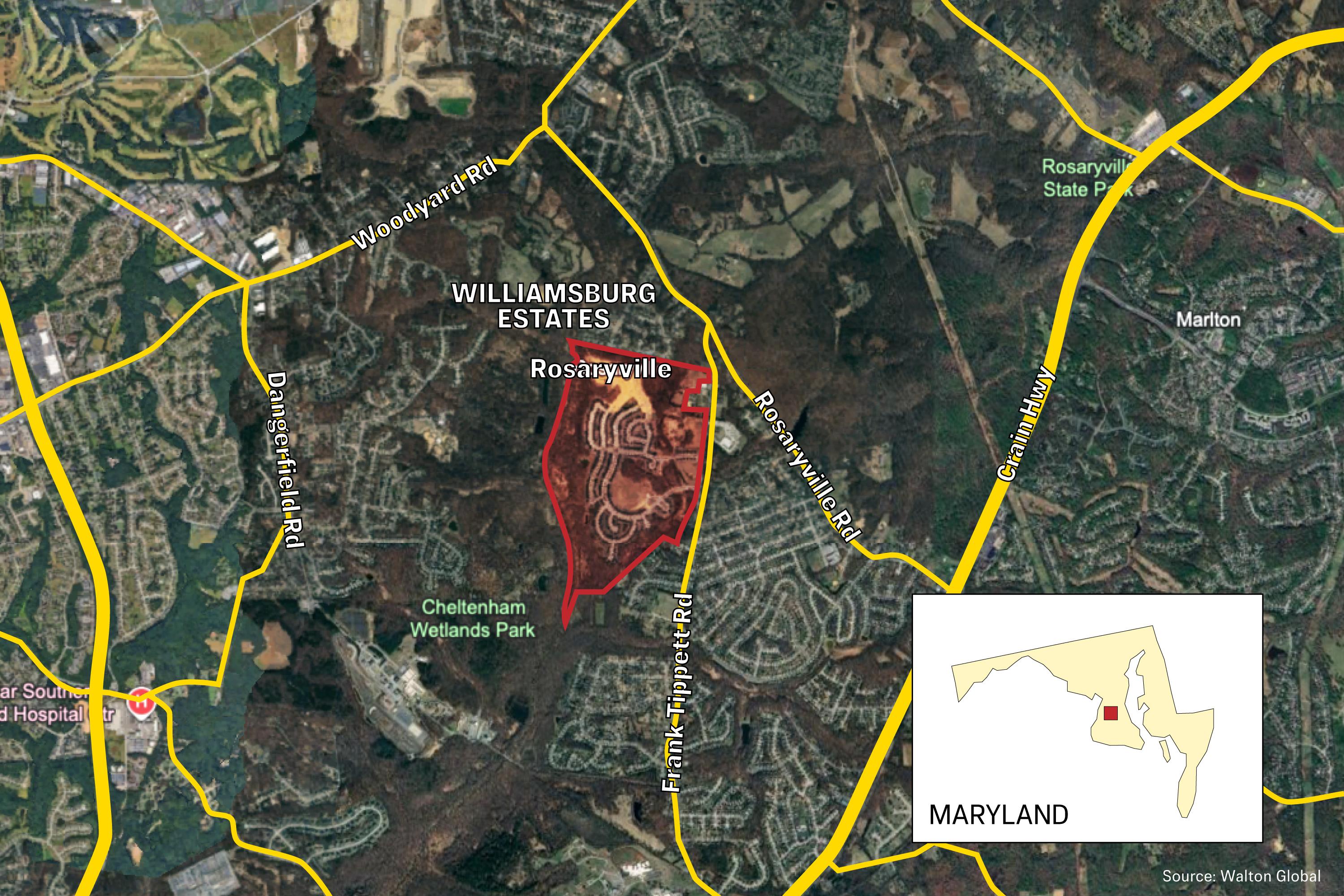
In October 2024, Walton described the newly acquired 40-acre Marshall’s Landing site as being in “proximity to significant landmarks including Joint Base Andrews.”
Push Back to Protect National Security
The USDA’s National Farm Security Action Plan, which was unveiled in July, positions American agriculture as a critical component of national security and aims to address threats from foreign adversaries, cyberattacks, bioterrorism, and supply chain vulnerabilities. The USDA worked with the departments of Defense, Justice, and Homeland Security to develop the plan.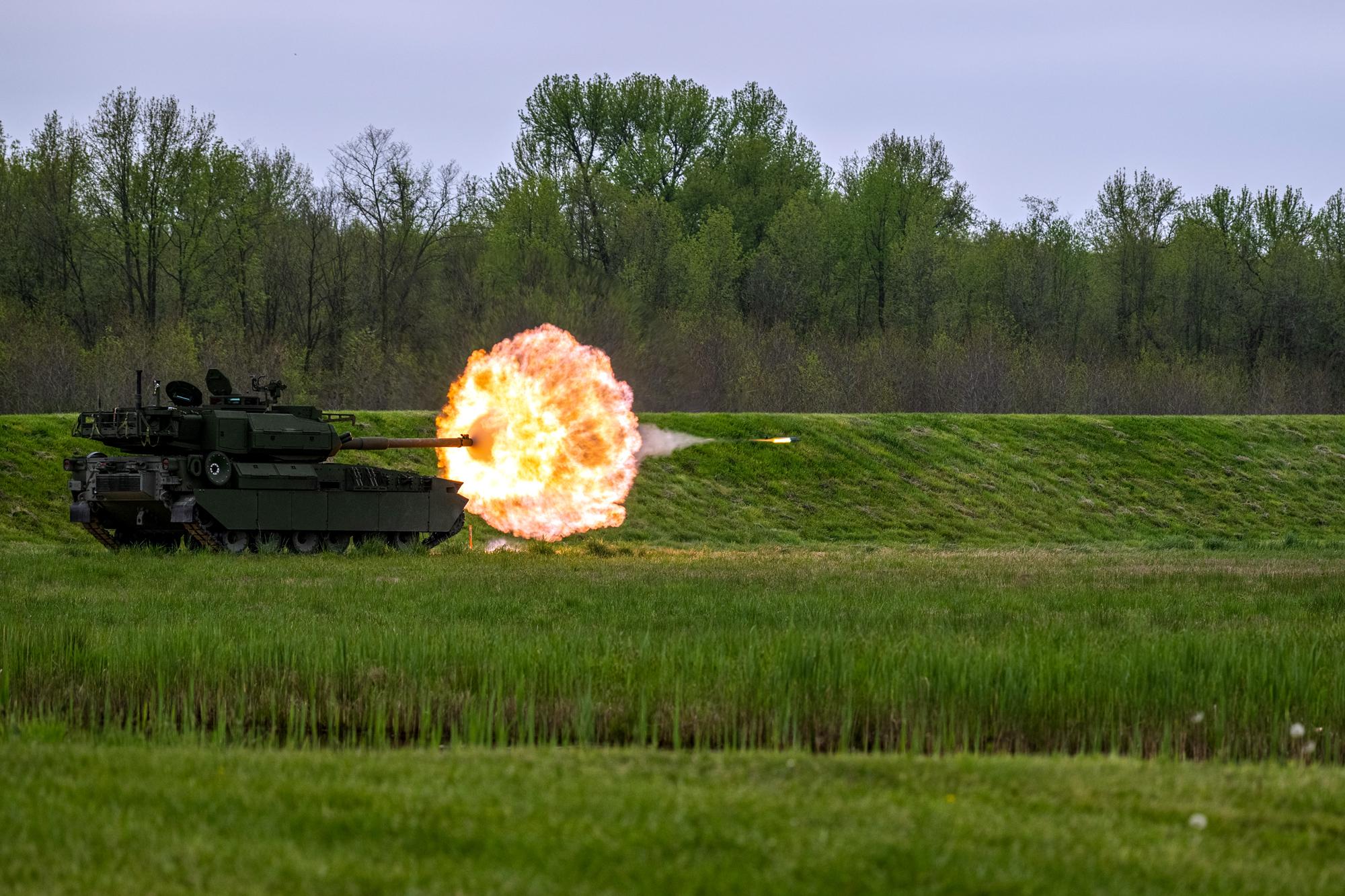
At the state level, there has been a significant rise in legislative efforts to restrict foreign ownership of U.S. land.
In Florida, which rounds out the top five states with the most Chinese ownership of agricultural land, SB 264 prohibits Chinese entities who are not citizens or lawful residents of the United States from owning real property in Florida. The law became effective July 1, 2023. Legal challenges are ongoing.