UNITED NATIONS—The United States said on Tuesday it believed it could persuade the Chinese regime to impose new U.N. sanctions on North Korea following its latest ballistic missile test and warned that Washington would also target and “call out” countries supporting Pyongyang.
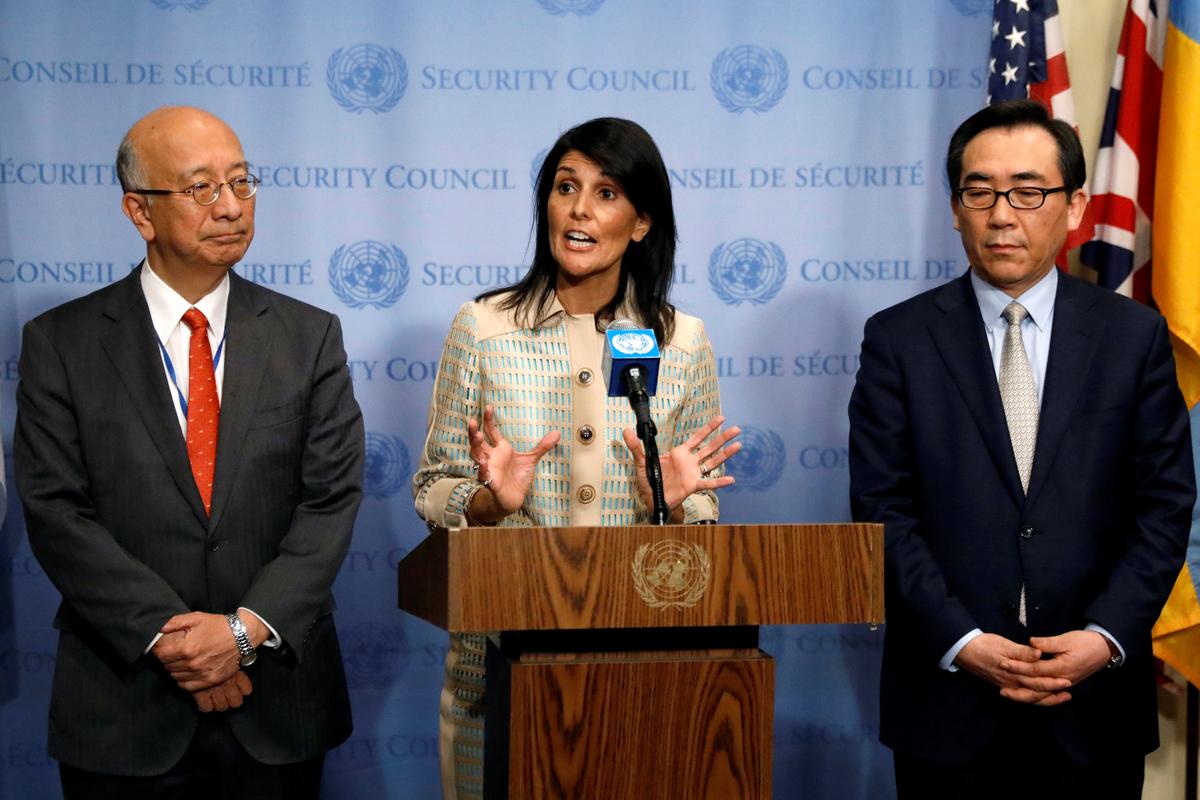
Speaking to reporters ahead of a closed-door U.N. Security Council meeting on the missile launch, U.S. Ambassador to the United Nations Nikki Haley also made clear that Washington would only talk to North Korea once it halted its nuclear program.
“We are willing to talk, but not until we see a total stop of the nuclear process and of any tests there,” Haley said. “If you are a country that is supplying or supporting North Korea we will call you out on it, we will make sure that everyone knows who you are and we will target sanctions toward you as well.”
North Korea fired a ballistic missile on Sunday that landed in the sea near Russia, which experts said signaled major advances in developing an intercontinental ballistic missile that could target the United States.
The United States has been discussing possible new U.N. sanctions with Pyongyang’s ally and neighbor the Chinese regime since a failed missile test about two weeks ago.