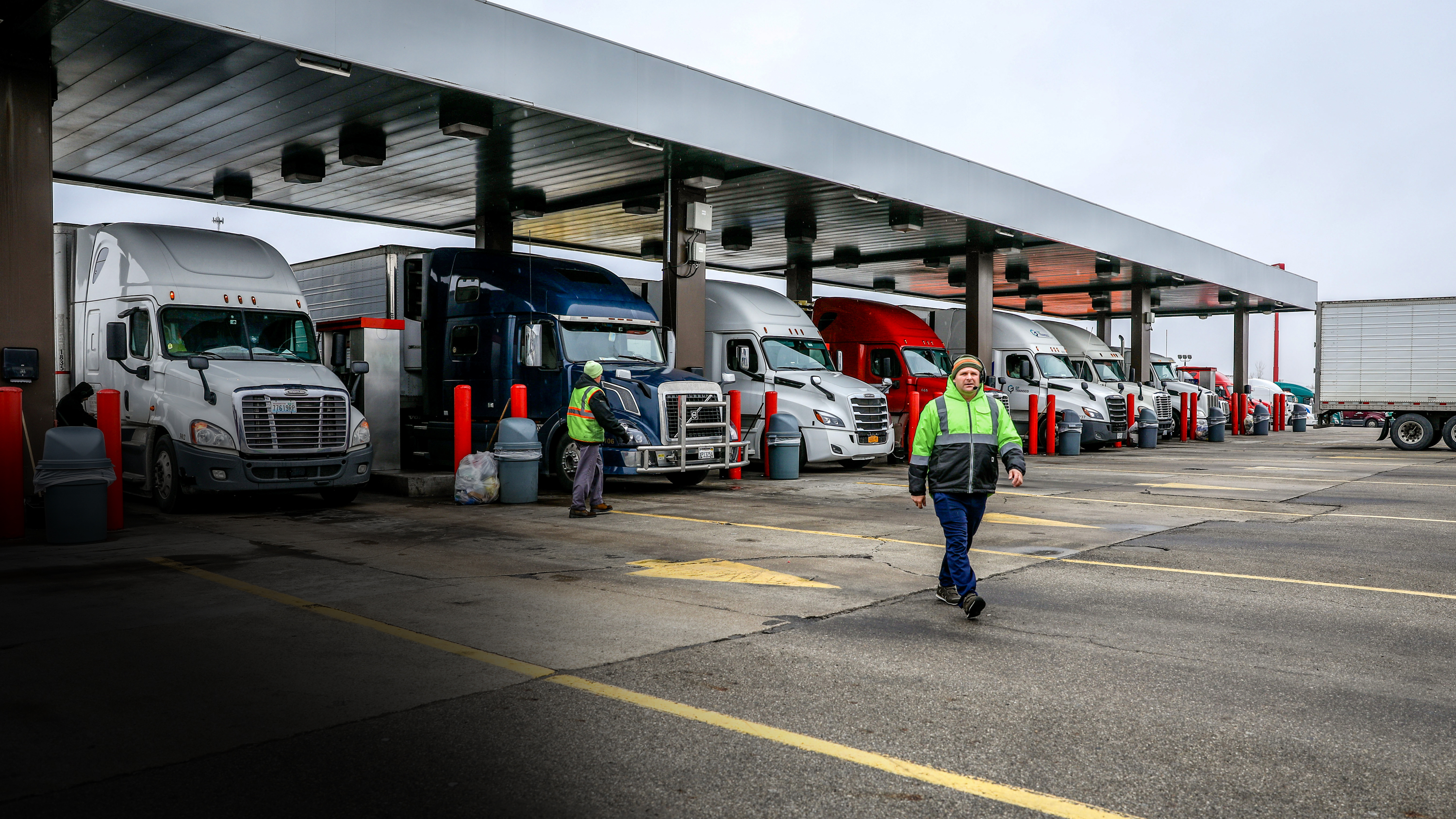

When a semitruck driver made an illegal U-turn on Florida’s Turnpike in August 2025, causing the deaths of three occupants of a minivan, debate ignited over the industry that trains truck drivers and the skill level of those who possess commercial driver’s licenses (CDLs).
CDL mills are companies that offer training for the CDLs required for truckers but that otherwise sidestep state regulations and “self-certify” with the federal government as trucker training companies.
Trucker training companies told The Epoch Times that limited federal oversight before and after the agency first overhauled the rules on CDLs in 2022 has led to major discrepancies in training quality from one company to the next.
Those changes, implemented three years ago, were intended to increase safety in the industry but instead led to the proliferation of CDL mills, according to Anne Bauza, president of the Driver Resource Center, a CDL training company.
“[These programs] rush students through the process within a couple of days or maybe weeks, with just a little or no real instruction,” Bauza told The Epoch Times.
“They’re focusing strictly on passing the test, giving them the basic knowledge that they need to take the driving test, but without the other requirements that are necessary for them to build a building block.”
In some states, there is also a disconnect between the offices that issue licenses and those that track applicants’ immigration status, providers said.
In the case of the Florida crash, California officials have said the federal government told them that driver Harjinder Singh was in the United States legally with a work permit when they issued him a CDL in 2024. Florida officials said Singh had entered the United States illegally via Mexico in 2018.

The DOT also accused thousands of trucker training schools of failing to comply with federal guidelines and forging or manipulating their training data.
Some trucker training companies are “just shameless in their advertising,” according to Jeff Burkhardt, the senior director of operations at the CDL training provider Ancora Education.
Government Issues Regulations
The DOT’s new crackdown on CDL training providers is one of the agency’s most significant industry overhauls since the FMCSA changed the rules in 2022 on how trainees apply for their licenses.“Prior to ... [2022], you could get your permit on your own, get trained by your uncle, your friend, and just go to the [Department of Motor Vehicles] and pass the road test,” Jonathan Marques, founder of Driving Academy, a CDL training provider, told The Epoch Times.
Burkhardt, who also serves as chairman of the board for the Commercial Vehicle Training Association, said this offered “a lot more flexibility for the consumer.”
He said the changes in 2022 aimed to create a more professional environment in the trucking industry with new rules requiring entry-level drivers to receive structured training.
Although the new driver training regulations aimed to create central standardized training to improve driver quality nationwide, what resulted was “the Wild Wild West ... in the transportation industry,” Bauza said.
“FMCSA allowed companies to self-certify that they were going to comply with the rules and regulations—no boots on the ground,” she said.

Adding to the layers of complexity are state regulations regarding the delivery of truck driver training, which may either exceed or fall short of the federal guidelines.
However, according to Burkhardt, “variances between oversight bodies at the state level and the curriculum and training content that they mandated” were present even before the new federal regulations were rolled out in 2022.
He said there was “no difference in scrutiny” from the federal government on legitimate versus illegitimate trucker training providers throughout the states.
Marques said he believes that the federal government in 2022 was also trying to widen the industry and prevent a “bottleneck of the actual trucking schools,” in part by allowing trucking companies and other entities such as county utilities, shipping carriers, and school districts to train their own employees by signing up as training providers.
“That is how a lot of unlicensed state schools kind of went underneath the radar and set up as a trucking company to be a training provider, but ultimately providing training to the outside public,” he said.
What makes the process even more complicated, according to Marques, is that each state has its own statewide agency that manages truckers; some use a Department of Motor Vehicles, a board of education, or a state transportation department.
Some of the providers, Marques said, told the federal government that they were trucking companies training their own employees, when in reality, “they were training the outside public without the proper licensing from the state itself.”
This created a conduit for fraud, as many providers simply bypassed state oversight bodies and essentially checked off boxes through self-certification with the federal government, but without actually offering a proficient curriculum, according to Burkhardt.
However, trucker schools can skip state certification and self-certify in the federal registry if they are a public education entity or if they offer a registered apprenticeship training program through California’s Division of Apprenticeship Standards.

Noncitizens With Licenses
In late September 2025, the DOT began addressing CDL requirements for non-domiciled drivers: foreign nationals who do not reside in the United States or who have temporary legal presence in the United States.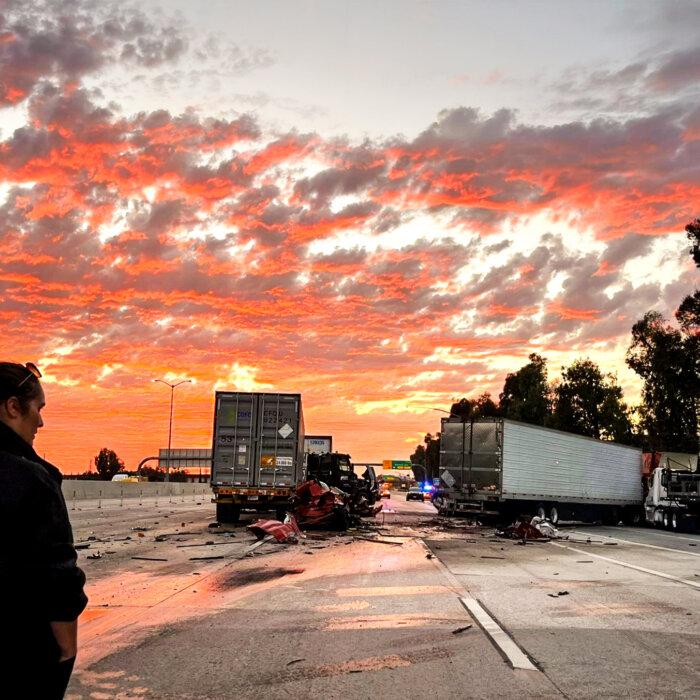

The agency ordered all states to pause issuing non-domiciled CDLs until states demonstrate compliance with federal rules.
“So what certain states were doing, they weren’t even looking at the work visa, and [the drivers’] CDL licenses were still extended past their work visa, which means, technically, legally, they had no right to be working here,” Marques said.
After a federal audit, the DOT accused California, Washington state, Texas, South Dakota, Pennsylvania, and Colorado of improperly issuing CDLs to noncitizens.
Marques said that although CDL holders have long been required to communicate in basic English, proficiency, and especially fluency, can vary.

Some of the CDL mills in California have focused on specific nationalities and tailored their training to minimize the use of English, according to Marques.
“Then you’re just kind of milling people through, so there are very little checks and balances when it comes to the immigrant stuff, because from a business point of view, they had their target audience,” he said.
Fixing the System
Burkhardt said the new regulatory actions have sent shockwaves through the industry, and that legitimate training providers such as his own welcome the new rules.Beyond supporting the DOT’s crackdown on CDL mills and its new regulations for the trucking industry, Bauza said the key to training safe truckers is providing them with a strong foundation.
“As a school, I consider us the roots of an oak tree,“ she said. ”We’re never seen, but if we give them really strong roots and give them the curriculum and the training necessary, they’re going to be able to go out and become a proficient, professional driver.”
According to Bauza, when CDL mills fail to adequately train driver applicants, students may pass the CDL exam after paying for the training, but then, when they apply for jobs at various trucking companies, they quickly realize that they do not have the skills needed to get hired.
She said she would like to see the DOT put “boots on the ground” to verify that all training providers teach real proficiency, reside in a physical location with an actual curriculum, and possess trucks that are in “working order.”