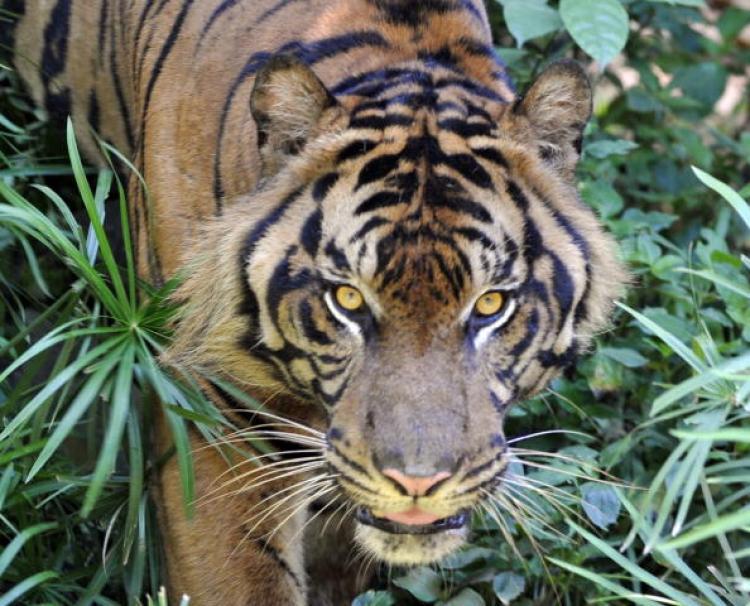
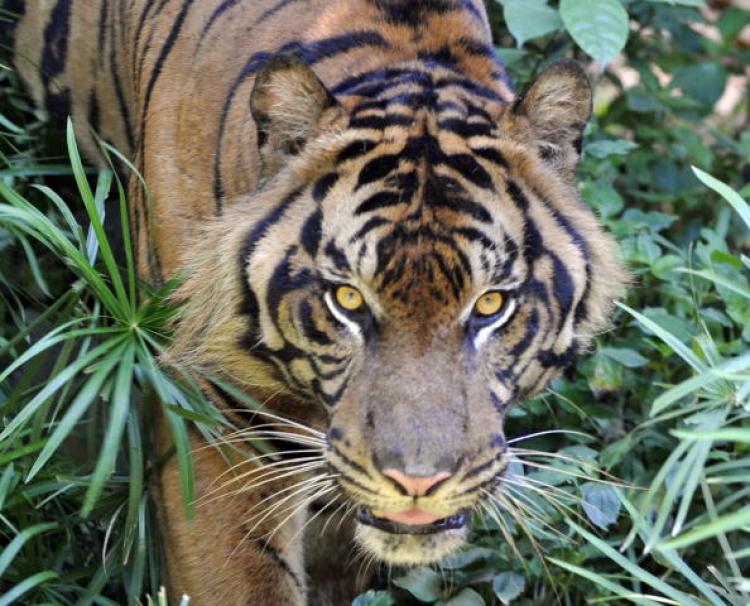
SURABAYA, Indonesia-Widespread habitat destruction and illegal trade of tiger parts for medicine and fashion, have devastated the world’s magnificent big striped cats.
Today, only six out of nine tiger species still exist in the wild, and the population has dropped since the turn of the century from an estimated 100,000 to 3,200 according to the World Wildlife Fund (WWF).
However, plans for a global tiger recovery program are in the works as representatives from 13 tiger-range countries began a three-day, ‘Pre-Tiger Summit Partners’ meeting, in Bali, Indonesia, Monday.
The meeting is an important precursor to the upcoming Global Tiger Summit in St. Petersburg, in September, where drafts formulated at pre-meeting will be ratified.
Delegates from Bangladesh, Bhutan, China, India, Indonesia, Cambodia, Laos, Malaysia, Myanmar, Nepal, Russia, Thailand and Vietnam, are working to draft a “Global Tiger Recovery Program,” aimed at doubling the world’s wild tiger population by 2022.
The countries will all draft a “Leaders Declaration.”
The Indonesian Forestry Minister Zulkifli Hassan in his opening speech, said that in Indonesia, only the Sumatran tigers still remain in the wild; Balinese tigers were hunted to extinction before the 1940s and Javan tigers were all killed in the 1980s, according to The Jakarta Post.
“The existence of [the] Sumatran tiger is also alarming, so we endeavor to conserve them through a mix of strategic policy, regulation and action,” the Hassan said in the report..
Indonesia has already pledged to enforce severe penalties against poachers and illegal loggers.
The minister said that tigers, already under threat from illegal trade and massive habitat destruction, are now confronting more hunts than ever to meet the demand for tiger parts in traditional medicine, health tonics, ornamentation and even fashion.
During the meeting, each delegate will outline their country’s tiger recovery plan, including their contributions to support global tiger recovery and their funding for conservation programs.
World Wildlife Fund says the population of wild tiger has declined and from nine tiger sub-species, only six exist today — the Sumatran, Bengal, Amur, Indochinese, South China and Malayan tiger.
Experts warn that poaching, illegal trade, loss of prey and retaliatory killing due to conflict with villagers living around tiger habitat are pushing tigers to the brink of extinction. Forest destruction has also contributed to the rapid decline in tiger numbers.
Also attending the meeting are world tiger experts, representatives from the WWF, and the Global Tiger Initiative, as well as donor agencies including the United States Agency for International Development (USAID), and the Australian Agency for International Development (AusAID).
Today, only six out of nine tiger species still exist in the wild, and the population has dropped since the turn of the century from an estimated 100,000 to 3,200 according to the World Wildlife Fund (WWF).
However, plans for a global tiger recovery program are in the works as representatives from 13 tiger-range countries began a three-day, ‘Pre-Tiger Summit Partners’ meeting, in Bali, Indonesia, Monday.
The meeting is an important precursor to the upcoming Global Tiger Summit in St. Petersburg, in September, where drafts formulated at pre-meeting will be ratified.
Delegates from Bangladesh, Bhutan, China, India, Indonesia, Cambodia, Laos, Malaysia, Myanmar, Nepal, Russia, Thailand and Vietnam, are working to draft a “Global Tiger Recovery Program,” aimed at doubling the world’s wild tiger population by 2022.
The countries will all draft a “Leaders Declaration.”
The Indonesian Forestry Minister Zulkifli Hassan in his opening speech, said that in Indonesia, only the Sumatran tigers still remain in the wild; Balinese tigers were hunted to extinction before the 1940s and Javan tigers were all killed in the 1980s, according to The Jakarta Post.
“The existence of [the] Sumatran tiger is also alarming, so we endeavor to conserve them through a mix of strategic policy, regulation and action,” the Hassan said in the report..
Indonesia has already pledged to enforce severe penalties against poachers and illegal loggers.
The minister said that tigers, already under threat from illegal trade and massive habitat destruction, are now confronting more hunts than ever to meet the demand for tiger parts in traditional medicine, health tonics, ornamentation and even fashion.
During the meeting, each delegate will outline their country’s tiger recovery plan, including their contributions to support global tiger recovery and their funding for conservation programs.
World Wildlife Fund says the population of wild tiger has declined and from nine tiger sub-species, only six exist today — the Sumatran, Bengal, Amur, Indochinese, South China and Malayan tiger.
Experts warn that poaching, illegal trade, loss of prey and retaliatory killing due to conflict with villagers living around tiger habitat are pushing tigers to the brink of extinction. Forest destruction has also contributed to the rapid decline in tiger numbers.
Also attending the meeting are world tiger experts, representatives from the WWF, and the Global Tiger Initiative, as well as donor agencies including the United States Agency for International Development (USAID), and the Australian Agency for International Development (AusAID).