My friend and her family celebrate the Fourth of July by holding a daylong family Olympics followed by a potluck, a barn dance, and a talent show. In the show, teams sing patriotic songs or recite speeches and poems about America. Underlying these festivities is a sense of gratitude and indebtedness—to family, to country, and above all to God—for all of their blessings.
Their tradition of reflecting on their country’s history doesn’t turn a blind eye to past or present evils. It affirms the good and gives thanks to the family and country that taught them what goodness is.
Patriotism stems not from pride but from humility. It focuses not on what we’re owed but on the gratitude we owe. It’s consists of an awareness that we are born indebted. St. Thomas Aquinas wrote:
“Man becomes a debtor to other men in various ways, according to their various excellence and the various benefits received from them. On both counts God holds first place, for He is supremely excellent, and is for us the first principle of being and government. On the second place, the principles of our being and government are our parents and our country, that have given us birth and nourishment.”
Therefore, patriotism includes a sense of justice regarding the gratitude we owe for the goods of life and upbringing, as well as love, which is independent of a person or country’s merits or flaws. We love our country not because it’s the best but simply because it’s ours.
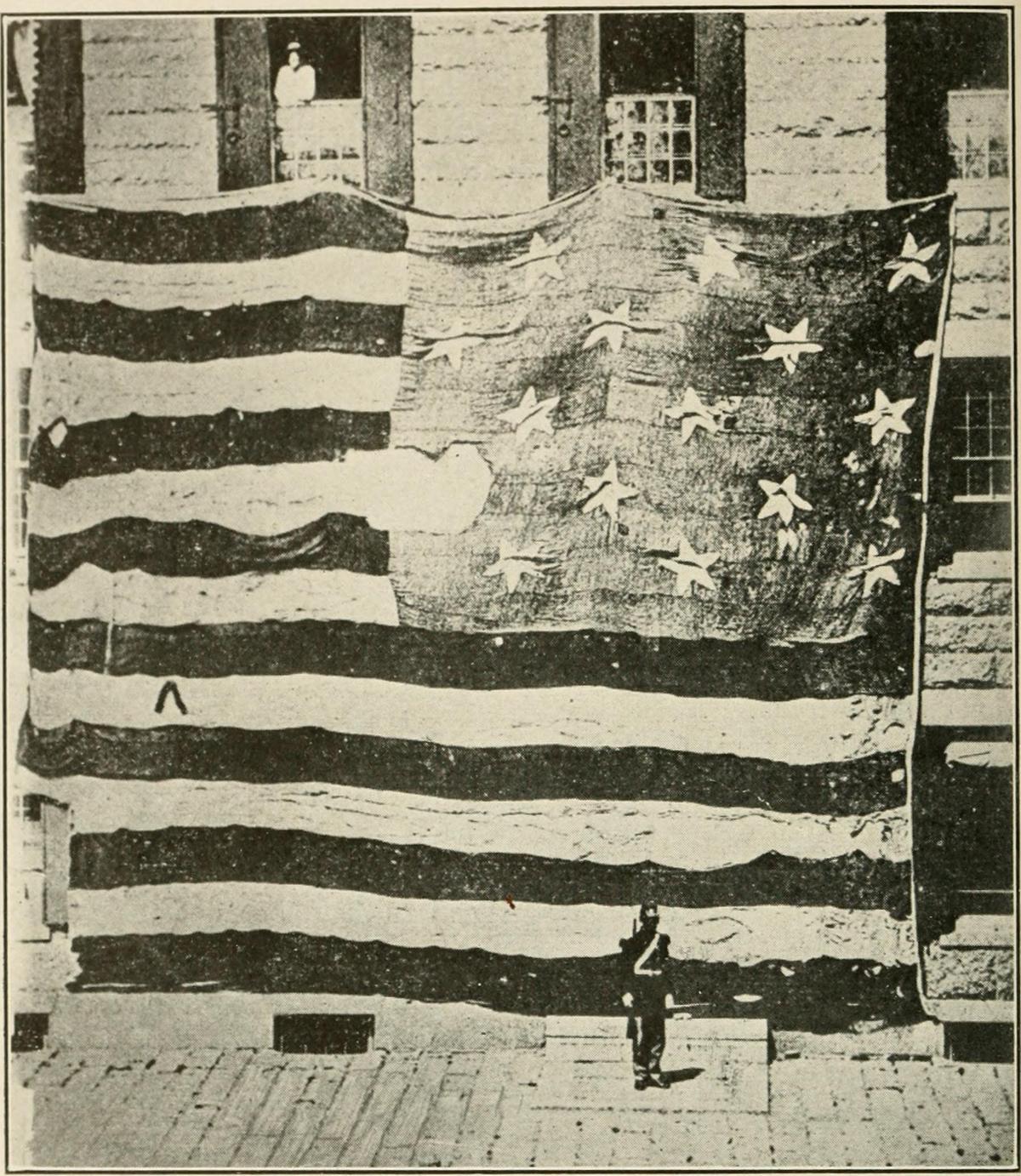
What struck me about my friend’s Fourth of July family celebrations was how their love of family and friends, their gratitude for their home and other blessings, swelled into an overflowing love of the country that sheltered those blessings. Their recitations were a way to be mindful of the source of the good things they'd received.
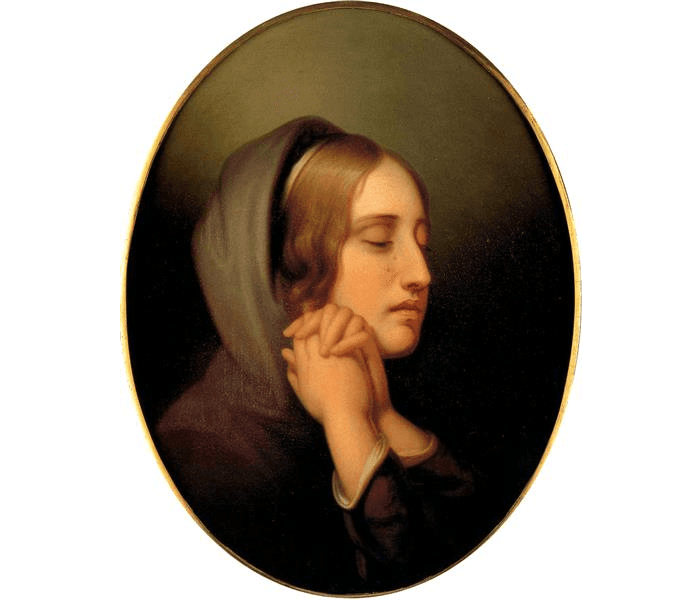
America for Me
‘Tis fine to see the Old World and travel up and down Among the famous palaces and cities of renown, To admire the crumbly castles and the statues and kings But now I think I’ve had enough of antiquated things.
So it’s home again, and home again, America for me! My heart is turning home again and there I long to be, In the land of youth and freedom, beyond the ocean bars, Where the air is full of sunlight and the flag is full of stars.
...I know that Europe’s wonderful, yet something seems to lack! The Past is too much with her, and the people looking back. But the glory of the Present is to make the Future free— We love our land for what she is and what she is to be.
Oh, it’s home again, and home again, America for me! I want a ship that’s westward bound to plough the rolling sea, To the blessed Land of Room Enough, beyond the ocean bars, Where the air is full of sunlight and the flag is full of stars.
Henry Van Dyke’s poem “America for Me” points to a unique characteristic of American patriotism in that it has an eye to carrying the torch of liberty into the future and to continual improvement. As Dr. Kody W. Cooper wrote, “American patriotism has always had an essentially aspirational component, of loyalty to what America could be and seeking to advance beloved ideals like equal justice for all.”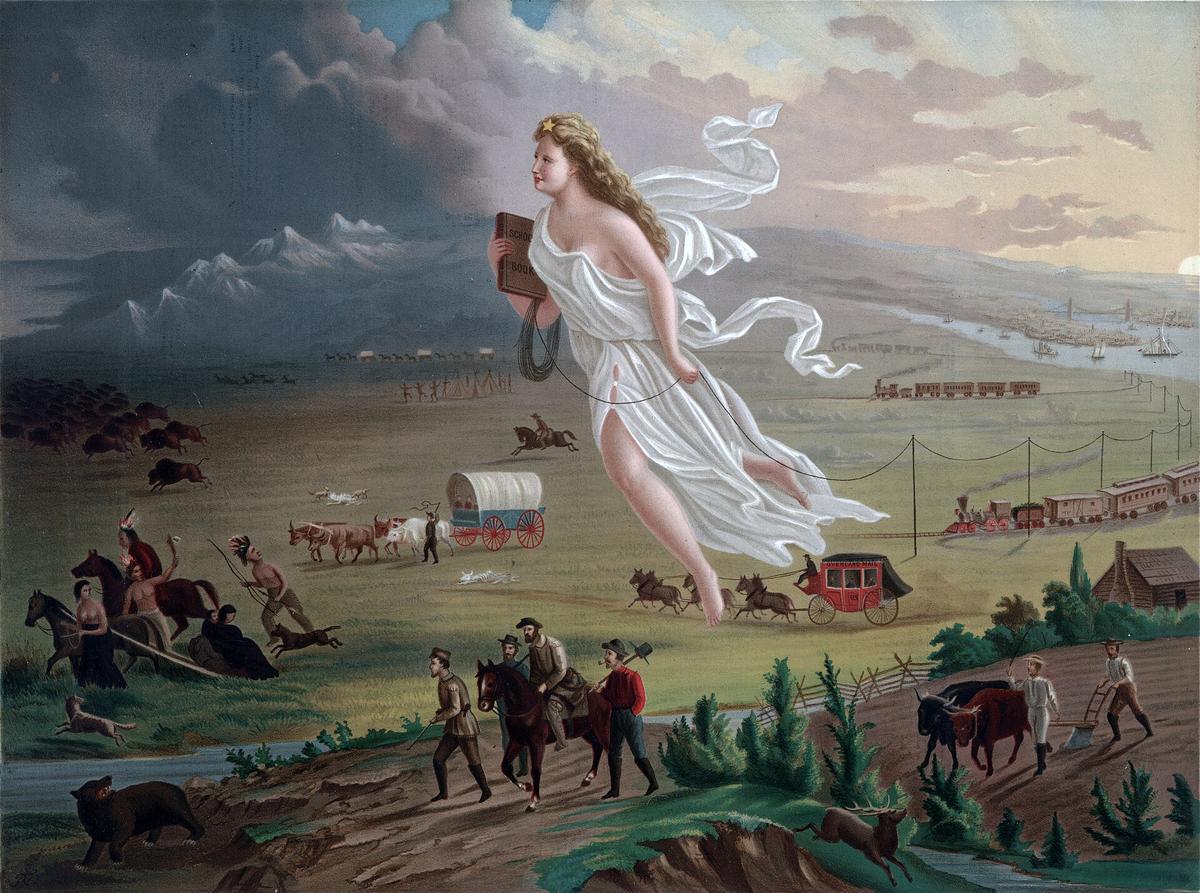
The poem’s speaker highlights another distinctive characteristic of America: It seems untamed and wild as “the friendly western woodland where Nature has her sway!,” yet more comfortable and homey than the grandeur of Europe with its castles and palaces: “It’s sweet to dream in Venice, and it’s great to study Rome/ But when it comes to living there is no place like home.” The speaker is aware of the past and future but is firmly grounded in the present; he admires the beauty of other places but retains a love of his own home.
For him, America strikes a powerful and delicate balance between the preservation of history and the care for posterity, between the large scale of rolling seas and sprawling forests and the small scale of the homestead. This balance is illustrated in the repeating line that depicts America as a land full of both sunlight and starlight. At the poem’s heart is an individual love (“Oh, to take your hand, my dear, and ramble for a day/ In the friendly western woodland where Nature has her sway!”).
The Gift Outright
The land was ours before we were the land’s. She was our land more than a hundred years Before we were her people. She was ours In Massachusetts, in Virginia, But we were England’s, still colonials, Possessing what we still were unpossessed by, Possessed by what we now no more possessed. Something we were withholding made us weak Until we found out that it was ourselves We were withholding from our land of living, And forthwith found salvation in surrender. Such as we were we gave ourselves outright (The deed of gift was many deeds of war) To the land vaguely realizing westward, But still unstoried, artless, unenhanced, Such as she was, such as she would become.
In 1961, Robert Frost became the first poet to give a recitation at a presidential inauguration. John F. Kennedy had initially requested that Frost compose a new work for the occasion, but when Frost refused, Kennedy requested a recitation of “The Gift Outright” with a slight amendment to the final line. Kennedy suggested that he change “would become” to “will become” in the last line to reflect a tone of greater optimism about America’s future. Frost agreed but ended up composing a new poem titled “Dedication” despite his earlier protestation.However, at the inauguration, he was unable to read it due to the harsh glare of the sunlight on the snowy ground, and so he ended up reciting “The Gift Outright” from memory.
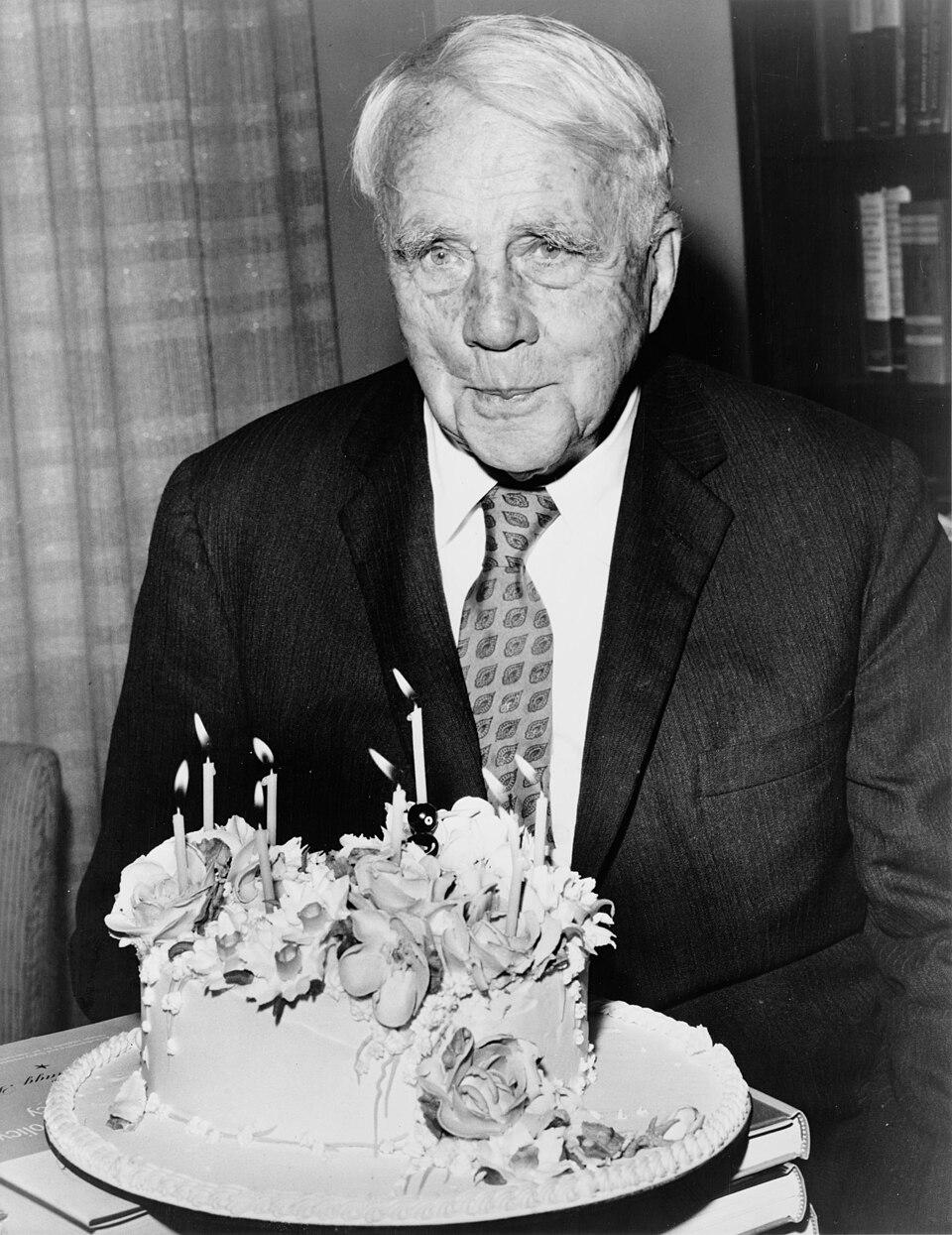
Frost described the poem as “a history of the United States in a dozen [actually, sixteen] lines of blank verse.” It speaks to the necessity of the individual’s gift of self to his country in order to find “salvation.” The poem’s religious undertones echo the belief that, paradoxically, we find ourselves only by giving of ourselves: “Whoever wishes to come after me must deny himself, take up his cross, and follow me. For whoever wishes to save his life will lose it, but whoever loses his life for my sake will find it.” (Matthew 16:24-25). There is also an echo of Psalm 27:13 in the reference to “our land of living”: “I believe I shall see the Lord’s goodness in the land of the living.”
Sail On, O Ship of State
Thou, too, sail on, O Ship of State! Sail on, O Union, strong and great! Humanity with all its fears, With all the hopes of future years, Is hanging breathless on thy fate! We know what Master laid thy keel, What Workmen wrought thy ribs of steel, Who made each mast, and sail, and rope, What anvils rang, what hammers beat, In what a forge and what a heat Were shaped the anchors of thy hope! Fear not each sudden sound and shock, ‘Tis of the wave and not the rock; ‘Tis but the flapping of the sail, And not a rent made by the gale! In spite of rock and tempest’s roar, In spite of false lights on the shore, Sail on, nor fear to breast the sea! Our hearts, our hopes, are all with thee. Our hearts, our hopes, our prayers, our tears, Our faith triumphant o'er our fears, Are all with thee, — are all with thee!
Henry Wadsworth Longfellow’s poem “Sail On, O Ship of State” are the last stanzas of a longer poem titled “The Building of the Ship,” published in 1849. The abridged version impacted not just one, but two American presidents. On the threshold of the Civil War, Abraham Lincoln was said to have requested a recitation of the poem. He was moved to tears by its final lines. In the midst of World War II, Franklin D. Roosevelt sent the first five lines of the poem in a letter to Winston Churchill in 1941, writing, “I think this verse applies to you people as it does to us.” Churchill, in turn, was taken with the poem and quoted it in a radio broadcast to the British people.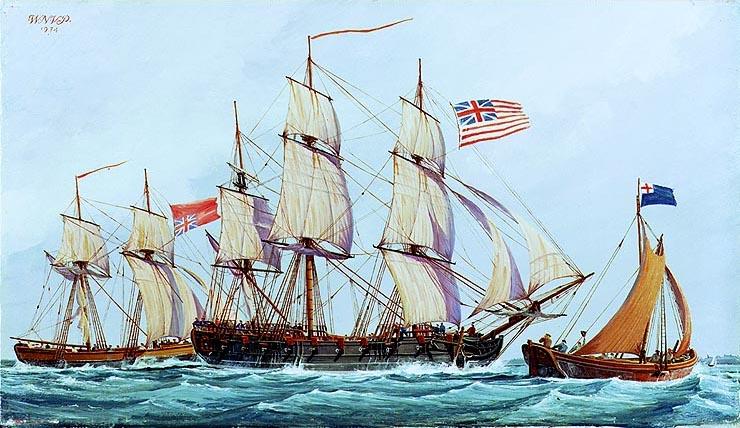
The name of the ship, “Union,” refers not only to the United States but also to a marital union behind the history of the ship’s construction. The ship builder’s apprentice marries his master’s daughter upon the completion of the ship. Their union is likened to the marriage between the ship and ocean. The same elements that make their union successful are those that forge the creation of America: “gentleness and love and trust/ Prevail o'er angry wave and gust.”
Both unions were forged through toil and sacrifice and therefore are fortified against future storms. Behind the magnificence of the ship of state are the individual human loves that bind together that Union and serve as a school in which to learn sacrifice and self-giving.
Like the poems by Van Dyke and Frost, Longfellow’s poem conveys a profound gratitude for the gift of the country. It culminates in a swell of hope for America’s future and the determination to carry her ideals onward.