Around 1757, at the age of 10, John Dunlap (circa 1746–1812) was sent on a 3,000-mile voyage from his home in Ireland to join his uncle in Philadelphia. His uncle, William, was a successful printer and bookseller, whose social connections only assisted that success. William had married Deborah Croker, the niece of Benjamin Franklin’s common-law wife, Deborah Read Franklin.
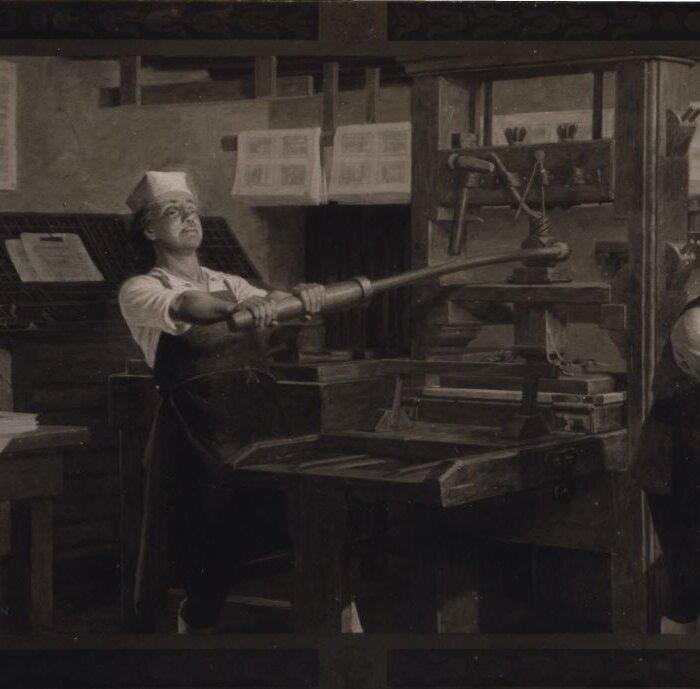
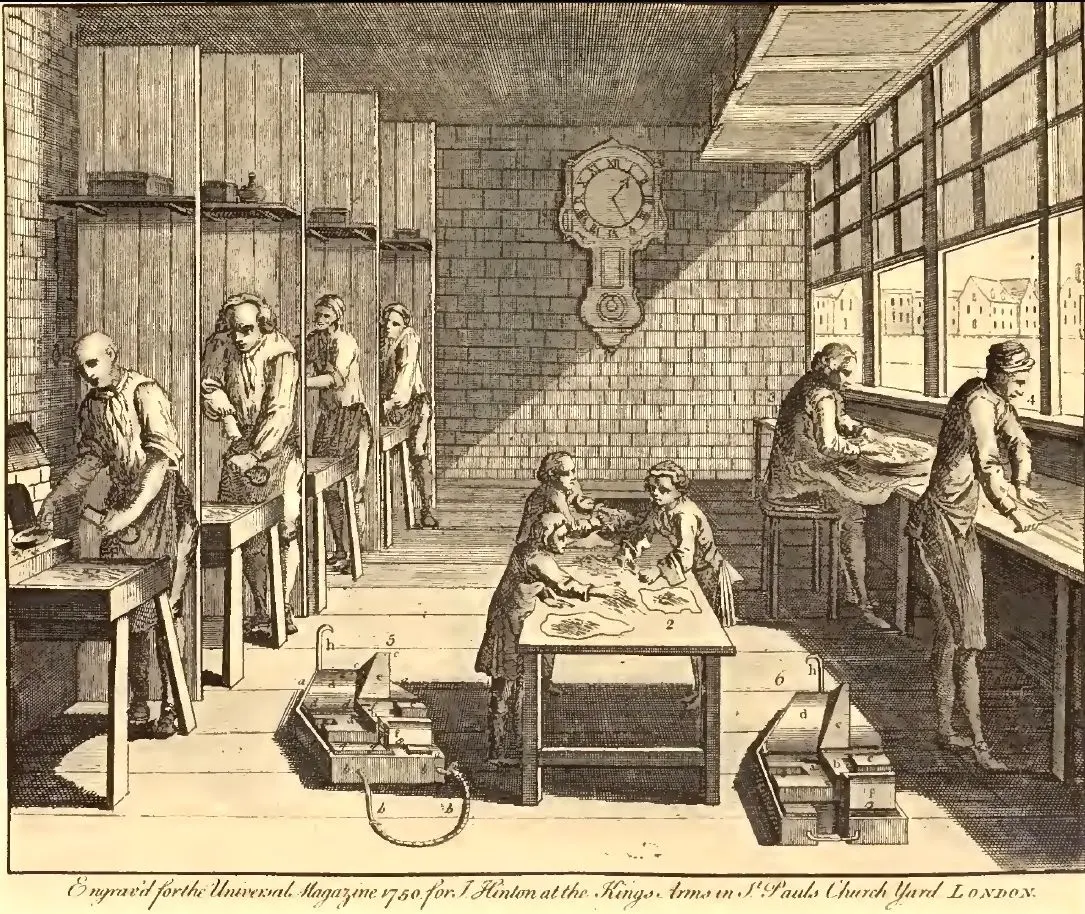
William Dunlap was appointed postmaster by Benjamin Franklin around the same time as his nephew’s arrival. With a burgeoning business, the young Dunlap received ample opportunities to learn the profession as his uncle’s apprentice.
Business During Chaos
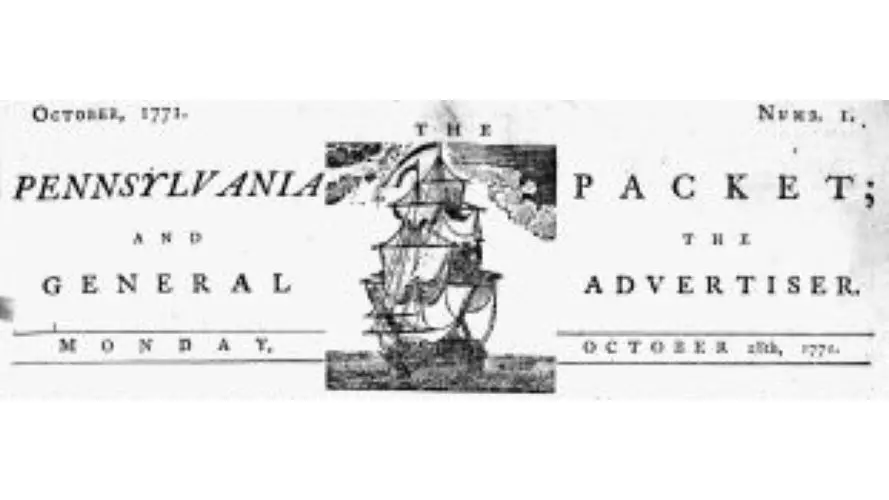
In 1766, William left the business to his nephew in order to become a minister with the Church of England. For two years, Dunlap ran the printing business in Philadelphia, while William studied to eventually become rector of the parish of Stratton in Virginia. In 1768, William officially sold the business to his nephew.During the early years of owning the business, Dunlap struggled financially, often sleeping in his office. But his intense work ethic, dedication to his craft, and wise investments soon paid dividends. On Oct. 28, 1771, the young printer began publishing a weekly newspaper called The Pennsylvania Packet; and the General Advertiser (13 years later, it would become America’s first successful daily newspaper). The newspaper proved to be a successful endeavor, and it also promoted his ability as a printer.
Less than two years later, in February 1773, Dunlap married Elizabeth Ellison, of Liverpool, with whom he would have five daughters and two sons, though it appears neither son survived to adulthood. During this time, the colonists were getting restless regarding the many tax acts passed by the British Parliament. Colonists had already clashed with governmental representatives and British soldiers, including the Stamp Act Riots of 1765, the Boston Massacre of 1770, and the Gaspee Affair of 1772. Less than a year after Dunlap wed, the Boston Tea Party took place on Dec. 16, 1773, which escalated the ongoing conflict.
The following year, representatives from the colonies assembled in Dunlap’s hometown of Philadelphia to convene the First Continental Congress. That proximity had great effect on Dunlap’s career. It was also during this year that Dunlap made his first professional association with Thomas Jefferson, when he published the Virginian’s “A Summary View of the Rights of British America.”

The conflict with Great Britain appeared destined for military action. Shortly after the First Continental Congress concluded, several Philadelphians gathered, among them Dunlap, and formed the Light Horse of the City of Philadelphia (now known as First Troop Philadelphia City Cavalry), as a means of defense. The formation proved prescient.
Printing the Declaration
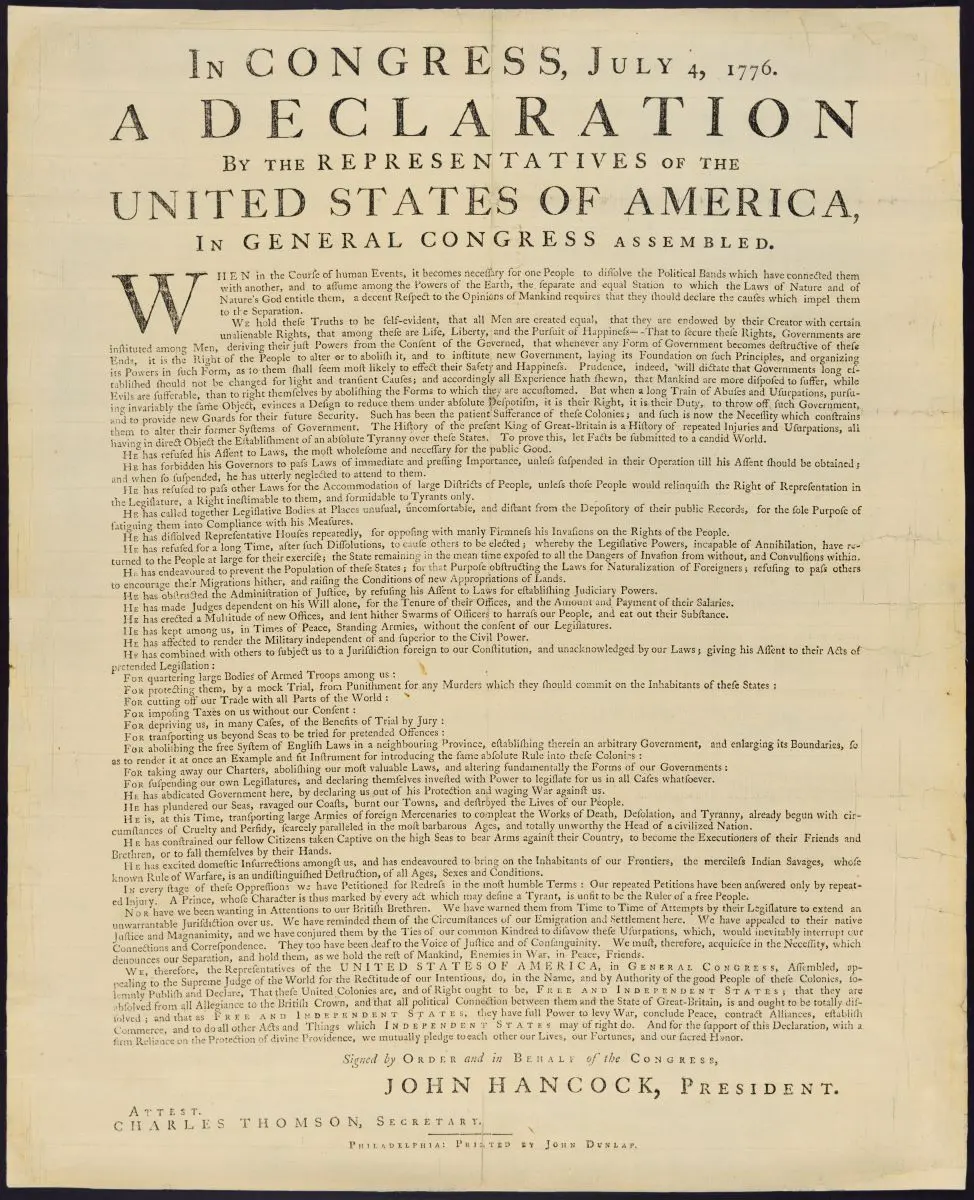
On July 2, 1776, the Second Continental Congress approved Richard Henry Lee’s resolution to separate from Great Britain. The Congress’s Committee of Five—John Adams, Roger Sherman, Robert Livingston, Franklin, and Jefferson—had drafted a declaration of independence, but Congress needed to approve the draft. Over two days, delegates debated over the wording, penned by Jefferson. On July 4, the Declaration of Independence was completed. Now it needed to be published and disseminated, and Congress wanted a lot of prints.
John Hancock, president of the Continental Congress, implored Dunlap to keep printing the Declaration of Independence so that it could be sent throughout the colonies, as well as to the Continental Army. There was such a sense of urgency that many copies were folded for delivery before the ink could dry. On July 6, Hancock sent a copy to Gen. George Washington in New York City. It was read to Washington’s troops on July 9.
Congress’s Printer
Having printed the new country’s most important document, he soon embarked on the country’s most important battle. He joined Washington in the famous battles of Trenton and Princeton in December 1776 and January 1777, respectively. The battles breathed new life into the troops and the cause of independence.Later that year, Dunlap was forced to move his printing business to Lancaster after the British occupied Philadelphia (Congress fled to York). By this time, Dunlap was appointed official printer of the Continental Congress.
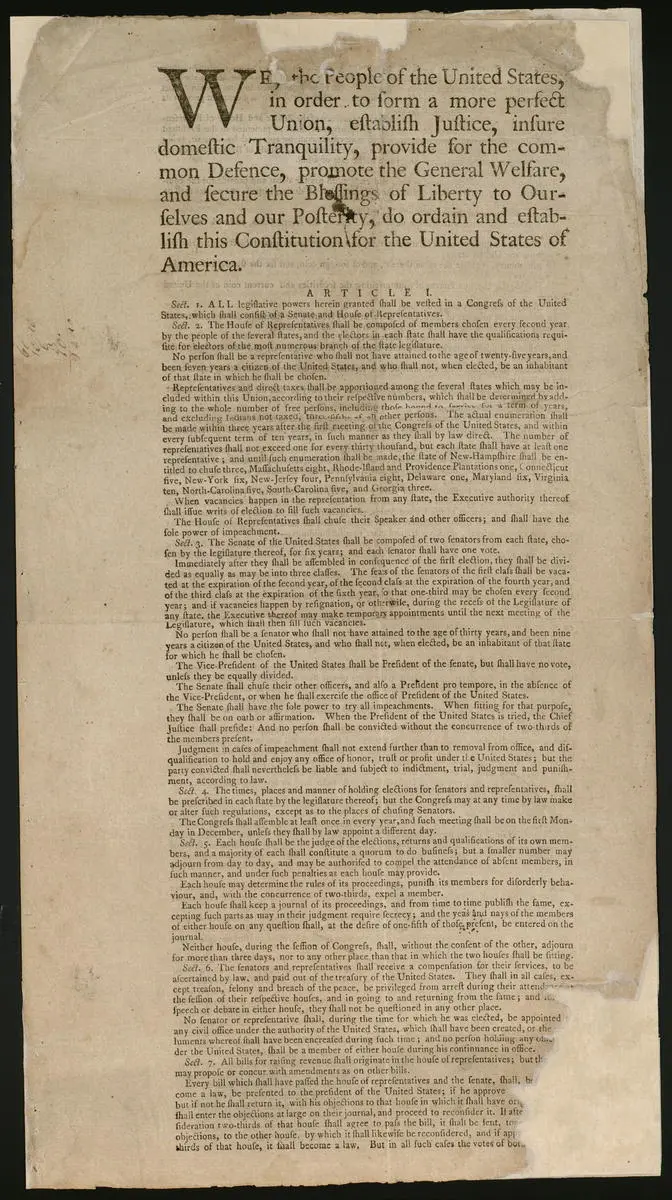
In 1787, Dunlap published another famous American document: the United States Constitution. The first print was issued to the delegates who had convened again in Philadelphia to debate the need for a new constitution in place of the Articles of Confederation. Upon approval by the Constitutional Convention’s delegates, Dunlap published it in his newspaper, The Pennsylvania Packet.
Shortly before he settled into retirement in 1795, he helped quell the Whiskey Rebellion in 1794. The Irish immigrant had become a success story, opening numerous presses and newspapers, and accumulating real estate that totaled approximately 98,000 acres. He died in 1812. Despite his successes in business and in revolution, it seems his death was sadly hastened through his affinity for alcohol.
“So humble was his beginning in life that he slept upon a blanket under his counter and ate pepper-pot only bought in the market from his inability to purchase a bed or any other food. He was a staunch Revolutionary Whig, and active as a dragoon in the most perilous stages of the war. In the parties which divided his country he was always moderate, candid and just to both sides. To public institutions he was liberal, to the poor charitable and to his friends kind and affectionate. In his family he was less amiable and respectable than in society. Towards the close of his life he became intemperate so as to fall in the streets. He was early and uniformly my friend.”