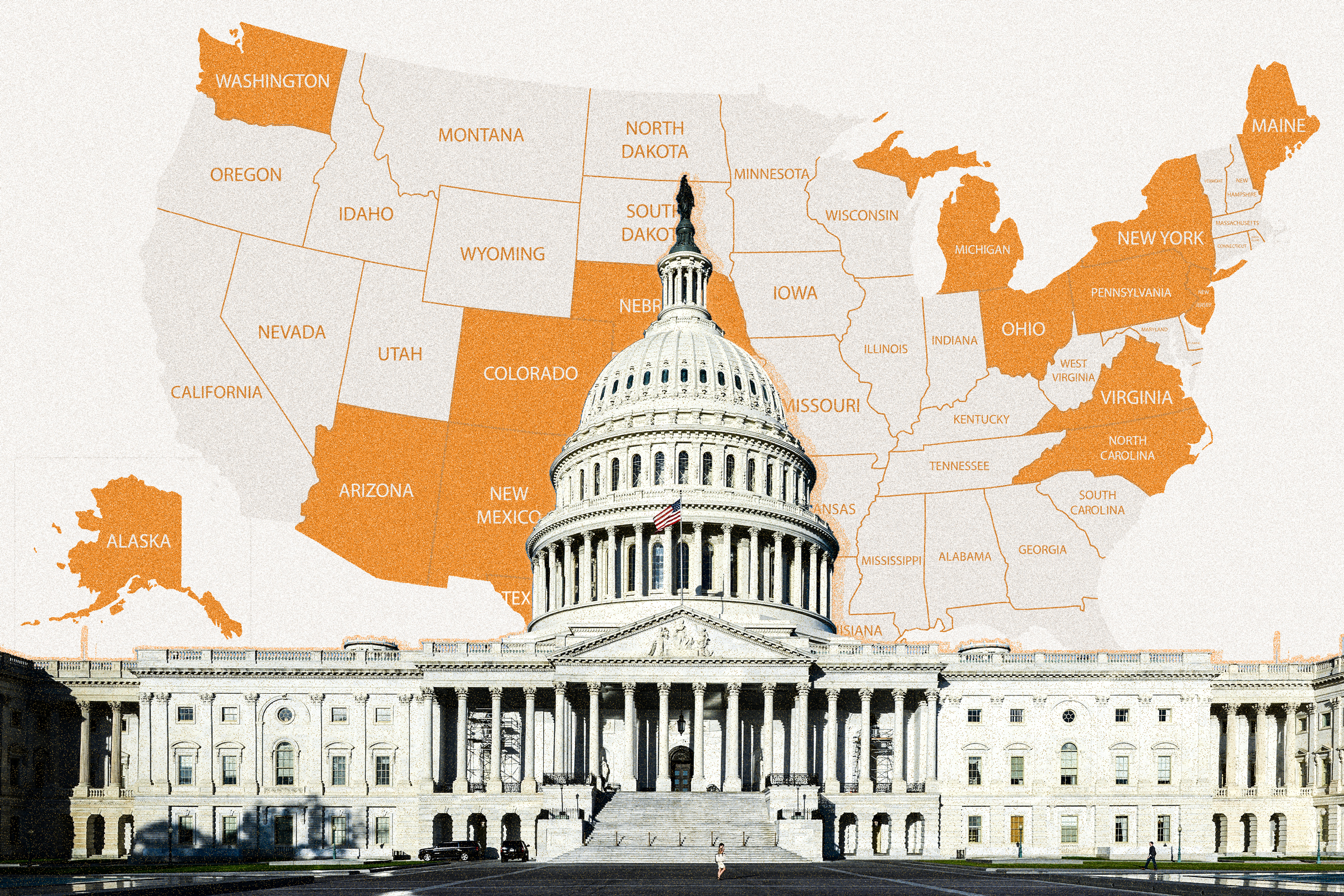
The first 2026 midterm primaries are more than 200 days away, with Arkansas, North Carolina, and Texas kicking off inter-party preliminaries on March 3, 2026, but many congressional races are taking shape as incumbents and challengers launch campaigns.
Among the most closely watched contests will be for supremacy in the House of Representatives, where Republicans now hold a 220–213 advantage.
Democrats believe they can flip the chamber, while the GOP is gunning to increase its majority in the Nov. 3, 2026, election.
Among these races are 13 House seats Democrats won in districts President Donald Trump captured, and three Republicans won in districts then-Vice President Kamala Harris secured in November 2024.
These 61 House contests include anticipated tight tussles in eight of California’s 52 House seats, with the NRCC putting the bull’s-eye on five incumbent Democrats, and the DCCC spotlighting three Republicans. Democrats now have a 43–9 bulge in California’s congressional delegation.
Other states with multiple House races that could be 2026 dogfights include five each in Florida and Ohio. In both states, the NRCC believes that it can knock off two incumbent Democrats, and the DCCC is targeting three sitting Republicans.
Four New York House incumbents are in hot seats with the NRCC confident that it can defeat three sitting Democrats—two on Long Island—and the DCCC targeting Rep. Mike Lawler (R-N.Y.) in the lower Hudson Valley.
Once again, the NRCC will attempt to win at least one of three Democrat-held Nevada seats in the Las Vegas area.
The sitting president’s party has lost House seats in every midterm but two since 1950.
Of course, with Texas lawmakers set to redraw the state’s 38 congressional districts and California legislators threatening to do the same, the playing field could be significantly altered by the end of the year. Stay tuned.
1. North Carolina Congressional District 1
Two-term Rep. Donald Davis (D-N.C.) defeated Republican challenger Laurie Buckhout by 1.7 percentage points—6,300 votes—in the 2024 North Carolina First Congressional District (CD 1) race.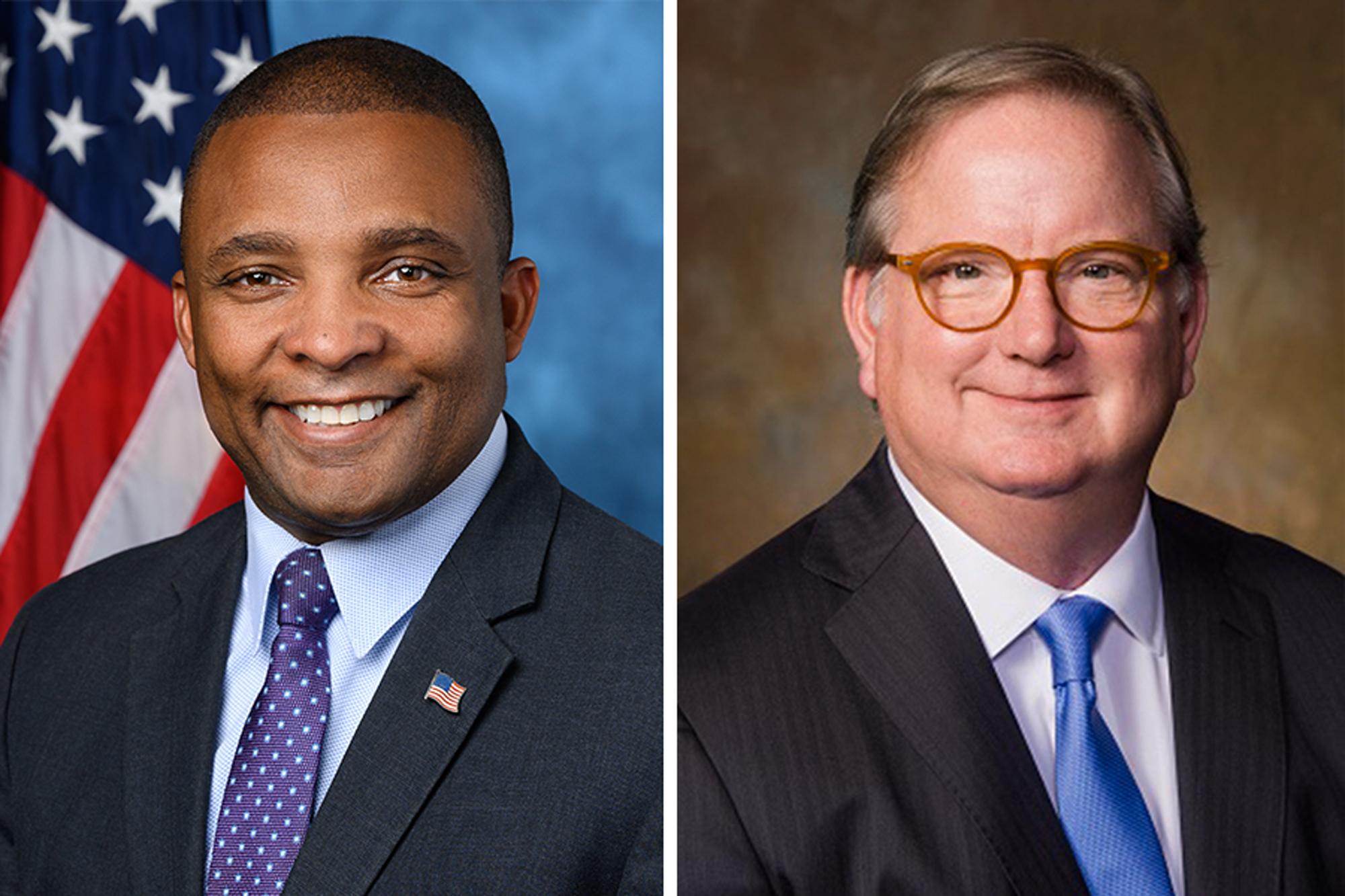
Roberson, who owns home-care, hospice, and nursing home operations, ran for the seat in 2022 but lost the GOP primary by 2,000 votes.
North Carolina CD 1 is among the 13 congressional districts where voters selected Trump in 2024 but sent a Democrat to the House. The president won the district by 3.1 percentage points, meaning that Davis outperformed Harris by 4.8 percentage points while squeezing past Buckhout.
2. Texas Congressional District 34
At least five Republican challengers will vie in the March 3, 2026, GOP primary for the party nod to take on two-term Rep. Vicente Gonzalez Jr. (D-Texas) in Texas’s 34th Congressional District (CD 34).

This is a seat Gonzalez retained by fewer than 5,000 votes—2.6 percentage points—in 2024, despite Trump winning by 4.4 percentage points.
The 2024 election marked the second time Gonzalez edged out former Rep. Maya Flores (R-Texas), after ousting her in 2022 from the seat in the Gulf Coast district, which stretches from Brownsville to Corpus Christi. It was the tightest margin of victory in Texas’s 38 congressional district elections in 2024.
Gonzalez will first need to brush aside a primary challenge from Brownsville policy researcher and rock musician Etienne Rosas before facing the winner of the GOP primary.
As of Aug. 1, at least five Republicans have declared candidacy with the Dec. 8 primary filing deadline still months away.
They are: Keith Allen, retail manager, ordained minister, and podcast host; Joshua Cortez, former senior advisor to Rep. Monica De La Cruz (R-Texas); Eric Flores, Army infantry veteran and former assistant U.S. attorney for the Southern District of Texas; Mauro Garza, teacher and entrepreneur; and Bam Morales, Army veteran and law enforcement officer.
As of June 30, Gonzalez’s campaign had more than $932,000 in its FEC campaign kitty while challengers had amassed nominal contributions.
The Cook Political Report and Larry J. Sabato’s Crystal Ball rate Texas’s CD 34 as a “toss-up” district, while Inside Elections with Nathan L. Gonzales gives it a “Tilt Democratic” rating.

3. Ohio Congressional District 9
Rep. Marcy Kaptur (D-Ohio) has been on the GOP’s target list since she succeeded 14-term Rep. Thomas Ashley (D-Ohio) in 1982. In 2026, Republicans feel confident they can flip Ohio’s Ninth Congressional District (CD 9) for the first time since 1930.The state’s longest-serving member of Congress is seeking an 18th term in the Northwest Ohio district that Trump won by 7 points and Kaptur retained by 1,382 votes—0.7 percentage points—over business owner, Realtor, and former state representative Derrick Merrin.
Merrin is among four Republicans who will contend for the party berth to challenge Kaptur in the May 5, 2026, GOP primary. The others include Alea Nadeem, an Air National Guard officer who has been a national security policy advisor at the Pentagon and the National Security Council; attorney and Ohio state Rep. Josh Williams; and Air Force veteran Wayne Kinsel.
Kaptur, as of Aug. 1, does not have a primary opponent. However, she does have a big fundraising advantage with nearly $950,000 in her FEC campaign fund. By contrast, of her opponents, only Nadeem has reported contributions—less than $86,000—as of June 30.
The Cook Political Report and Crystal Ball rate Ohio’s CD 9 as a “toss-up.”

4. Pennsylvania Congressional District 7
Newcomer Rep. Ryan Mackenzie (R-Pa.) in 2024 knocked out three-term incumbent Rep. Susan Wild (D-Pa.) by 4,062 votes—1 percentage point—in their Pennsylvania Seventh Congressional District (CD 7) race.Wild, as of Aug. 1, is not among the three Democrats who have declared their candidacies for Pennsylvania’s May 19 primary for a space on the ballot opposite Mackenzie in 2026. The state candidate-filing deadline for the party preliminaries is March 10, 2026.
The confirmed three are Marine veteran and former federal prosecutor Ryan Crosswell, Northampton County Executive Lamont McClure, and nonprofit executive Carol Obando-Derstine.
Mackenzie, who does not have a Republican primary challenger as yet, served on the Pennsylvania Economic Development Financing Authority before defeating Wild in CD 7, which includes all of Carbon, Lehigh, and Northampton counties in northeast Pennsylvania.
Mackenzie’s campaign had $1.2 million in its FEC war chest as of June 30, significantly more in contributions than any of his potential opponents.
The Cook Political Report, Inside Elections, and Crystal Ball all rate Pennsylvania’s CD 7 as a “toss-up” district.

5. Nebraska Congressional District 2
This key Omaha-area House seat is wide open after five-term Rep. Don Bacon (R-Neb.) announced on June 30 that he is not seeking reelection in 2026, and Democrats believe that they can win it.Nebraska’s Second Congressional District is one of three districts in the country that Harris won in 2024 while also electing a Republican to the House. Bacon, a retired Air Force general, defeated Democrat Tony Vargas by less than 2 percentage points in their rematch from 2022.
With Bacon out of the picture, four Democrats and one Republican have launched campaigns for the seat, which The Cook Political Report and Crystal Ball rate as “Lean Democratic” and Inside Elections calls a “toss up.”
As of Aug. 1, state Sen. Brett Lindstrom and Omaha City Councilman Brinker Harding have thrown their hats in the ring for the GOP primary.
Vying for the Democratic nod are Kishla Askins, a former deputy assistant secretary of Veterans Affairs under then-President Joe Biden; state Sen. John Cavanaugh; Denise Powell, small business owner and former corporate executive; and Evangelos Argyrakis, immigration attorney.
The Nebraska State Legislature has not yet set a date for the primary, but it is typically in May.


6. California Congressional District 13
Although Trump lost California by 20 percentage points in 2024, he won the state’s 13th Congressional District by 5.4 percentage points.Newcomer Rep. Adam Gray (D-Calif.) unseated one-term Rep. John Duarte (R-Calif.) by 187 votes in their 2024 slugfest—the closest House race nationwide—and Republicans will likely spend big to get the Central Valley seat back.
As of Aug. 1, Gray doesn’t face a party rival in the June 2 primary, but Ceres Mayor Javier Lopez and business owner Vin Kruttiventi will face off for the GOP nod.
Gray is one of 13 Democrats holding seats in crossover districts that the president won in 2024.
The district garners a “toss-up” rating from the Cook Political Report, Crystal Ball, and Inside Elections.
7. New Jersey Congressional District 7
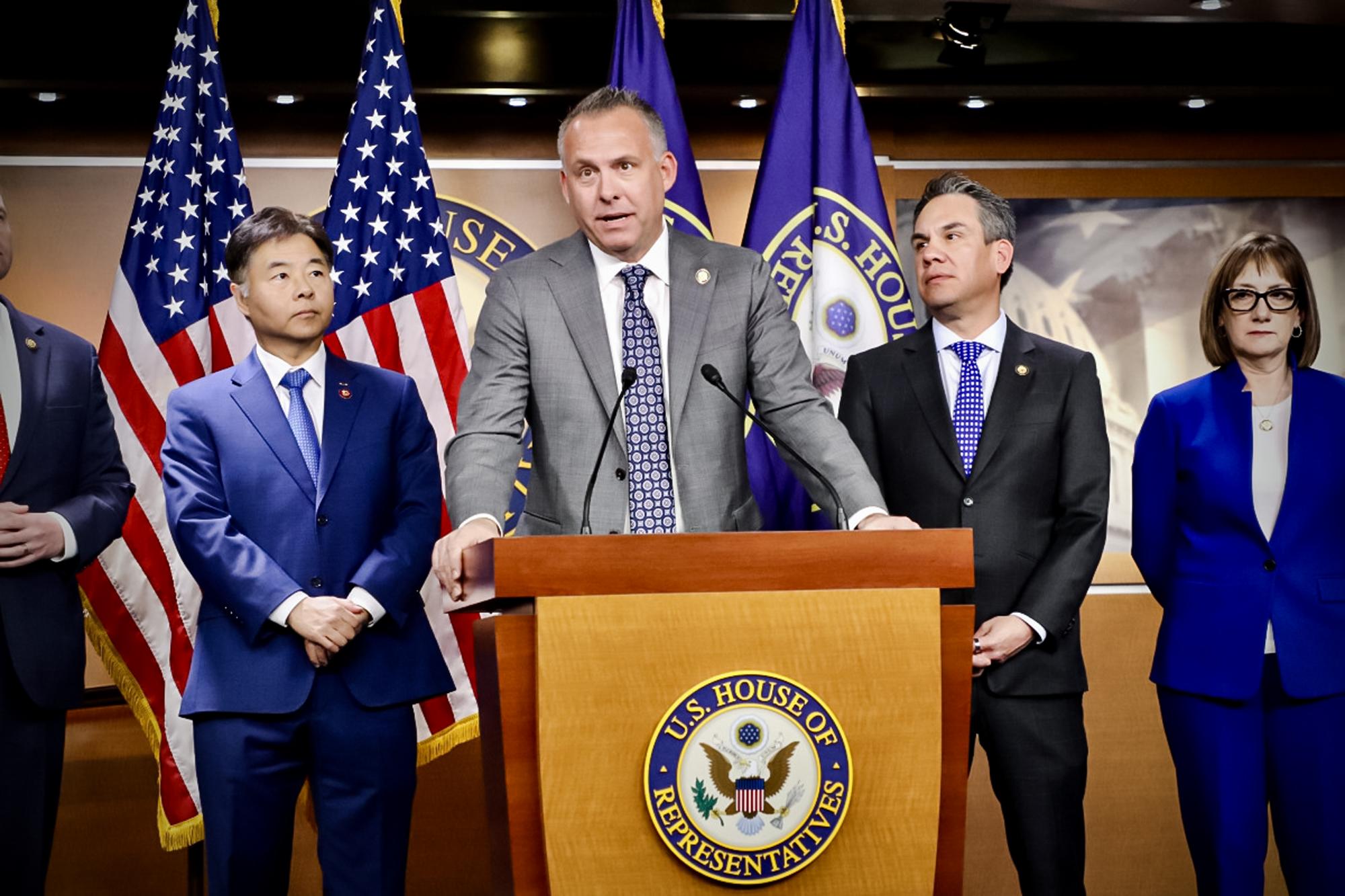
Two-term Rep. Thomas Kean Jr. (R-N.J.) does not, as of Aug. 1, have any opponents in New Jersey’s June 2 primary, but at least eight Democrats will battle for a Seventh Congressional District ballot berth to dislodge him in November 2026.The district, one of the most affluent in the nation, includes Hunterdon and Warren counties, and parts of Morris, Somerset, Sussex, and Union counties in north-central New Jersey.
Kean was reelected in 2024 by 5.4 percentage points over Democrat Susan Altman after wresting the formerly blue stronghold from two-term Rep. Tom Malinowski (D-N.J.) by 2.8 percentage points—less than 9,000 votes—in 2022. It was a rematch from their 2020 race, which Malinowski won by 1.2 percentage points.
The son of former New Jersey Gov. Thomas Kean Sr., Kean is a former state lawmaker who worked in the Environmental Protection Agency during the George H.W. Bush administration.
The candidate-filing deadline for the primary is March 23, 2026, but the Democratic inter-party preliminary is already crowded.
Among contenders are Rebecca Bennett, criminal justice professor; Beth Ellen Adubato, former Navy helicopter pilot, Air National Guard officer, and health care executive; Valentina “Vale” Mendoza, an attorney; Michael Roth, an official in the Biden administration’s Small Business Administration; Felipe Santos, an entrepreneur; Tina Shah, a physician; Brian Varela, a marketing agency owner; and Gregory Vartan, Common Council of Summit councilmember.
Crystal Ball rates New Jersey’s Seventh Congressional District a “toss-up,” while The Cook Political Report classifies it as “Lean Republican,” and Inside Elections as “Tilt Republican.”

8. New Mexico Congressional District 2
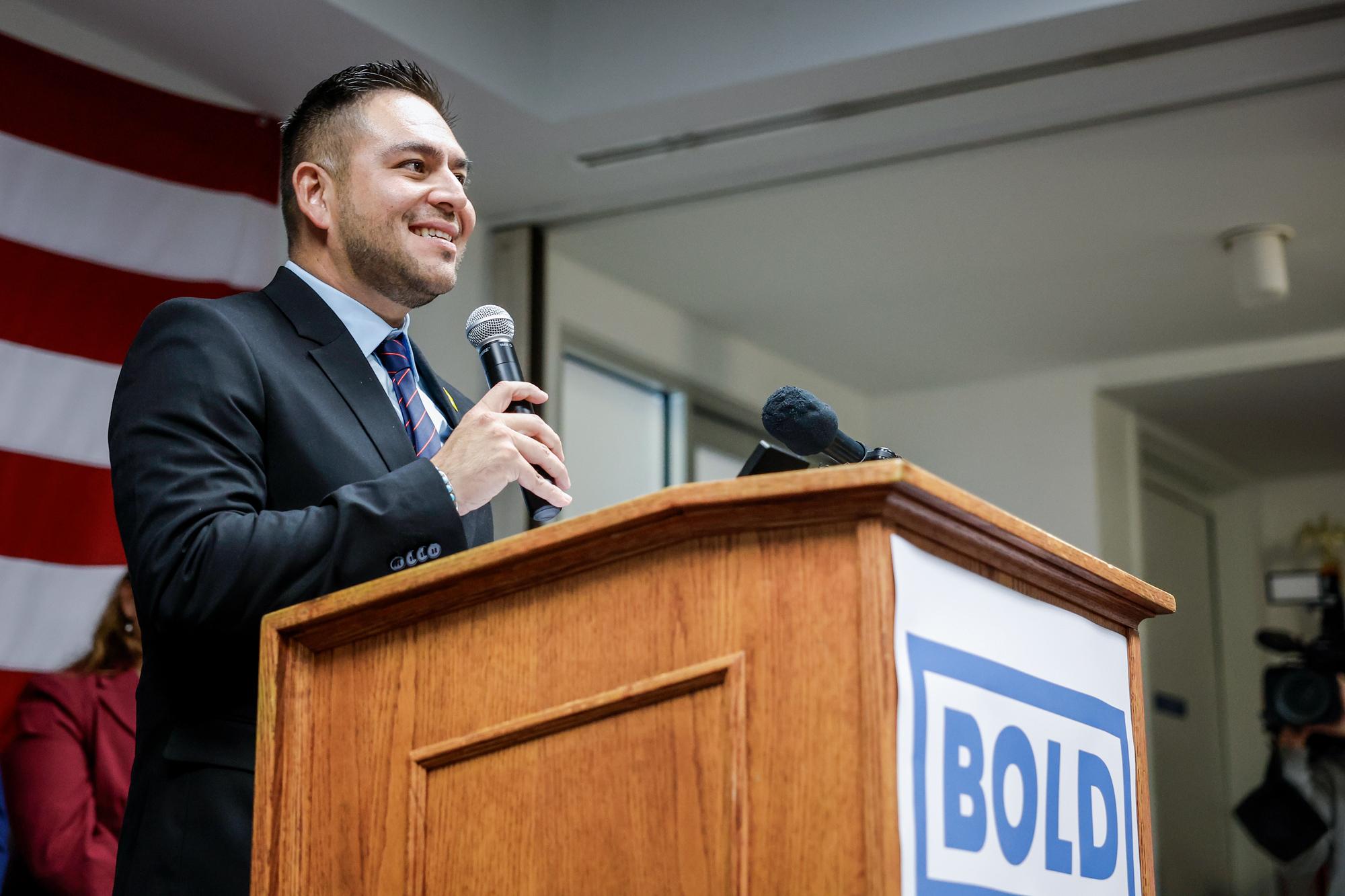
Rep. Gabe Vasquez (D-N.M.) edged out incumbent Rep. Yvette Herrell (R-N.M.) by 0.7 percentage points in 2022—the nation’s closest House race during that midterm election. He beat Herrell again by more than 4.2 percentage points in their 2024 rematch in New Mexico’s Second Congressional District.As of Aug. 1, Vasquez does not face a challenger in the state’s June 2 primary, nor does Republican Eddy Aragon, although that could change by the Feb. 3 candidate-filing deadline.
The district, which spans southern New Mexico—including Las Cruces and the southern reaches of Albuquerque—is one of 13 districts Trump won in 2024 while a Democrat was elected to the House.
Vasquez, a former journalist, Hispano Chamber of Commerce de Las Cruces executive director, and field representative for Sen. Martin Heinrich (D-N.M.), served on the Las Cruces City Council before challenging Herrell.
Aragon is CEO of Rock of Talk and a longtime Albuquerque radio broadcaster. As of Aug. 1, he had $3,000 in his FEC campaign fund compared to Vasquez’s $626,000.
The Cook Political Report rates New Mexico’s Second Congressional District as a “toss-up,” while Inside Elections gives it a “Tilt Democratic” classification, and Crystal Ball calls it a “Lean Democratic.”
9. Maine Congressional District 2
Rep. Jared Golden (D-Maine) is seeking a fifth term in Maine’s Second Congressional District, a district he won in 2024 by 0.6 percentage points—2,706 votes—and Trump won by almost 7 points.Next year, he’ll likely have to do that against former two-term Republican Gov. Paul LePage in the 27,326-square-mile district, the largest by area, east of the Mississippi River.
As of Aug. 1, neither faces a party rival in the state’s June 9 primary, but that could change before the March 15 candidate-filing deadline.
Golden had $1 million in his FEC campaign fund as of June 30, while LePage had $527,781.
The Cook Political Report and Crystal Ball rate Maine’s Second Congressional District as a “toss-up,” while Inside Elections pegs it as “Tilt Democratic.”


10. Virginia Congressional District 2
Rep. Jennifer Kiggans (R-Va.) has survived two races in Virginia’s Second Congressional District, unseating incumbent Rep. Elaine Luria (D-Va.) in 2022 by 10,000 votes—3.4 percentage points—and then fending off Democrat Missy Cotter Smasal by 3.8 percentage points in 2024.Another tussle awaits if she’s to three-peat in the tidewater district, which has a strong military—primarily Navy—constituency.
Kiggans, a former Navy helicopter pilot and an adult-geriatric nurse practitioner, faces no GOP challengers in the June 16 primary as of Aug. 1, but party rivals could emerge before the April 2 candidate-filing deadline.
Three Democrats have declared candidacies. They are U.S. Naval Academy graduate and fast-attack submarine veteran James Osyf; Navy veteran and entrepreneur John “Burk” Stringfellow; and data center project manager Nicolaus Sleister.
Kiggans had nearly $1.5 million in her FEC kitty as of June 30. The Democratic candidates had either nominal contributions or had not reported yet.
Virginia’s Second Congressional District is rated a “toss-up” district by Inside Elections and Crystal Ball. The Cook Political Report calls it “Lean Republican.”
11. New York Congressional District 4
First-term Rep. Laura Gillen (D-N.Y.) defeated incumbent Rep. Anthony D‘Esposito (R-N.Y.) by 2.3 percentage points in their 2024 Fourth Congressional District (CD 4) race. It was a rematch—and a reversal—of their 2022 race that D’Esposito won by 3.6 percentage points.As of Aug. 1, Gillen, the former Hempstead Town supervisor, faces two Democrat rivals in the party’s June 23 primary: real estate professional and veteran Democrat campaign manager Gian Jones and artist and stagehand Nicholas Sciretta.
Americord founder and CEO Martin Smithmyer is the only Republican seeking the party nod to take on Gillen, although more are likely to join the race before the April 2 candidate-filing deadline.
Gillen has more than $1 million in her FEC campaign bank. None of her challengers in the Long Island district had significant contributions as of June 30.
The Cook Political Report rates New York’s CD 4 as a “toss-up.” Inside Elections calls it “Tilt Democratic,” and Crystal Ball rates it as “Lean Democratic.”

12. Colorado Congressional District 8
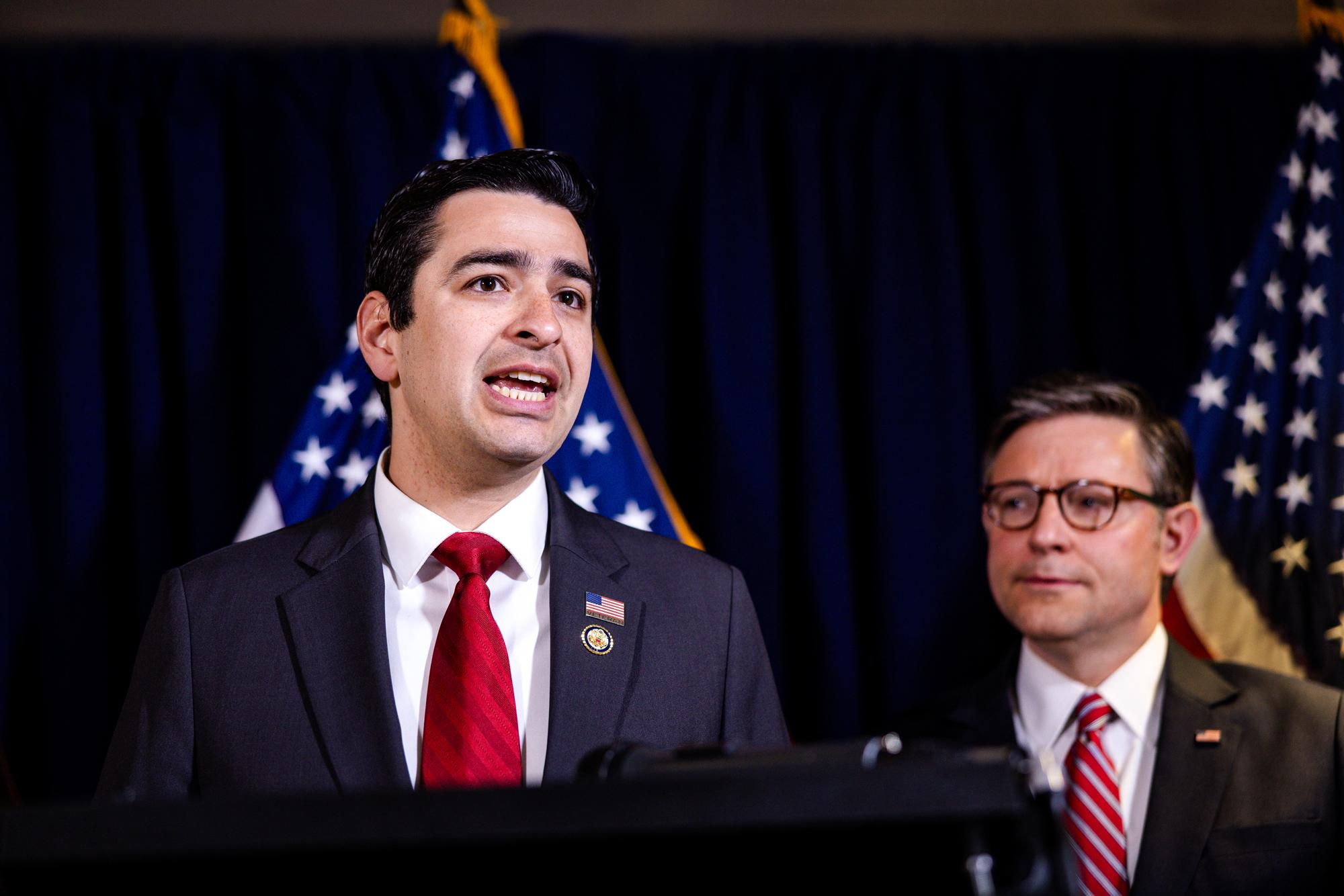
Rep. Gabe Evans (R-Colo.) defeated incumbent Rep. Yadira Caraveo (D-Colo.) by 0.7 percentage points in 2022 in Colorado’s Eighth Congressional District (CD 8) and again warded her off in 2024 by 1.2 percentage points.Evans will face a similar close race in 2026 if he’s to return to Congress for a third term representing Colorado’s newest district, which traces I-25 north of Denver in Adams, Larimer, and Weld counties.
Nearly 40 percent of CD 8 voters are Hispanic, and Democrats have a 3 percent registration advantage, which is why at least seven Democrats have launched campaigns to win the June 30 primary to take on Evans in November 2026—including Caraveo, a pediatrician.
The other six are: Amie Baca-Oehlert, executive director of the Denver Classroom Teachers Association; state Rep. Shannon Bird; Marine combat veteran and finance associate Evan Munsing; state Rep. Manny Rutinel; software management consultant John Szemler; and Colorado state Treasurer Dave Young.
Evans, an Army combat veteran, farmer, and former police officer, as of Aug. 1, does not have a GOP primary challenger, although there’s time for rivals to declare before the March 17 candidate-filing deadline.
He had $1.5 million in his FEC campaign kitty as of June 30, far more than the Democrat campaigns, although Rutinel had more than $800,000 in contributions.
The Cook Political Report, Inside Elections, and Crystal Ball all rate Colorado’s CD 8 as a “toss-up” district.
13. Arizona Congressional District 6
Two-term Rep. Juan Ciscomani (R-Ariz.) defeated Democrat Kirsten Engel in 2022 by 1.5 percentage points, and again in 2024 by 2.5 percentage points in a post-2020 Census reapportioned Sixth Congressional District (CD 6).The redistricting has made CD 6, which includes the suburbs of Tucson, all of Greenlee County, most of Cochise County, and parts of three other counties, more competitive. While Trump won the district in 2016 and 2024, Biden took it in 2020. Democrats have only won CD 6 once since it was created in 1992.
As yet, Ciscomani faces no rivals for the state’s Aug. 4, 2026, Republican primary, although that could change by the April 6 candidate-filing deadline.
At least six Democrats have launched campaigns to challenge Ciscomani: retired FBI Special Agent Johnathan Buma; Raytheon Technologies engineer Chris Donat; author and podcast host Mo Goldman; Navy veteran and Pima Community College veterans outreach coordinator JoAnna Mendoza; education administrator Samantha Severson; and career Army veteran Aiden Swallow.
Caregiver and neighborhood business association coordinator Gary Swing is running on the Green Party ballot, while independent Trevor Dickerson has also launched a campaign for the seat.
Ciscomani, who was a senior advisor for then-Arizona Gov. Doug Ducey and served as Arizona–Mexico Commission vice chair, had nearly $2 million in FEC campaign contributions as of June 30.
The Cook Political Report, Inside Elections, and Crystal Ball all rate Arizona’s CD 6 as a “toss-up” district.
14. Michigan Congressional District 7
First-term Rep. Tom Barrett (R-Mich.) defeated Democrat Curtis Hertel by nearly 4 percentage points in Michigan’s Seventh Congressional District in 2024 after incumbent Rep. Elissa Slotkin (D-Mich.) vacated the south-central Michigan seat to run for the Senate.As of Aug. 1, Barrett, an Army combat veteran and a former helicopter pilot in the Michigan Army National Guard, does not face an Aug. 4, 2026, primary rival, although candidates have until April 21 to file.
At least six Democrats will contend, with the winner taking on Barrett in November 2026: Michigan Army National Guard veteran and small business owner Elyon Badger; former U.S. Ambassador to Ukraine Bridget Brink; lifelong educator Josh Cowen; former Navy SEAL and former President Barack Obama’s Military Aide Matt Maasdam; advertising graphic designer Alexandra Prieditis; and Muhammad Salman-Rais, who has run for a number of local and state elected offices.
Barrett had nearly $1.5 million in his FEC campaign fund as of June 30, far more than the Democratic candidates, paced by Brink, with nearly $500,000.
The Cook Political Report, Inside Elections, and Crystal Ball all rate Michigan’s Seventh Congressional District as a “toss-up” district.


15. Washington Congressional District 3
Two-term Rep. Marie Gluesenkamp Pérez (D-Wash.) edged out Republican Joe Kent in 2022 by 0.8 percentage points and defeated him again in 2024 by 3.8 percentage points to retain her seat in Washington’s Third Congressional District (CD 3).The district, which was represented by Rep Jaime Herrera Beutler (R-Wash.) from 2011 to 2022, hasn’t voted for a Democratic president since candidate Barack Obama ran in 2008. Trump won in CD 3 in all three of his campaigns, making Pérez one of the 13 Democrats seeking reelection in districts that Trump won in 2024.
As of Aug. 1, at least one Democrat has launched a campaign to challenge her in the party’s Aug. 4, 2026, primary. Brent Hennrich, a cinema multiplex project manager, is making his third primary run for the seat.
Antony Barran, who owns and operates an oyster farm, is the only Republican thus far who has formally launched a campaign for the seat, although that number is likely to grow before the May 8 candidate-filing deadline.
Pérez had $1.1 million in her FEC campaign fund as of June 30. None of the other candidates had much to report.
The Cook Political Report rates Washington’s CD 3 a “toss-up” district, while Inside Elections calls it a “Tilt Democratic,” and Crystal Ball rates it as a “Lean Democratic” district.

16. Alaska’s At-Large Congressional District
First-time incumbent Rep. Nick Begich (R-Alaska) faces no challengers thus far in defending his seat as Alaska’s House representative, but that is certain to change by the June 1 registration deadline for the state’s Aug. 18, 2026, primary.Begich, an entrepreneur and scion of an Alaska political family, unseated first-time incumbent Rep. Mary Peltola (D-Alaska) by 2.4 percentage points in 2024.
Peltola, the first Democrat to represent Alaska in the House since 1972, defeated 2012 Republican vice presidential candidate and former Gov. Sarah Palin by 3 percentage points in a 2022 upset.
Peltola’s narrow loss in a state Trump won by double-digits has fostered speculation about whether she will challenge Begich, run for the Senate against incumbent Sen. Dan Sullivan (R-Alaska), or run for governor with Gov. Mike Dunleavy term-limited.
Peltola has not indicated any interest in running for a political office in 2026.
However, she did still have $78,531 in her FEC campaign account as of June 30. Begich reported $1.2 million in contributions.
The Cook Political Report, Inside Elections, and Crystal Ball all rate Alaska’s At-Large Congressional District as “Likely Republican.”