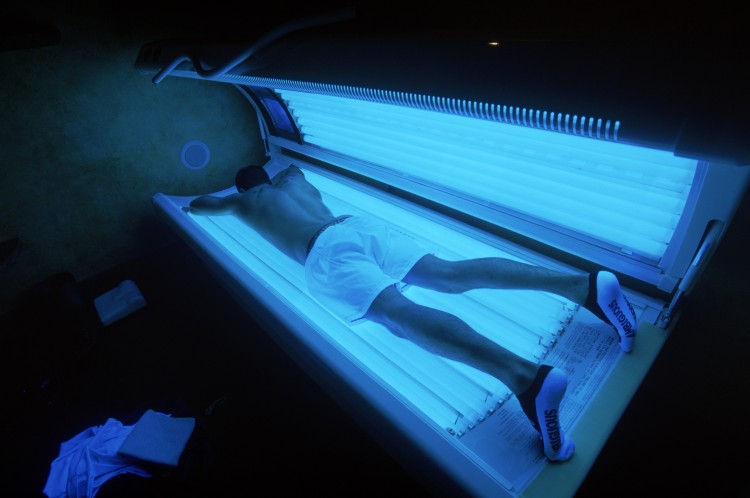
Conservative member of Parliament, James Bezan plans introduce a federal bill in March that would require putting radiation warning labels on tanning beds that show a link between ultraviolet rays and melanoma, the most fatal kind of skin cancer. The labels would be placed where they could be clearly seen.
“I’m strictly talking about a consumer awareness campaign of labeling the risks so that those who are using a tanning salon, especially those under 18, are aware that their risks to a carcinogenic exposure are greatly escalated when they are in an artificial tanning system,” said Bezan.
Tanning salon operators are critical of the proposed legislation that would warn consumers of the skin cancer risks associated with tanning beds.
The Joint Canadian Tanning Association (JCTA) also says there’s no scientific evidence linking tanning beds to skin cancer or melanoma.
“We don’t think the science even comes anywhere near supporting such a notion,” JCTA President Doug McNabb told the Canadian Press.
“We think it’s a little grandstanding politically,” McNabb said of Bezan’s bill. The JCTA is calling on the provinces to instead help regulate industry operating standards.
Early in 2009, the International Agency for Research on Cancer, a branch of the World Health Organization, moved ultraviolet-emitting tanning beds to its highest cancer risk group and labeled them as “carcinogenic to humans,” along with cigarettes, arsenic, and asbestos.
The report also stated that the risk of skin cancer is increased by 75 percent when a person starts using tanning devices before the age of 30.
The Canadian Cancer Society, World Health Organization (WHO), and the International Commission on Non-Ionizing Radiation Protection strongly recommend the restriction of minors under 18 from using tanning beds.
A statement on WHO’s Web site reads, “Childhood exposure to UV and the number of times a child is burnt by UV, either from the sun or from sunbeds, are known to increase the risk of developing melanoma later in life.”
But JCTA favors a looser rule that would require parents of those under 16 to sign an approval form in the salon. The association says that skin type, rather than age, matters the most in determining whether tanning is damaging. It does not advise those with fair skin to use tanning beds regardless of age.
“Banning minors from professional salons will only make the problem of overexposure worse,” said McNabb, adding that teenagers would then use inexpensive and unregulated methods to tan at home.
He estimates that roughly 2 to 3 percent of salon clients are under 18 while less than 0.5 percent are under 16.
The Canadian Cancer Society would also like to see the entire tanning industry regulated, including requiring a license for UV-emitting equipment and for all staff who work with it, according to Canadian Press.
Bezan was motivated to propose the legislation after his wife, a “sun worshipper” who used both natural sunlight and tanning beds, was twice diagnosed with melanoma.
“I'd like to see people avoid those circumstances that we’ve gone through as a family,” he said.
In the U.S. as in Canada, the tanning salon industry is opposed to the proposed regulations.
In the United States, The Food and Drug Administration is also now looking into more stringent tanning bed regulations. These new rules will include more prominent warnings in the hopes that people will be more informed about the dangers of indoor tanning.
The FDA wants consumers to know that UV radiation in tanning devices poses serious health risks. A recent report by the International Agency for Research on Cancer, (IARC), part of the World Health Organization, concludes that tanning devices are more dangerous than previously thought. Exposure to UV radiation, whether from the sun or indoor tanning beds, can cause skin cancer, burns, and premature aging.
The Health Care Bill now includes a 10 percent tax on tanning beds, expected to raise $2.7 billion over 10 years.
“I’m strictly talking about a consumer awareness campaign of labeling the risks so that those who are using a tanning salon, especially those under 18, are aware that their risks to a carcinogenic exposure are greatly escalated when they are in an artificial tanning system,” said Bezan.
Tanning salon operators are critical of the proposed legislation that would warn consumers of the skin cancer risks associated with tanning beds.
The Joint Canadian Tanning Association (JCTA) also says there’s no scientific evidence linking tanning beds to skin cancer or melanoma.
“We don’t think the science even comes anywhere near supporting such a notion,” JCTA President Doug McNabb told the Canadian Press.
“We think it’s a little grandstanding politically,” McNabb said of Bezan’s bill. The JCTA is calling on the provinces to instead help regulate industry operating standards.
Early in 2009, the International Agency for Research on Cancer, a branch of the World Health Organization, moved ultraviolet-emitting tanning beds to its highest cancer risk group and labeled them as “carcinogenic to humans,” along with cigarettes, arsenic, and asbestos.
The report also stated that the risk of skin cancer is increased by 75 percent when a person starts using tanning devices before the age of 30.
The Canadian Cancer Society, World Health Organization (WHO), and the International Commission on Non-Ionizing Radiation Protection strongly recommend the restriction of minors under 18 from using tanning beds.
A statement on WHO’s Web site reads, “Childhood exposure to UV and the number of times a child is burnt by UV, either from the sun or from sunbeds, are known to increase the risk of developing melanoma later in life.”
But JCTA favors a looser rule that would require parents of those under 16 to sign an approval form in the salon. The association says that skin type, rather than age, matters the most in determining whether tanning is damaging. It does not advise those with fair skin to use tanning beds regardless of age.
“Banning minors from professional salons will only make the problem of overexposure worse,” said McNabb, adding that teenagers would then use inexpensive and unregulated methods to tan at home.
He estimates that roughly 2 to 3 percent of salon clients are under 18 while less than 0.5 percent are under 16.
The Canadian Cancer Society would also like to see the entire tanning industry regulated, including requiring a license for UV-emitting equipment and for all staff who work with it, according to Canadian Press.
Bezan was motivated to propose the legislation after his wife, a “sun worshipper” who used both natural sunlight and tanning beds, was twice diagnosed with melanoma.
“I'd like to see people avoid those circumstances that we’ve gone through as a family,” he said.
In the U.S. as in Canada, the tanning salon industry is opposed to the proposed regulations.
In the United States, The Food and Drug Administration is also now looking into more stringent tanning bed regulations. These new rules will include more prominent warnings in the hopes that people will be more informed about the dangers of indoor tanning.
The FDA wants consumers to know that UV radiation in tanning devices poses serious health risks. A recent report by the International Agency for Research on Cancer, (IARC), part of the World Health Organization, concludes that tanning devices are more dangerous than previously thought. Exposure to UV radiation, whether from the sun or indoor tanning beds, can cause skin cancer, burns, and premature aging.
The Health Care Bill now includes a 10 percent tax on tanning beds, expected to raise $2.7 billion over 10 years.