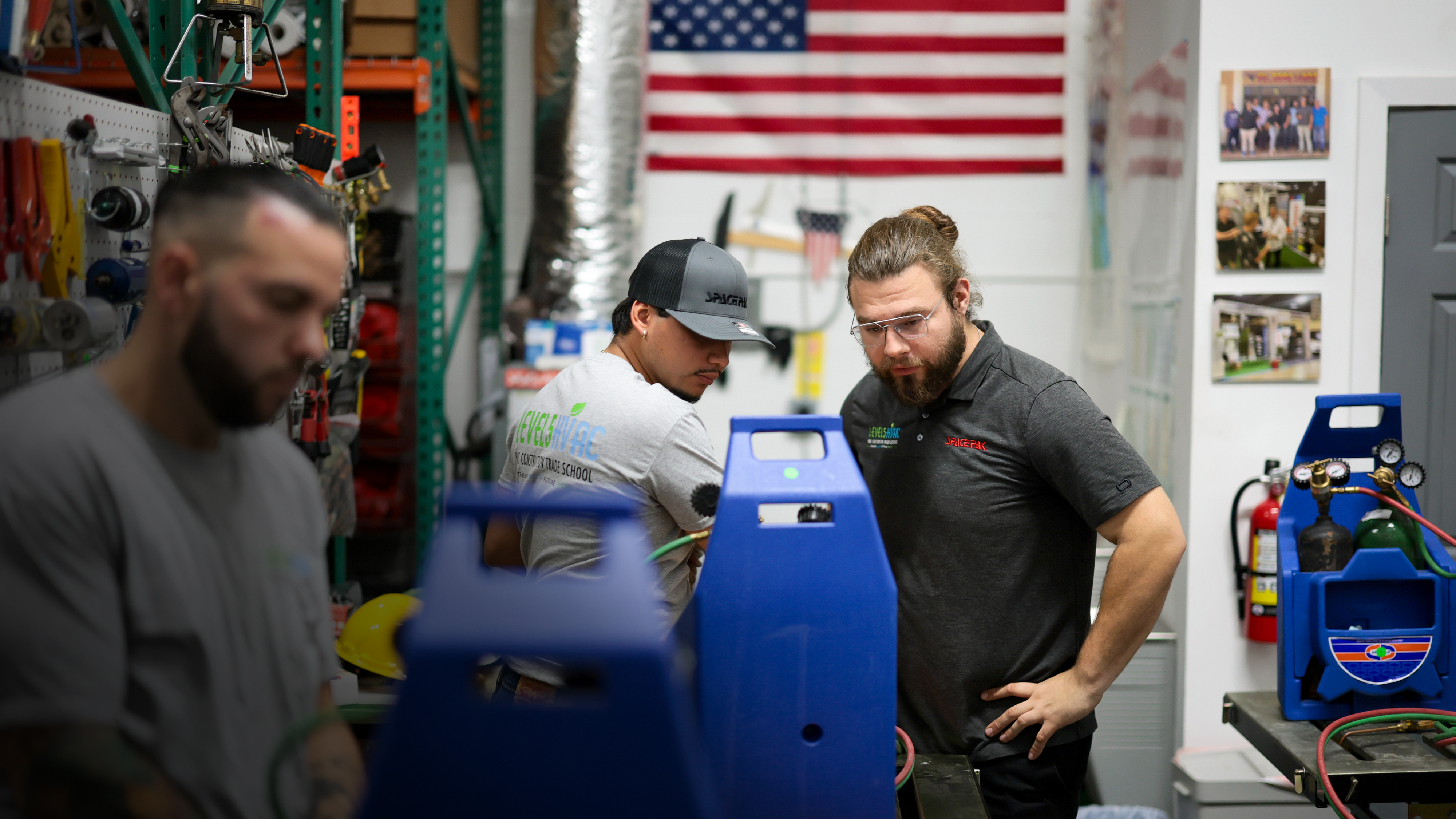

For years, students were told the future belonged to college graduates with a four-year degree. Now, some of the fastest-growing opportunities are in skilled trades, where there is an escalating demand for labor and a higher level of job security amid the rise of artificial intelligence.
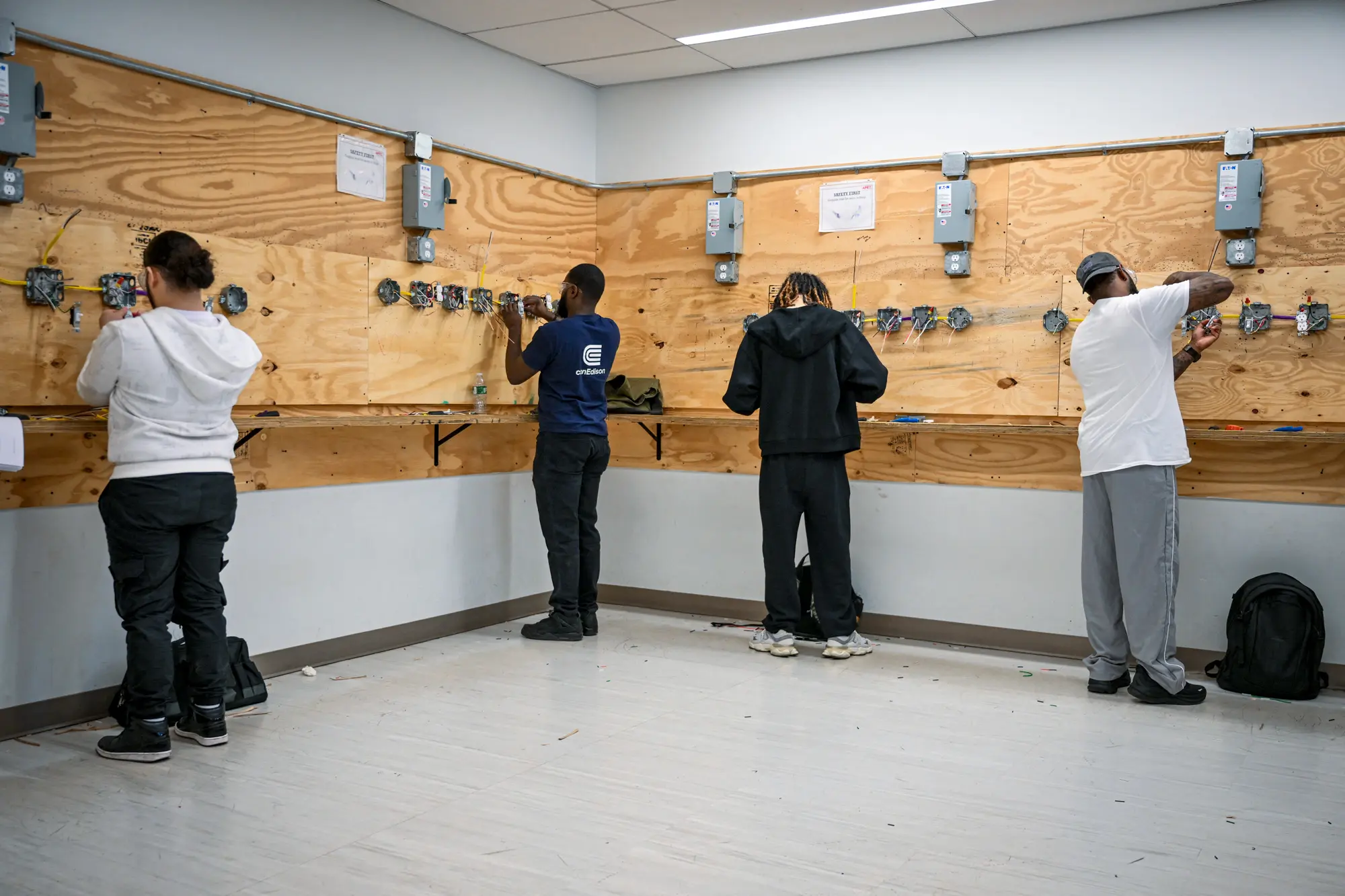
Vocational schools and specialized training programs are seeing a surge of interest among Gen Z students and younger workers who are considering options beyond traditional higher education.
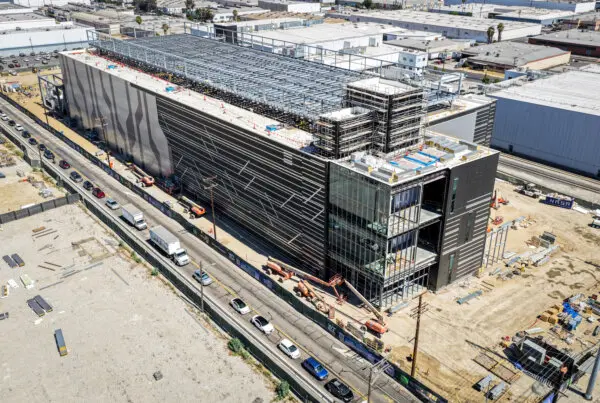
And the timing couldn’t be better. Major infrastructure projects and the rapid buildout of AI-related facilities are fueling demand for workers with hands-on technical skills. Workforce experts say the convergence of these trends could reshape how Americans think about education and career pathways going forward.
“The past couple of years, people have been flocking to things that are considered safe from AI, but then this tailwind came in where there’s also a lot of need for these roles to support the labor movement,” said Brady Colby, head of market research at Validated Insights, which analyzes trends in higher education and trade school.
He told The Epoch Times that while interest in vocational studies had seen slow, steady growth in recent years, it “really took off” in the past six months.
“It’s harder to recruit for some of these skilled trades than it is for computer programmers now,” he said.
Validated Insights noted in its June report that trade school revenue surpassed all expected growth in 2025, expanding 11.4 percent and surpassing $19 billion. That’s nearly double the original growth forecast.
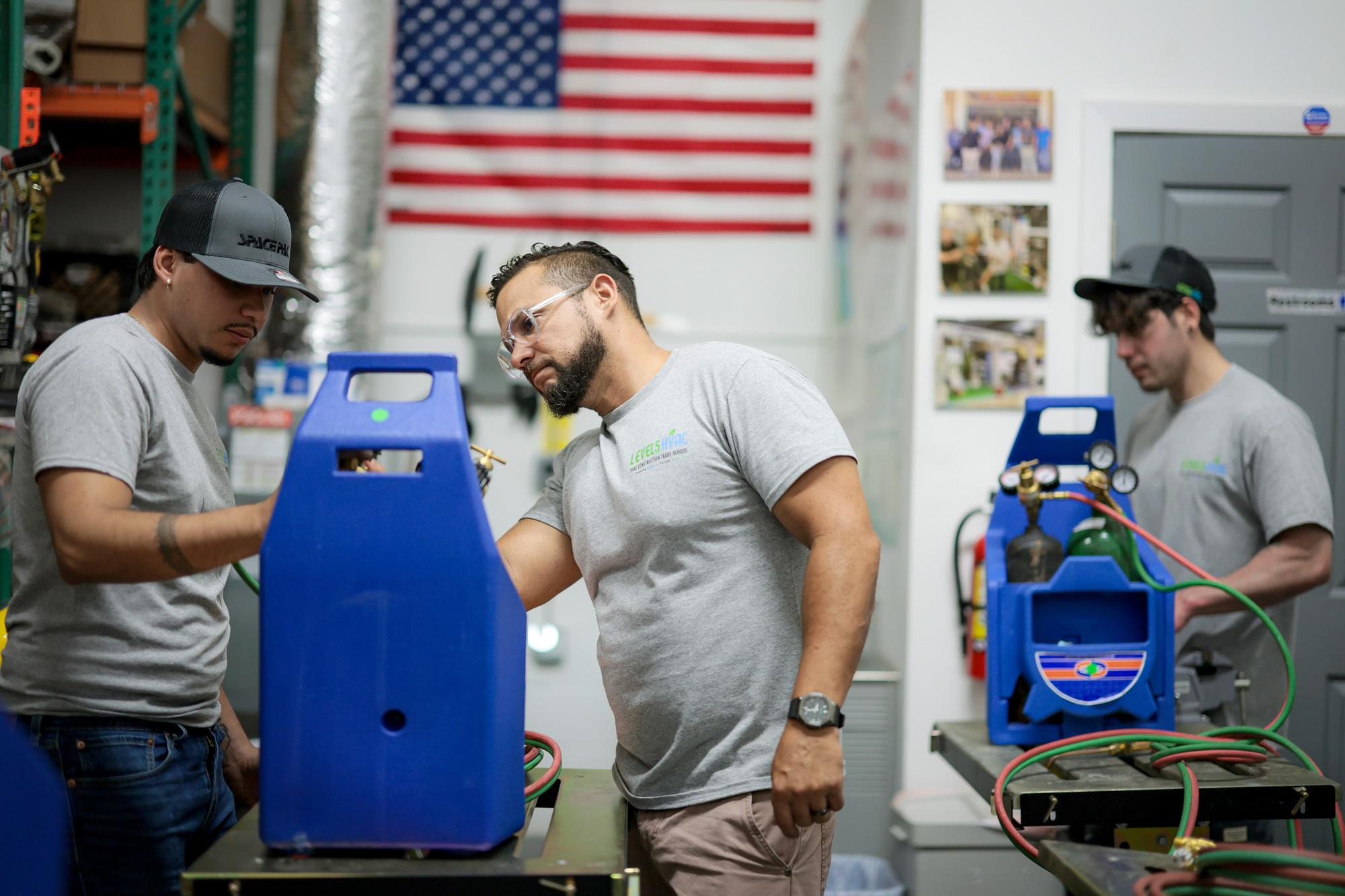
The Philadelphia Technician Training Institute states on its website that many Gen Z members are choosing vocational colleges “because these institutions provide quick applied education that leads directly to rewarding professions with reliable salaries.”
Mike Nager, author of “The Smart Student’s Guide to Smart Manufacturing and Industry 4.0,” told The Epoch Times: “For decades, four-year degrees were seen as the only path for a safe future. Trades were seen as a fallback for those who couldn’t or wouldn’t go to college and get a degree.”
But now when it comes to choosing a four-year degree path as the default, “the payback just isn’t there anymore in many cases,” he said.
He also believes an interest in education alone won’t be enough to replenish the widening gap in America’s skilled talent pool.
“Kids have to be shown what the trades are, get some firsthand experience. This is where the industry needs to step up, create outreach programs to address the ‘awareness gap’ for trades,” he said.
The “awareness gap” is the disconnect between rising demand for skilled professionals and the public’s perception of these careers. For years, some say it fostered the societal stigma that vocational career paths led to either overly physical or just low-paying work. On the flip side, this perception created a favorable atmosphere for standard university education.
Changing the Narrative
Cyrus Kennedy, a behavioral analyst and CEO of The Ad Firm, said attitudes toward vocational careers are definitely changing.
“It’s a mix of a math problem and a psychological shift,“ he told The Epoch Times. ”Gen Z has watched older millennials drown in six-figure student debt for degrees that don’t guarantee a job.”
Kennedy said this trend toward vocational studies as higher education is happening at a time when there’s “growing fatigue with purely digital, screen-bound work.”
“Young people are realizing that specialized trades offer immediate earning potential, job security that AI can’t easily displace, and a clear path to entrepreneurship without the financial chokehold of a four-year degree,” he said.
Kennedy said another assumption being reexamined about working in skilled trades is the alleged cap on career growth and the risk of physical burnout.
“In reality, the trades are one of the fastest pipelines to business ownership,“ he said. ”An apprentice plumber or electrician doesn’t just learn how to fix a pipe; they learn a business model. Many transition into project managers, estimators, or business owners. It requires high-level cognitive problem-solving, customer psychology, and financial literacy.”
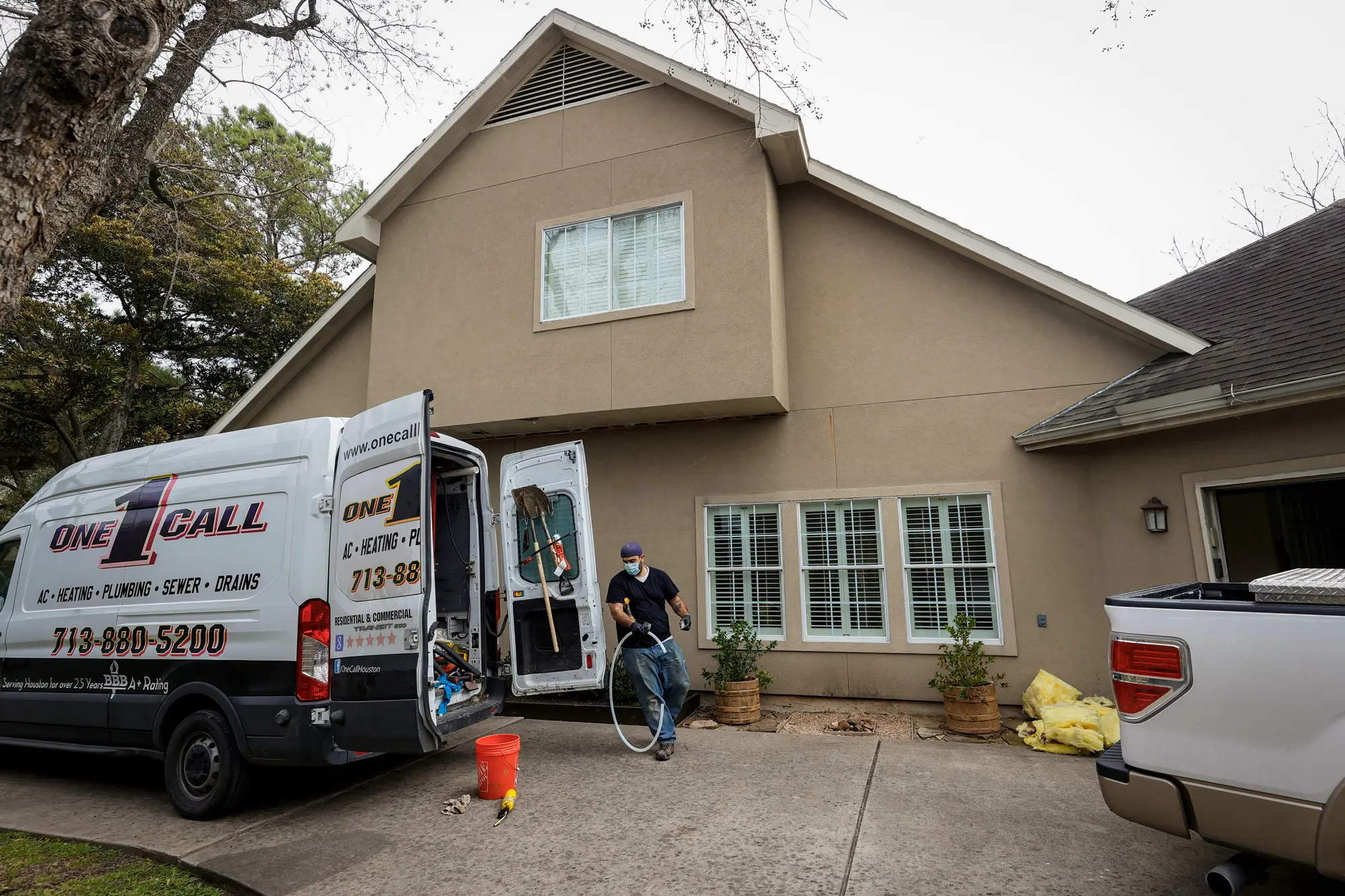
“The body takes a beating. You’re in attics in August, and the real money comes after years of licensing and hard experience,“ he said. ”What students overlook most is the ceiling—field tech, foreman, estimator, then running your own shop. The ones who see that from day one go furthest.”
He also doesn’t find the surge in interest surprising.
“Young people watched a generation take on serious debt for degrees that didn’t guarantee much, and they did the math,“ he said. ”An apprentice earns while learning instead of paying to learn. The work also can’t be shipped overseas or handed to software.
“Nobody’s replacing a licensed plumber with an app.”
Industries that have reported the highest number of skilled worker shortages in 2026 include electricians, welders, HVAC technicians, plumbers, and heavy equipment mechanics.
Meanwhile, the median pay in many of these professions now matches or exceeds that of many that require four-year degrees, according to Bureau of Labor Statistics data.

Growing interest in technical careers is also reflected in public polls. A Resume Templates survey of 1,250 Gen Z adults in January found that six out of 10 respondents planned to pursue “blue collar” work in 2026. The main reason cited was better long-term job security against possible AI-related job loss.
In May, Challenger, Grey & Christmas published research showing there were 38,579 planned job cuts due to AI—the highest monthly total they’d ever recorded for that specific reason. AI-related downsizing accounted for 40 percent of all announced cuts, up from just 7 percent in January and 26 percent in April.
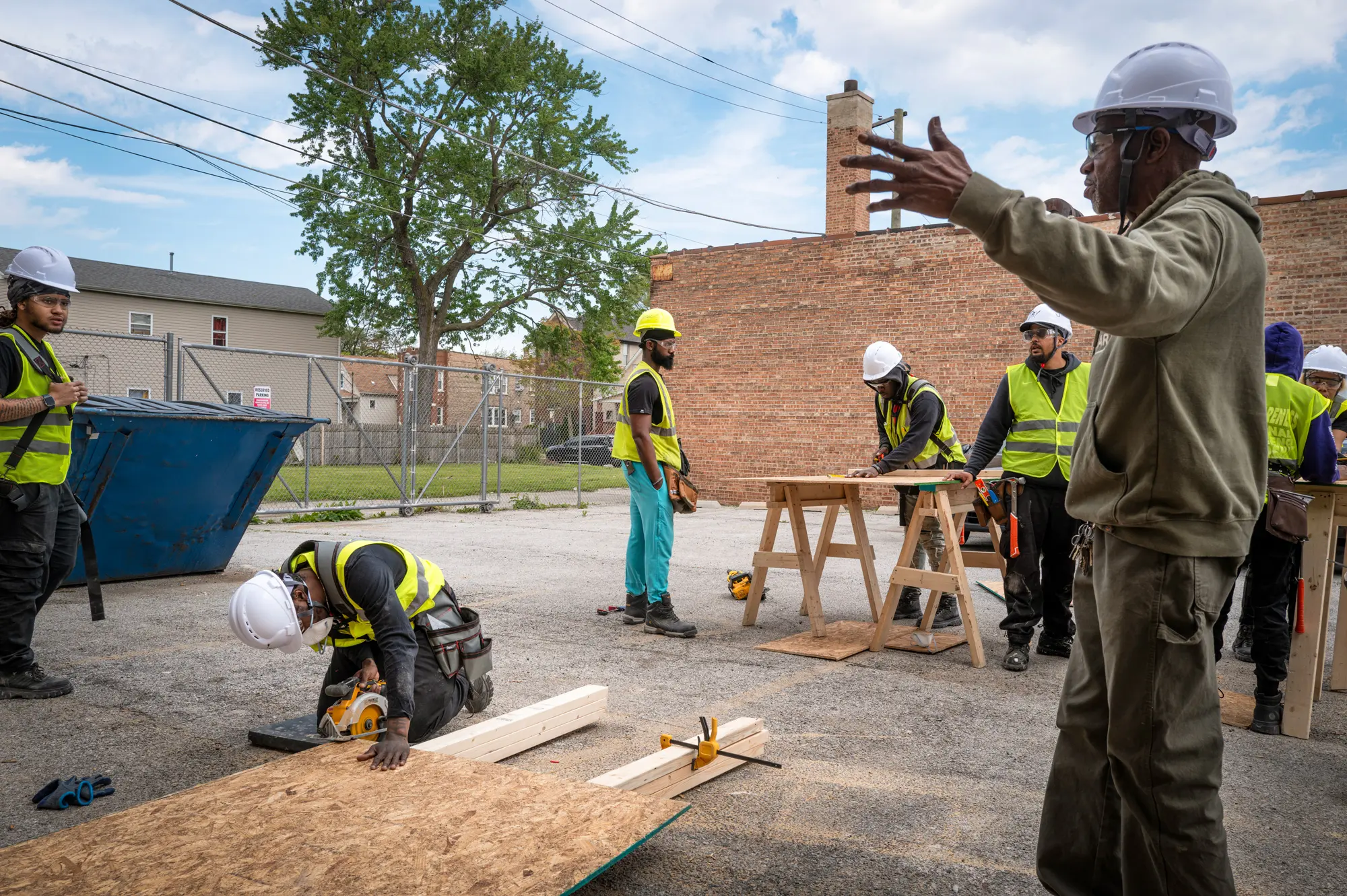
One-Two Punch
When it comes to rebuilding America’s skilled labor force, there are two major factors converging. On one hand, there are millions of trade workers planning to retire through 2032.



On the other hand, there’s the ongoing U.S. data center and infrastructure buildout, which is driving a technician talent crisis.
The biggest names in tech, such as Google, Meta, and Amazon Web Services, have all launched their own training programs for skilled workers in an effort to expand their hiring pool.

But the shortages are being felt in nearly every industry, and there’s no shortcut to replacing America’s retiring talent.
“It’s the retirement wave,” Morgan said. “I’m losing techs to bigger shops ... but the bigger problem is that the men and women who trained me are aging out and taking decades of judgment with them.
“You can teach code and technique in a classroom. You can’t shortcut the instinct that tells someone a system is about to fail before it does.”

Modern vocational work is also evolving in lockstep alongside the technology boom, adding another layer of challenge.
“They’ve gone highly digital. Modern apprentices aren’t just reading paper blueprints; they are using 3D modeling, diagnostic software, and advanced automation,” Kennedy said.
“The modern trade worker is essentially a tech specialist who works with their hands. Training programs have evolved to place a heavy emphasis on adaptability, business operations, and tech-integration, because a trade business today lives and dies by its software stack just as much as its physical tools.”
Morgan shares this sentiment. “Ten years ago, training was mostly hands and pipe,“ he said. ”The good programs now teach digital diagnostics, connected systems, and the software side, because a tech who can’t document a job properly is only half useful to me.”