A month after the outbreak of cholera in Haiti, the United Nations reported Wednesday the spread of the disease is likely to accelerate.
Nearly 10,000 cases of cholera have been reported so far, including 643 deaths, according to the U.N. Office for the Coordination of Humanitarian Affairs (OCHA).
OHCA reports the situation is not improving, particularly after last weekend’s Hurricane Tomas caused floods and mudslides to the beleaguered island. In the wake of the storm, already poor sanitary conditions in the country are expected to deteriorate further.
Cholera has been confirmed in six of the nine departments of Haiti.
Last Monday, the first case of cholera originating in the capital Port-au-Prince was confirmed. The number of cases in the crowded city is expected rise.
OCHA stated that the current situation will require significant additional logistical and financial resources.
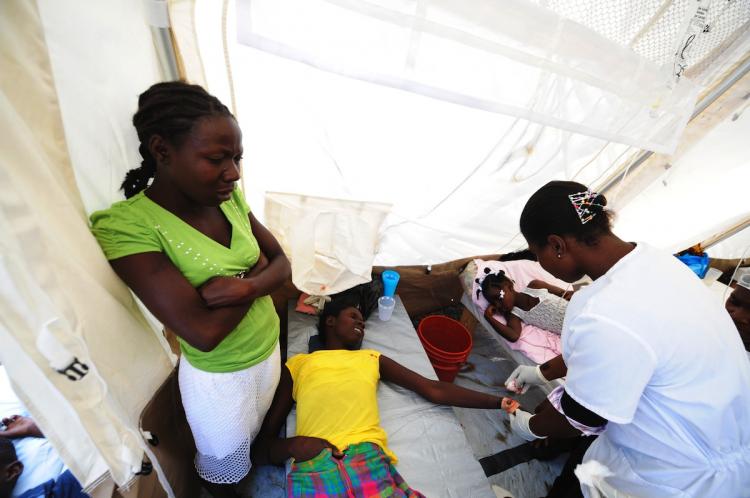
Humanitarian organizations have been bracing for the possibility of a countrywide epidemic since the beginning of relief efforts. Teams are currently evaluating where additional cholera treatment centers are needed.
In the north of the country, Doctors Without Border (MSF) reports that it is advising local health units in how to cope with the disease, which is a new experience for hospital staff, according to the organization’s website.
MSF field staff report that part of the problem is that many people in Haiti cannot afford transportation to reach medical facilities.
Cholera is an acute intestinal infection caused by a bacteria that’s transmitted via contaminated food or water. The disease’s incubation period is only one to five days. It causes severe diarrhea and vomiting that can lead to death due to dehydration.
An education campaign is also underway throughout Haiti to teach locals how to prevent spread of the disease, particularly in cramped camps, where many have lived since the earthquake struck last January.
Nearly 10,000 cases of cholera have been reported so far, including 643 deaths, according to the U.N. Office for the Coordination of Humanitarian Affairs (OCHA).
OHCA reports the situation is not improving, particularly after last weekend’s Hurricane Tomas caused floods and mudslides to the beleaguered island. In the wake of the storm, already poor sanitary conditions in the country are expected to deteriorate further.
Cholera has been confirmed in six of the nine departments of Haiti.
Last Monday, the first case of cholera originating in the capital Port-au-Prince was confirmed. The number of cases in the crowded city is expected rise.
OCHA stated that the current situation will require significant additional logistical and financial resources.
Humanitarian organizations have been bracing for the possibility of a countrywide epidemic since the beginning of relief efforts. Teams are currently evaluating where additional cholera treatment centers are needed.
In the north of the country, Doctors Without Border (MSF) reports that it is advising local health units in how to cope with the disease, which is a new experience for hospital staff, according to the organization’s website.
MSF field staff report that part of the problem is that many people in Haiti cannot afford transportation to reach medical facilities.
Cholera is an acute intestinal infection caused by a bacteria that’s transmitted via contaminated food or water. The disease’s incubation period is only one to five days. It causes severe diarrhea and vomiting that can lead to death due to dehydration.
An education campaign is also underway throughout Haiti to teach locals how to prevent spread of the disease, particularly in cramped camps, where many have lived since the earthquake struck last January.